Cabinet Clears ₹10,000 Crore Startup India Fund of Funds 2.0 to Boost Deep Tech and Innovation
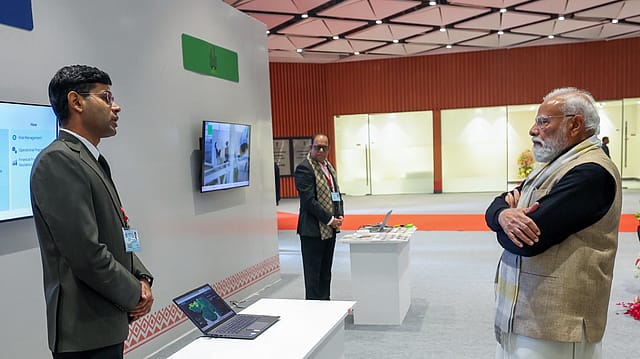
The Union Cabinet, chaired by Prime Minister Narendra Modi, has approved a ₹10,000 crore Startup India Fund of Funds 2.0 to further facilitate the mobilisation of venture capital for the country’s startup ecosystem following the success of the first Fund of Funds for Startups (FFS 1.0).
“The scheme is designed to accelerate the next phase of India’s startup journey by mobilising long-term domestic capital, strengthening the venture capital ecosystem, and supporting innovation-led entrepreneurship across the country,” a statement issued on Saturday by the Cabinet secretariat after the meeting said.
Launched under the Startup India initiative, FFS 2.0 builds on nearly a decade of sustained efforts to position the country as one of the world’s leading startup nations.

Zeroing In on ECI
09 Oct 2026 - Vol 05 | Issue 41
Constitutional legitimacy versus political opportunism
Since the launch of Startup India in 2016, India’s startup ecosystem has grown from fewer than 500 startups to over 200,000 government-recognised startups, the statement noted.
The new fund will adopt a targeted and segmented funding approach, with a specific focus on deep tech, advanced manufacturing, and early-stage founders.
How will Startup India Fund of Funds 2.0 prevent innovative ideas from failing due to lack of early funding?
It aims to ensure that innovative ideas do not fail due to a lack of early financial support, while also providing a safety net for new and innovative ideas and reducing early-stage failures caused by funding constraints.
The government intends to provide “patient, long-term capital” for breakthroughs in high-tech areas and innovative manufacturing that typically take longer to develop.
FFS 2.0 builds upon the success of FFS 1.0, which was launched in 2016 to address funding gaps and catalyse the domestic venture capital market for startups.
Under FFS 1.0, the entire corpus of ₹10,000 crore was committed to 145 Alternative Investment Funds (AIFs).
These supported AIFs have invested over ₹25,500 crore in more than 1,370 startups across sectors such as agriculture, artificial intelligence, robotics, automotive, clean tech, consumer goods and services, e-commerce, education, fintech, food and beverages, healthcare, manufacturing, space tech, and biotechnology.
How will Startup India Fund of Funds 2.0 address high-risk capital gaps for innovation?
The press release stated that the first phase “played a pivotal role in nurturing first-time founders” and helped build a “strong foundation for India’s venture capital ecosystem,” while also crowding in private capital.
One of the key objectives of FFS 2.0 is to address high-risk capital gaps that are often overlooked by private investors but are essential for advancing self-reliance and innovation-driven growth.
By directing greater capital to priority sectors, the scheme seeks to take Indian innovation to the next level and support startups building globally competitive technologies, products, and solutions.
The fund will also encourage investment beyond major metropolitan hubs such as Bengaluru and Delhi so that innovation can thrive across the country.
According to the statement, it is designed to address “high-risk capital gaps” and direct funding to priority areas important for economic growth and self-reliance.
“It is expected to play a pivotal role in shaping India’s economic trajectory, leading to transformational impact,” the statement said.
The government added that the fund is aligned with the broader national vision, stating, “Aligned with the national vision of Viksit Bharat @ 2047, the Fund represents the Government’s continued commitment to empowering entrepreneurs, fostering innovation, and unlocking the full potential of India’s startup ecosystem.”
By supporting innovation-led entrepreneurship and long-gestation technologies, the scheme is expected to contribute to “strengthening India’s economic resilience, boosting manufacturing capabilities, and generating high-quality jobs,” while reducing dependence on foreign investment and mobilising long-term domestic capital for the next phase of India’s startup journey.
(With inputs from ANI)