BRICS Summit in Delhi: Leaders Arrive, Ministers May Travel by Bus as Capital Tightens Security & Traffic Plans
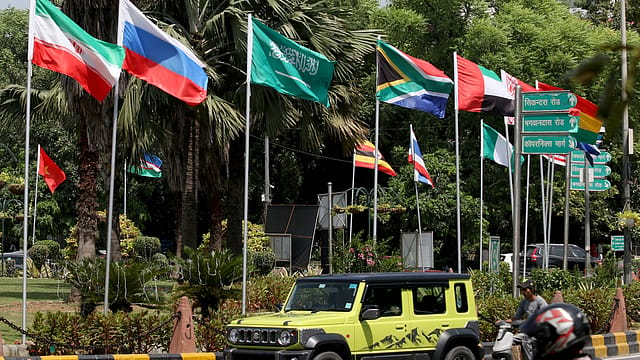
Before the summit table comes the seating arrangement on a bus.
Union ministers and chief ministers attending the BRICS Summit in New Delhi are expected to assemble at Parliament and travel together to Bharat Mandapam, according to sources cited by ANI. The departure time and detailed movement plan are yet to be finalised, but the proposed arrangement has a straightforward purpose: fewer individual convoys on roads already preparing for an intensive spell of diplomatic traffic.
For a capital accustomed to making way for VIPs, shared transport could offer a little breathing room. It also captures one of the challenges facing the host city as foreign delegations arrive for the September 12–13 gathering: accommodating the summit while limiting the disruption it brings.
The arrivals are gathering pace. Philippine Foreign Affairs Secretary Maria Theresa P Lazaro reached New Delhi on Thursday and was received by senior Ministry of External Affairs officials. Russian President Vladimir Putin also arrived ahead of the summit, with Union Minister of State for External Affairs Kirti Vardhan Singh welcoming him.

Zeroing In on ECI
09 Oct 2026 - Vol 05 | Issue 41
Constitutional legitimacy versus political opportunism
Brazilian Foreign Minister Mauro Vieira reached the capital on Wednesday. He will represent President Luiz Inacio Lula da Silva, who, according to the ANI report, is staying in Brazil for his election campaign.
The different arrivals bring their own schedules and protocol requirements. Together, they feed into a much larger operation across the capital. Special Commissioner of Police (Security) Manish Agarwal told ANI that approximately 16 heads of state were expected, including several requiring extensive security protection.
Delhi Police has mobilised more than 15,000 personnel, while the Union home ministry has provided approximately 200 companies of Central Armed Police Forces for law and order and other operational duties. Those are separate deployments, reflecting the scale of preparations around the summit.
Across New Delhi, personnel have been assigned to different sectors, security drills conducted and surveillance equipment installed. Deputy Commissioner of Police (New Delhi) Sachin Sharma said CCTV feeds were being monitored and coordination meetings held with other agencies.
“Our technical equipment has been installed so that any threat can be detected,” Sharma told ANI. “We are ensuring that the public does not face any kind of inconvenience.”
Managing that second objective will require careful coordination with the first. Designated routes have been checked and secured, with police and the Traffic Branch tasked with monitoring movements and maintaining traffic flow. Agarwal said advisories detailing potentially disrupted routes and timings had been issued.
The proposed ministers’ bus fits into this wider effort. According to the sources cited by ANI, consolidating their journeys would reduce the number of convoys and help agencies manage the route more efficiently. The sources linked the arrangement to Prime Minister Narendra Modi’s emphasis on reducing inconvenience to the public during major official programmes.
Security planners are also preparing for movements beyond the official itinerary. Visiting dignitaries may want to explore cultural or historical sites in Delhi and neighbouring states. Agarwal said neighbouring states had been advised during coordination meetings to keep security arrangements ready for visits organised at short notice.
Police are monitoring social media activity and potential sudden demonstrations, and have rehearsed contingency plans. Coordination has involved the home and external affairs ministries, the Intelligence Bureau and other agencies responsible for the meetings and events surrounding the summit.
Once the delegations reach the negotiating table, the focus is expected to shift to strategic trade resilience, cross-border payment mechanisms, energy security and possible pathways towards resolving conflicts in Eastern Europe and West Asia.
The gathering is also expected to include representatives of the current chairs of ASEAN, the African Union, the Gulf Cooperation Council, CELAC and the Eurasian Economic Union. UN Secretary-General Antonio Guterres and the heads of the WTO, WHO and New Development Bank are among those scheduled to attend, according to ANI.
For India, this is its fourth BRICS chairship, following 2012, 2016 and 2021. Its previous turn culminated in a virtual summit. This time, hosting means receiving delegations, securing routes and preparing Bharat Mandapam for two days of discussions under the theme “Building for Resilience, Innovation, Cooperation and Sustainability”.
There will be plenty of room for diplomatic language over the next two days. Delhi’s immediate assignment is more tangible: get the guests to their meetings, keep the security arrangements working and leave space for the city’s residents to get on with their day.
One proposed contribution to that effort has wheels, shared seats and a departure time still to be confirmed.
With inputs from ANI