Beyond the Battlefield: Defeating Naxalism’s Ideology
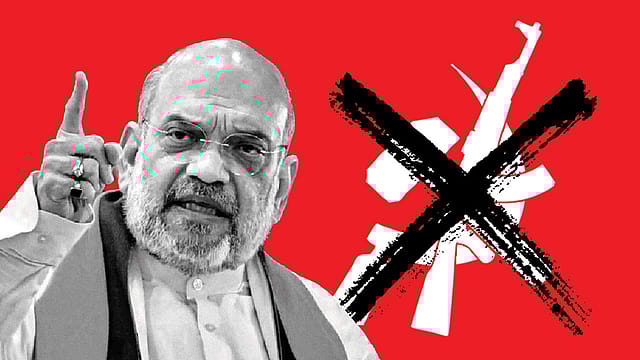
In the dense jungles of the Red Corridor, India’s security forces have secured a decisive victory against armed Naxals. Once numbering in the thousands and entrenched in remote strongholds, Naxals have now been eradicated. Their bases have been reclaimed and their weapons silenced through the courage, resilience and sustained efforts of security personnel. Praising this achievement, Union Home Minister Shri Amit Shah has warned that the battle is far from over. Beneath the surface of this physical triumph lies an invisible front, the war of ideas, where the toxic roots of Naxalism still seek fertile ground in urban networks and intellectual circles. Eradicating this ideology --- which rejects the Indian Constitution, undermines democracy and glorifies violence -- is next. Shah, during the discussion on Naxalism in Lok Sabha, put it starkly: wherever ideology of Naxalism has spread, it has inevitably fused with violence. That is the very essence of Naxalism called “Urban Naxals”.
The term Urban Naxals is used for certain ideologues, organizations and NGOs operating from the comfort of cities and who are fuelling the idea through legal support, sympathetic media narratives and, at times, covert funding. These are no mere sympathizers. They are complicit in anti-national activities. After taking the charge of Home Ministry in 2019, Shah took initiatives to curb this anti-national activities. The Union Home Ministry has tightened the noose. After assuming charge of the Home Ministry in 2019, Shah initiated measures to curb such anti-national activities. The Union Home Ministry has since strengthened its actions. The Bhima-Koregaon case laid bare the ties between pseudo-intellectuals and Naxal handlers. Investigations into terror funding have brought others under scrutiny, while tighter regulations on foreign funding for NGOs have signalled a firm stance: neither armed insurgents nor those accused of supporting them, whether through action or advocacy, will be beyond the reach of the law.
Zeroing In on ECI
09 Oct 2026 - Vol 05 | Issue 41
Constitutional legitimacy versus political opportunism
From its inception, Naxalism in India has waged a relentless assault on the legitimacy of elected governments. Naxals didn't just take up arms, they torched the Indian Constitution and erected parallel structures like Jantana Sarkars – a shadow governments in villages that dispensed "justice" through dreaded Jan Adalats. Those who disagreed with this ideology were branded government informers and summarily executed, making an atmosphere of terror that created a governance vacuum.
This raises a pointed question for the intellectual elite: Whom does your sympathy truly serve? When Naxal violence peaked, tribals bore the brunt; murdered, exploited, their development stalled. Yet, where were the human rights campaigns on international platforms or in certain media outlets for these victims? Did the innocent people of Bastar, blasted by landmines, lack human rights? Where were the candlelight vigils for the school principal executed in a Jan Adalat for hoisting the Tiranga on Independence Day? For years, elite platforms romanticized Naxalite violence as "revolution" or a quest for social justice. Can justice truly bloom from bloodshed? By arming the poor against their own government, what utopia did they envision?
Now, as the government acts decisively, cries of "human rights" echo selectively. The Home Minister nailed this hypocrisy. "Intellectuals who pen long articles advising the government, why do they never write about the tribals' suffering? Why is their sympathy so selective?" The truth stings: these urban elites care little for tribal welfare or constitutional faith. They cling to a hollow ideology the world has long rejected.
Victory in this ideological arena demands intellectual firepower, not bullets. The government's strategy pivots to education, awareness and counter-narratives. Universities must host seminars unmasking Naxalism’s failures. Digital campaigns should empower tribal youth and every misleading narrative must be dismantled with irrefutable facts. Legally, the crackdown continues, UAPA actions, NGO surveillance, ensuring urban networks crumble.
Shah highlighted the Urban Naxals' twisted pleas: "Hold talks with armed Naxals fighting injustice; don't kill them, show sympathy. Yet, not one intellectual came forward for the farmers killed, the martyred security jawans, their widows or children. Their “humanity” spares only Constitution-burners with guns, ignoring citizens slain by those weapons. We cannot accept this dual character,” the Home Minister said, adding “These are not humanitarians, they are Naxalite backers, arming the poor to spread ideology, their days are numbered.”
During the discussion, the Home Minister also dissected the Salwa Judum saga, a 2005 people's movement against Naxal terror, led by Shri Mahendra Karma (later assassinated by Maoists). Tribal youth trained as Special Police Officers bolstered the fight. But in 2011, some naxal sympathisers petitioned the Supreme Court against Salwa Judum. A Supreme Court judge deemed it illegal, ordering weapon surrenders. Naxals then hunted Salwa Judum associates. Shockingly, the judge who passed the order later became the Opposition’s Vice Presidential candidate. Shah lamented that those respecting law and order wouldn't nominate him.
India stands at a crossroads. We have crushed the Naxals, now we must uproot the ideology. By creating awareness, enforcing law and challenging hypocrisy, we will secure a violence-free future for India.
(The writer is a freelance journalist)