Bail Denial to Umar Khalid and Sharjeel Imam: SC restores the sanctity of UAPA
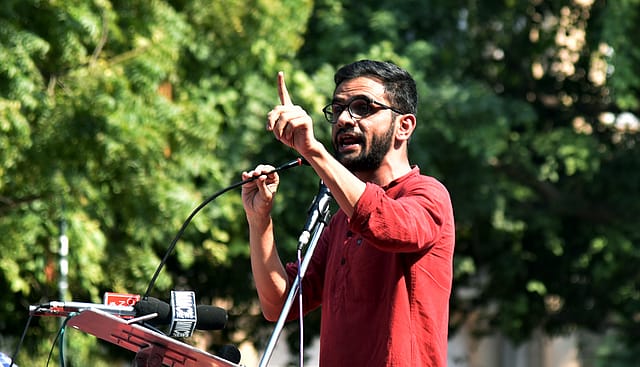
The Supreme Court’s denial of bail to Umar Khalid and Sharjeel Imam on Monday, two among the many individuals who stand accused in the 2020 Delhi riots, restores a semblance of order in matters relating to the Unlawful Activities Prevention Act (UAPA), 1967. Increasingly, the judicial dictum “bail, not jail” had steadily encroached the domain of the UAPA as well. The legal tactics used by those accused in the 2020 cases were closely scrutinised by the court. The court’s judgment will have a salutary and deterrent effect on those contemplating the use of violence and terrorism to achieve political goals.
In its verdict, the court gave relief to five of the seven accused who had approached it for bail. Gulfisha Fatima, Meeran Haider, Shifa Ur Rehman, Mohammad Saleem Khan and Shadab Ahmed, were granted bail under strict conditions—12 in all—while Khalid and Imam were not. In doing this, the court carefully analysed individual circumstances and roles played by all the accused. The court outlined a “hierarchy of participation” that enabled it to sketch a gradient of involvement in the riots: Khalid and Imam, according to the court, were involved “at the level of planning, mobilisation, and strategic direction, extending beyond episodic or localised acts.” The other five had a more subsidiary role.

Open Minds 2026
26 Jun 2026 - Vol 05 | Issue 26
The power of ideas and arguments in 50 portraits
Beyond the specifics of the case, the judgment is important for two reasons. The most important is the use of legal strategies and tactics to overcome the high bar set by Section 43D(5) of UAPA. This section makes it very difficult to secure bail in such cases as the trial judge, by design, is given very little discretion. To overcome this “problem” lawyers have found a novel “solution.” Delays in the start of the trial are often used to pit this provision of UAPA against Article 21 of the Constitution that says “No person shall be deprived of his life or personal liberty except according to procedure established by law.” Under liberal jurisprudence that prevails in India, this has been used to secure bail for persons accused of offences under UAPA. Delays in trials or prolonged pre-trial detention have been subtly interpreted as violating Article 21.
In the instant case, the court has put an end to this “slide” in the interpretation of Section 43D(5). The court in its judgment said that, “The jurisprudence of this Court does not support a construction whereby delay simpliciter eclipses a statutory regime enacted by Parliament to address offences of a special category.” (Paragraph 33)
In plain English, the court has put an end to the legal strategy of pitting Article 21 against Section 43D(5) enacted by Parliament for specific reasons.
In this particular case, the court openly noted the tactic of delaying the trial: “What assumes significance is that the procedural history and order sheets do not support the assertion that the delay is attributable to prosecutorial inaction or judicial inaction. The common counter affidavit and the Trial Court’s orders record that, at various stages, the prosecution expressed readiness to proceed, including readiness to commence arguments on charge, while objections, requests for deferment, and issues relating to sequencing of arguments were raised on behalf of the accused...the Trial Court noted that despite repeated directions, certain accused declined to receive copies of the charge-sheet in the manner directed, insisted on alternate modes of supply, or filed successive applications, necessitating further procedural orders and contributing to delay at the pre-charge stage.” (Paragraph 38)
In judicial language this is as damning as it gets. The accusation that Khalid and Iman were not given bail and treated unfairly was dismantled by the former Chief Justice of India, D Y Chandrachud, in interactions with the press after he demitted office. The judgment on Monday specifically highlighted this factor.
Instead of only relying on “delay” as a factor in granting bail, the court said that any inquiry of delay must be “contextual” and should factor in: 1) the nature of allegations 2) the statutory field 3) the stage of the proceedings 4) the realistic trajectory of the trial 5) the causes contributing to the delay and 6) the risks attendant upon release (of the accused).
Together, these six factors provide an even playing field for Section 43D(5) that was increasingly under pressure from human rights lawyers and liberal activists. Had this vital section of the law been diluted, it would have become very difficult to hold persons accused of terrorism and other crimes against the state under detention. The court has justly halted the slide in that direction.
The second key observation of the court, highlighted in Paragraphs 31 and 46, is about UAPA being a law not just to check offences that affect the security of the state but also the “stability of civic life” (Paragraph 31) and “peace of society” (Paragraph 46). These are very important and underappreciated aspects of the situation that confronts India today.
Increasingly, “stability of civic life” has been the target of various disruptive and anarchic forces and can no longer be divorced from the larger concerns about India’s internal security. Interestingly, even as India has managed to overcome outright separatist and “revolutionary” threats that used insurgencies to overthrow elected governments or secede from the country, anarchic actions—such as the 2020 riots—have become more frequent. The court’s assessment that “stability of civic life” is an important facet in considering UAPA is an important development.
In recent years, the lines between what constitutes terrorism and actions geared to destabilise the “stability of civic life” have been blurred. Very often, these tactics are used by special or sectional interests that are too impatient to work the democratic processes to advance their goals or are unwilling to build the necessary political coalitions to advance these goals. At least two such instances—that proved dangerous for “stability of civic life”—have been witnessed in the past five years. The Delhi riots of 2020 were one such instance.