Air India Phuket-Delhi Flight Probe Deepens After 300-Foot Drop; CEO Briefs Aviation Authorities
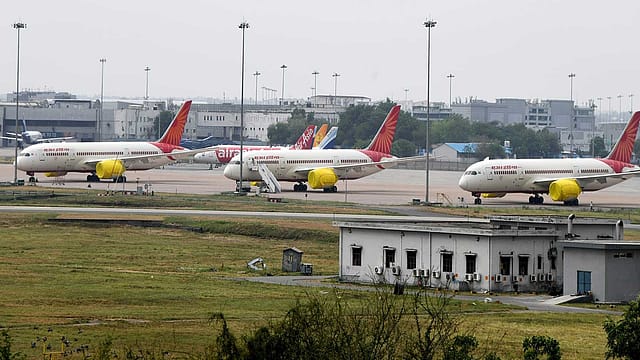
Outgoing Air India CEO Campbell Wilson met senior officials of the Ministry of Civil Aviation (MoCA) and the Directorate General of Civil Aviation (DGCA) on Tuesday, briefing them on the status of the investigation. After the meeting, Wilson offered little detail. “We were just giving an update on the status of the investigation.” He added that it was up to the Civil Aviation Ministry to provide any further update.
The meeting comes a week after Air India flight AI2379, an Airbus A320 operating from Phuket to Delhi, experienced a sudden loss of approximately 300 feet of altitude during cruise on August 4. The aircraft subsequently stabilised and landed safely in Delhi. Reuters reported that the aircraft, registered as VT-EXO, had 145 people aboard and that the incident resulted in injuries to passengers and crew.

Look Who's Talking Regime Change
23 Oct 2026 - Vol 05 | Issue 43
What happened aboard AI2379?
The aircraft was cruising towards Delhi when it suddenly lost altitude. The abrupt movement caused passengers and crew members to be injured. The incident was classified by the authorities as a “Serious Incident”, triggering a formal investigation by the Aircraft Accident Investigation Bureau (AAIB). According to Reuters, investigators secured both the aircraft's Flight Data Recorder (FDR) and Cockpit Voice Recorder (CVR) for examination. Those recordings could be critical in establishing what happened inside the cockpit and how the aircraft responded during the altitude loss. The aircraft itself subsequently completed the flight and landed safely in Delhi.
Why is Airbus joining the investigation?
The investigation is no longer just an airline-regulator exercise. European aircraft manufacturer Airbus has said it is sending specialists to assist the authorities examining the incident. Reuters reported that Airbus is providing technical assistance under the framework of ICAO Annex 13 and is supporting both the airline and the investigating authorities. The Times of India has also reported that France's Bureau of Enquiry and Analysis for Civil Aviation Safety (BEA) is expected to assist the probe alongside Airbus. The involvement of the aircraft manufacturer and the French aviation safety agency adds another layer of technical scrutiny to the investigation.
Is the crew also under scrutiny?
Another development has complicated the investigation. Reuters reported that India's Civil Aviation Ministry said the captain's initial screening for psychoactive substances returned a positive result, prompting further laboratory testing. On Tuesday, The Times of India reported that the pilot-in-command's confirmatory test was also positive, citing sources. The report said the initial test had been “non-negative” and that the subsequent confirmatory test also returned positive. That finding, however, should not be treated as an explanation for the aircraft's altitude loss. The investigation is still underway, and the test result is only one part of a much larger inquiry into what happened aboard AI2379. Reuters separately reported that Indian television channels had reported a positive second test, but Reuters said it had not independently verified those reports.
What is Air India saying?
Air India has so far maintained that it will not comment on investigative findings while the official probe is underway. The airline said the AAIB investigation is being conducted under ICAO Annex 13 and that it would provide all necessary cooperation to the relevant authorities. That means the airline itself is keeping its conclusions close to the chest while investigators examine the available evidence. Wilson's meeting with MoCA and DGCA therefore assumes significance: it comes as regulators seek a clearer picture of the incident and as the airline prepares to hand over whatever information and operational data investigators require.
Why this incident is being watched closely?
The episode comes at a particularly sensitive time for Air India. The airline has been under heightened scrutiny since the June 2025 crash of Air India flight AI171, and aviation safety remains a closely watched issue for the carrier and India's regulators. The Phuket-Delhi incident was very different in nature: the aircraft did not crash, the crew regained control and the flight landed safely. But a sudden 300-foot altitude loss during cruise, injuries aboard the aircraft and the subsequent questions surrounding the crew make the incident serious enough to warrant a detailed investigation.
For now, there are several unanswered questions: What triggered the sudden altitude loss? Was it turbulence, a technical issue, an operational event or something else? And what role, if any, did the flight crew's condition play? Those answers will have to come from the investigation, not speculation. For Air India, the turbulence may have lasted seconds. The questions it has triggered are likely to last much longer.
(With inputs from ANI)