New FASTag local toll pass from November 1: Who qualifies and how much can you save?
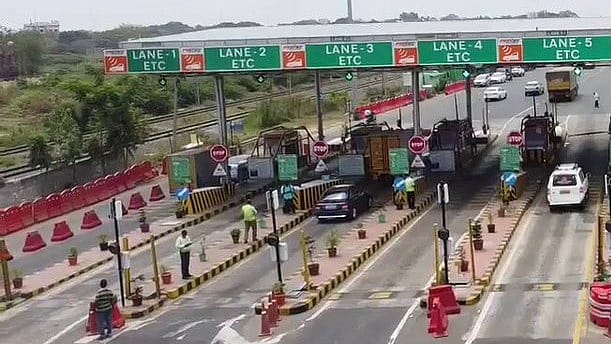
For people who cross the same National Highway toll plaza on their daily commute, toll payments can add up quickly. The government is now offering eligible local residents a cheaper alternative: an annual pass costing ₹1,500 or ₹3,000, depending on the toll plaza’s location.
The Ministry of Road Transport and Highways has notified the new rates under an amendment to the National Highways Fee Rules. The scheme takes effect on November 1, 2026, and is designed to make frequent local journeys more affordable.
How much will the new local toll pass cost?
The annual fee will be ₹1,500 for toll plazas located outside municipal or local town limits and ₹3,000 for plazas within those limits. Eligible residents currently pay ₹360 for a monthly pass, which adds up to ₹4,320 over a year. That means eligible users could save ₹2,820 annually at plazas outside municipal limits and ₹1,320 at plazas within them, assuming the existing monthly rate remains unchanged.

Look Who's Talking Regime Change
23 Oct 2026 - Vol 05 | Issue 43
The government may revise the annual fees every year, with revised rates taking effect from April 1.
Who can apply for the concessional FASTag pass?
The facility is meant for owners of non-commercial vehicles living within a 20-km radius of an eligible toll plaza. Applicants must have a valid, functional FASTag linked to their vehicle.
However, proximity alone does not guarantee eligibility. The concession will not be available where a service road or alternative road is available for the commuter’s use. It is also excluded from National Highways and expressways that use a closed user-fee collection system.
The pass will apply only to the specific toll plaza for which it is issued. It cannot be transferred to another plaza, so motorists who regularly cross several toll points should check the terms carefully before choosing this option.
When and where will the new toll pass be available?
The annual local pass will be available at eligible toll plazas from November 1. The Ministry of Road Transport and Highways has said that the facility will also be accessible through the Rajmargyatra mobile application from December 1, 2026.
The National Highways Authority of India (NHAI) has already been expanding digital access to monthly local passes. A Press Information Bureau release dated August 18 said the online facility had been extended to 121 toll plazas, allowing eligible residents to apply through the app instead of visiting a toll booth to submit documents.
Motorists should check the official Rajmargyatra local-pass portal for eligible plazas and application details.
Is this the same as the nationwide FASTag annual pass?
No. The local pass is different from the nationwide FASTag Annual Pass introduced in August 2025. The latter costs ₹3,075 for 2026–27 and allows eligible private cars, jeeps and vans to make up to 200 crossings at National Highway and National Expressway fee plazas over one year, whichever limit is reached first.
The new local pass, by contrast, offers unlimited crossings at one designated plaza during its validity, subject to eligibility and the notified conditions.
Why has the government introduced the scheme?
The change builds on the expansion of FASTag-based toll collection and existing local-pass arrangements. By offering an annual option, the government aims to reduce the cost and inconvenience faced by residents who frequently cross a nearby toll plaza for work, education or other everyday journeys.
For eligible households, the practical benefit will depend on the toll plaza they use, whether an alternative road is available and how often they travel. Checking those conditions before applying will be essential to making the most of the new concession.
(With inputs from ANI)