Cyclone Arnab alert: Andhra Pradesh braces for severe landfall, Nepal faces flood and avalanche risks
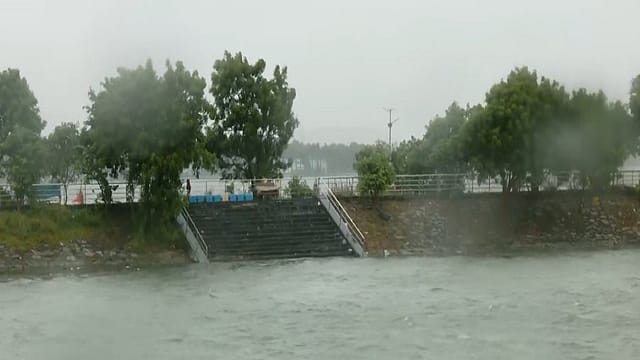
A cyclone gathering strength over the Bay of Bengal is threatening more than India’s eastern coastline. As Cyclone Arnab approaches Andhra Pradesh, forecasters are warning of powerful winds, intense rainfall and rough seas. Hundreds of kilometres away, Nepal is preparing for a different set of dangers: swollen rivers, disrupted transport, heavy mountain snowfall and possible avalanches.
The India Meteorological Department (IMD) has forecast that the very severe cyclonic storm will cross the Andhra Pradesh and Yanam coast between Bapatla and Visakhapatnam, close to Yanam, by the forenoon of Wednesday, October 28. Nepal’s disaster management authorities, meanwhile, have urged people and local administrations to remain on high alert from October 29 to 31.

Look Who's Talking Regime Change
23 Oct 2026 - Vol 05 | Issue 43
Cyclone Arnab landfall: When and where will the storm hit India?
In its latest coastal weather bulletin issued on October 27, the IMD said Cyclone Arnab was expected to move west-north westwards before turning north westwards towards the Andhra Pradesh coast. The forecast placed sustained wind speeds at 115-125 kmph at landfall, with gusts reaching 140 kmph.
The storm intensified into a very severe cyclonic storm early on October 27, according to IMD officials cited by ANI. Its projected landfall zone includes the stretch between Bapatla and Visakhapatnam, near Yanam.
The forecast remains subject to change as the system moves closer to land. Residents in coastal districts should follow the latest IMD bulletins and instructions from local authorities rather than relying on older forecasts.
Heavy rain, port warnings and a fishing ban in Andhra Pradesh
The threat extends beyond wind speeds. Coastal Andhra Pradesh is expected to experience intense rainfall, while Odisha has also been warned of widespread showers, thunderstorms and lightning. The IMD has cautioned that heavy to very heavy rain, including extremely heavy rain in isolated locations, is possible in Odisha on October 28.
Authorities have issued warnings at several Andhra Pradesh ports. According to IMD Cyclone Warning Centre director P. L. N. Murthy, Kakinada was placed under Great Danger Signal 10, Visakhapatnam and Gangavaram under Signal 9, and Machilipatnam and Nizampatnam under Signal 8. Other ports received local cautionary warnings.
Fishermen have been advised not to venture into the sea until the morning of October 30, ANI reported. The warnings reflect the danger posed by rough seas and strengthening winds as the cyclone approaches the coast.
Why is Nepal preparing for Cyclone Arnab’s impact?
The cyclone’s effects are also expected to influence weather conditions in Nepal. In an advisory issued on October 27, Nepal’s National Disaster Risk Reduction and Management Authority (NDRRMA) asked the public, local governments and relevant agencies to remain alert from October 29 to 31.
The authority’s warning draws on a special post-monsoon bulletin from Nepal’s Department of Meteorology. Five provinces, Koshi, Madhesh, Bagmati, Gandaki and Lumbini, are expected to face the most significant impacts on October 30 and 31, including rain, thunderstorms, lightning and strong winds. Heavy rainfall in some locations could trigger localised flooding.
Karnali and Sudurpashchim may also experience rain and thunderstorms, with heavy rainfall possible in isolated places.
Flooding, snowfall and avalanches: What are the risks in Nepal?
The danger is not limited to rain. High-hill and Himalayan areas face the possibility of heavy snowfall, snowstorms and avalanches, potentially affecting remote settlements, trekking routes and transport links.
The NDRRMA has advised tourists to avoid travelling to high-altitude areas during the alert period. People already in vulnerable locations have been urged to remain in safe places, while residents near rivers should avoid flood-prone areas. Travellers have also been advised to avoid non-essential journeys because road and air services could be disrupted.
The Kathmandu Post reported earlier that meteorologists were warning of a wider spell of unsettled weather across Nepal, with the potential for rainfall and snowfall after the monsoon’s withdrawal.
As Cyclone Arnab approaches India’s coast, both countries face different but connected weather risks. The immediate priority is to monitor official forecasts, heed local safety instructions and avoid exposed coastal or high-altitude areas until conditions improve.
(With inputs from ANI)