AI Summit 2026: How the Indian Army Is Using AI to Transform Engineering Support
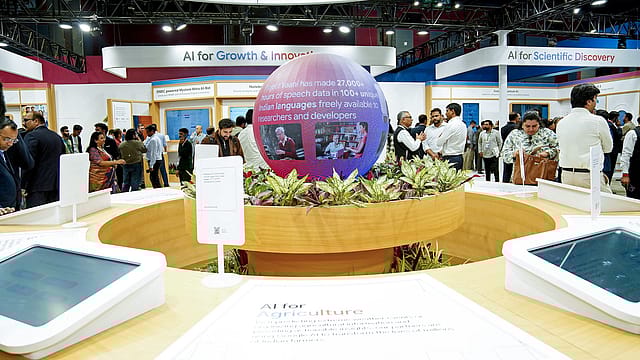
The Indian Army on Wednesday held a high-level seminar on “Engineering Support for the Indian Army: Smartising the Kill Chain” during the AI Impact Summit 2026 at Bharat Mandapam, bringing together senior military leaders, industry experts, and academics to explore how artificial intelligence can transform operational readiness.
The discussions focused on using AI to strengthen equipment reliability, enhance logistics efficiency, and modernise legacy platforms through predictive maintenance and intelligent data systems.
The initiative aimed to improve operational precision, speed, and mission effectiveness across the entire kill chain, from deployment to recovery.
How can AI convert vast sensor data into actionable intelligence?
The keynote address was delivered by Rajiv Kumar Sahni, Director General of Electronics and Mechanical Engineers, who outlined how AI can convert vast sensor data into actionable intelligence, anticipate emerging threats, and upgrade traditional weapon systems into smart, data-enabled platforms.

Look Who's Talking Regime Change
23 Oct 2026 - Vol 05 | Issue 43
He emphasised the importance of advanced analytics and predictive interventions to energise operational logistics and strengthen engineering support. He also highlighted the integration of AI into unmanned aerial systems, counter-drone technologies, and robotic platforms to ensure a decisive edge in future conflicts.
The seminar featured expert inputs from Mr Biswajit Biswas of Tata Elxsi, Sreeram Ananthasayanam of Deloitte India, and Prof Sashikumaar Ganesan from the Indian Institute of Science. They shared insights on scalable AI systems, governance frameworks, reliability modelling, and the application of mission-critical technologies.
What were the major themes discussed?
Deliberations were organised around four major themes: smartisation of legacy platforms using sensors and data pipelines, AI-driven predictive and prescriptive maintenance, adoption of niche technologies such as digital twins and anomaly detection, and strengthening industry-academia collaboration for secure and scalable solutions.
Participants examined how AI can reinforce every stage of the kill chain by embedding intelligence into engineering and logistics systems.
The focus was on improving equipment availability through real-time condition monitoring, reducing downtime via predictive alerts, and sustaining operational tempo without excessive capital expenditure.
The seminar also highlighted the integration of equipment health dashboards into command decision-making, enabling real-time visibility of readiness across formations.
Emphasis was placed on shifting from reactive repairs to predictive engineering through optimised spares provisioning, pre-positioning of resources, AI-enabled demand forecasting, and real-time asset tracking.
Concluding discussions reaffirmed the Indian Army’s commitment to technological modernisation, indigenous innovation, and structured collaboration with industry and academia.
The leadership reiterated its resolve to strengthen engineering support architecture and deploy scalable AI solutions aligned with national priorities.
(With inputs from ANI)