AI Can Protect Ships—and Target Them: Jaishankar Flags Maritime Risks at UN
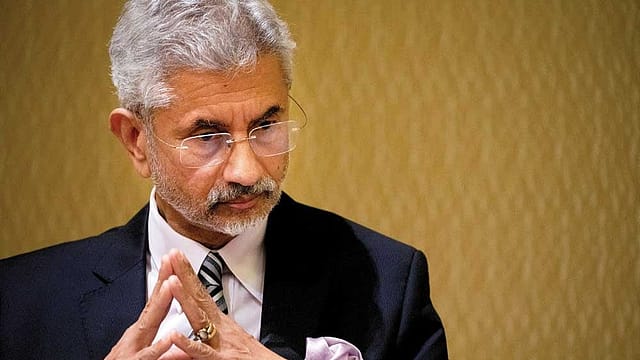
Artificial intelligence can help rescue people at sea, detect suspicious activity and protect ports. It can also help identify vulnerabilities and target vessels, communication networks and undersea infrastructure, External Affairs Minister S Jaishankar warned in New York on Friday.
Speaking at an event on AI and international peace and security on the sidelines of the 81st United Nations General Assembly, Jaishankar called for an approach that encourages innovation while anticipating its security consequences.
He co-chaired the discussion, which focused on maritime security, with Greek Foreign Minister George Gerapetritis.
“Emphasised the need to harness the possibilities offered by AI, anticipate its consequences and mitigate its risks. This calls for an approach that enables innovation while remaining conscious of its security implications,” Jaishankar wrote on X after the event.

Zeroing In on ECI
09 Oct 2026 - Vol 05 | Issue 41
Constitutional legitimacy versus political opportunism
Faster Decisions, Harder Questions
Jaishankar identified maritime surveillance, search and rescue, disaster response and the protection of ports and critical infrastructure as areas where AI could strengthen security.
The same technology, however, could enable sophisticated reconnaissance, vulnerability mapping and cyber operations against ships and maritime networks.
He also warned that growing autonomy in maritime systems raises questions about identifying responsibility, ensuring accountability and managing escalation, while leaving less time for decisions.
“Underlined that increasing autonomy in maritime systems raises questions of attribution, accountability & escalation, while also compressing decision making time,” he said.
Jaishankar pointed to the UN Charter and international law, including the law of the sea, as essential frameworks governing state conduct. He called for greater transparency, confidence-building, technical cooperation, capacity development and the exchange of best practices.
Access, Trust and Human Capabilities
Outlining India’s approach to AI, Jaishankar said the New Delhi Declaration emphasised democratic access to AI resources, secure and trustworthy systems, investment in human capabilities and the use of technology for economic growth and social good.
He reaffirmed that AI and maritime security remained priorities for India at the United Nations.
His remarks placed the potential benefits of AI alongside the need to manage how it is deployed, particularly where autonomous systems could affect security decisions at sea.
India Welcomes GCC Trade Negotiations
In a separate engagement, Jaishankar co-chaired the India-Gulf Cooperation Council Troika Ministerial Meeting and welcomed the launch of negotiations for an India-GCC Free Trade Agreement.
The meeting reviewed progress under the India-GCC Joint Action Plan 2024–28 and explored ways to deepen the partnership.
Jaishankar identified trade, investment, energy, food security, health, new technologies, culture and people-to-people exchanges as areas for closer cooperation. He also thanked the GCC leadership for supporting the Indian community.
Maritime security featured in those discussions as well.
“Reiterated our strong commitment to freedom of navigation and safety of seafarers & commercial shipping,” he said.
Cybercrime Convention Signed, Lavrov Talks Held
Jaishankar also signed the United Nations Convention against Cybercrime on the sidelines of the General Assembly.
“This Convention strengthens international cooperation for a safer digital future,” he said in a post announcing the signing.
In another meeting, he held talks with Russian Foreign Minister Sergey Lavrov, exchanging views on ongoing international issues and reviewing bilateral ties and cooperation within BRICS.
“A good meeting with FM Sergey Lavrov of Russia today,” Jaishankar wrote. “Exchanged views on a number of ongoing issues. Also took stock of our bilateral and BRICS cooperation.”
With inputs from ANI