After-Hours Work in Focus as India Debates Right to Disconnect
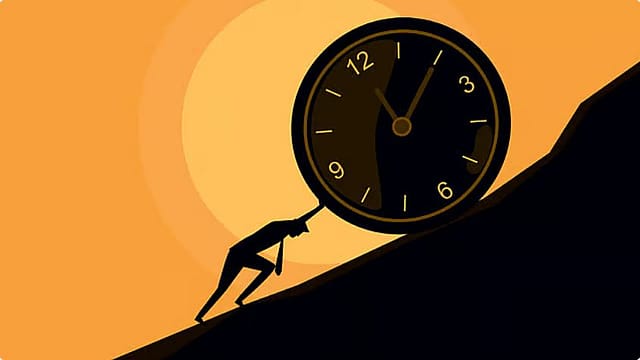
At 9.30 pm on a weekday, the Indian workday now has a habit of pretending it isn’t over. A Slack message arrives with no greeting. A WhatsApp ping lands. The phrasing is casual—just checking, whenever you get a chance—but the demand is precise: be available, be responsive, be on. In India, where work has always spilled messily into life, the spill has turned digital and permanent. It is against this low-grade invasion that the idea of a legal right to disconnect has begun to surface, almost as an embarrassed attempt to put the clock back where it used to be.
The first serious Indian attempt came from Kerala, which in November 2025 proposed a right to disconnect for IT employees, framing it as a mental-health safeguard rather than a productivity revolt. More recently, the idea moved into national view when Supriya Sule introduced a private member’s bill in Parliament, seeking to formally recognise an employee’s right not to engage with work communications outside prescribed hours. The move touched a nerve because it named something millions of workers experience but rarely articulate: the erosion of time that once belonged, unquestioned, to oneself.
Zeroing In on ECI
09 Oct 2026 - Vol 05 | Issue 41
Constitutional legitimacy versus political opportunism
That erosion is not evenly distributed. Constant availability falls hardest on those with the least room to refuse—junior employees, women juggling paid work with unpaid care, and those whose commitment is still being evaluated. In many offices, silence is read not as rest but as attitude. The expectation to respond, even when unofficial, becomes a test of loyalty.
India is late to this conversation. The right to disconnect has been circulating globally for nearly a decade, first codified in France, where companies above a certain size must negotiate after-hours communication norms. Variations followed across Europe—in Belgium, Spain, Italy, Portugal, and Slovenia—and more recently in Australia, whose 2024 amendment allows employees to refuse unreasonable after-hours contact, with disputes overseen by an industrial tribunal.
What these laws reveal, however, is not a clean victory of labour over capital, but a series of compromises with modern work itself. Study after study shows that they do not stop messages from being sent. The email still arrives. The phone still lights up. But, in workplaces with formal disconnect policies, after-hours pings are less likely to spiral into unpaid additional work. Compensation becomes clearer and availability is no longer automatic.
Technology, of course, is not neutral in this story. Work platforms are built to remember, to follow up, to signal delay. Read receipts, online status dots, automated nudges—these small design choices turn response time into character. The tools do not demand urgency outright; they imply it. Over time, the implication hardens into expectation.
This distinction matters for India, where work has long operated on elasticity, stretching late, compressing early, bending around crisis and opportunity. From factory floors to family businesses to the IT boom, the boundary between work and life has always been porous. The pandemic digitised overwork, with work-from-home dissolving spatial boundaries, and cheap data dissolving temporal ones. The phone became the office.
Critics of the Indian bills argue that a right to disconnect is either unenforceable or irrelevant in an economy built on global clients and time-zone arbitrage. How does one “disconnect” when your customer wakes up as you go to sleep? Others point out—correctly—that such protections do little for India’s vast informal workforce, where hours are fluid, safeguards thin, and off-time has never been guaranteed. These limits are real. But they do not make the question frivolous. They make it incomplete.
In much of Europe, the right to disconnect remains a framework right. Where it works better, it is tied to working-time laws and backed by clear arbitration, not moral appeals. The Indian proposals are unlikely to pass quickly, or cleanly. Yet they mark something new. For the first time, Indian law is attempting to describe exhaustion not as individual weakness, but as a structural flaw.
To know when work ends is not to reject work. It is to make it legible again.