Aadhaar 2.0: How UIDAI Is Reinventing Digital Identity
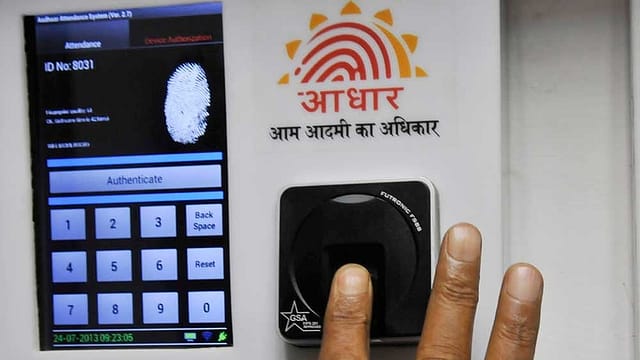
India’s new Aadhaar mobile application is being positioned as a major step towards secure, paperless identity verification. Designed around data minimisation and user consent, the app aims to reduce fraud while making digital services more accessible across the country.
What Is the New Aadhaar App and Why Was It Introduced?
Speaking on the sidelines of the Bharat Fintech Summit, UIDAI Deputy Director General Vivek Chandra Verma said the new Aadhaar app will simplify identity verification while strengthening security and privacy safeguards.
The platform is designed to reduce dependence on physical documents and minimise risks linked to identity misuse. It aligns with the upcoming Digital Personal Data Protection (DPDP) Act, which requires organisations to collect only essential personal information.

Losing Memory
16 Oct 2026 - Vol 05 | Issue 42
The making of a medical and social emergency
“Aadhaar does not always mean sharing all attributes. Even two or three attributes, like name or photograph, may be sufficient. The data shared is e-signed, verified and comes directly from Aadhaar, ensuring authenticity while reducing compliance burden for companies,” Verma said.
He added that limited data collection also helps businesses reduce cybersecurity risks and their responsibilities as data fiduciaries under the DPDP framework.
How Data Minimisation and Consent Work in Practice
The app follows the principle of data minimisation, meaning only necessary information is shared for a specific purpose. Users can see who is requesting their data, why it is needed, and decide whether to approve the request.
“The basic objective is to make life easier and more convenient moving from paper to paperless,” Verma said.
Explaining the consent-based process, he noted, “With QR-code-based identity sharing, users no longer need to carry or submit photocopies of Aadhaar cards. When you check into a hotel, you scan the QR code, see who is requesting the data and for what purpose, and provide consent. Only after the Aadhaar holder agrees does the information get shared.”
This approach reduces the risk of misuse associated with physical copies and ensures greater transparency in data sharing.
Expanding Access in Rural and Smaller Towns
UIDAI is also focusing on increasing adoption in tier-3, tier-4 towns and rural regions. India currently has over 142 crore Aadhaar holders, with 123 crore linked to mobile numbers and more than 80 crore smartphones in circulation.
To address limited device access in some households, UIDAI has introduced a ‘one app, multiple profiles’ feature, allowing up to five Aadhaar profiles on a single smartphone.
“Even if a family has one smartphone, all members can use Aadhaar services,” Verma said.
Users can now update their Aadhaar details from home within minutes, lock or unlock biometrics instantly, and manage identity information for multiple family members on one device.
Strengthening Trust and Preventing Identity Fraud
Verma said the app marks a shift from physical documents to secure digital verification, significantly improving reliability.
“A physical Aadhaar card can be tampered with or duplicated. But digital verification immediately flags incorrect or fraudulent data,” he said.
He added that the app increases trust in identity verification “by a factor of 10” and sharply reduces the chances of impersonation and document forgery.
According to Verma, UIDAI’s central database has not suffered any data breach in over 16 years of operation. He noted that most misuse occurs when people share physical copies without safeguards.
“With DPDP in place, entities will be legally bound to safeguard digital data and report breaches. There will be accountability,” he said.
Role of Artificial Intelligence in Aadhaar Security
Artificial Intelligence is also being integrated to strengthen system security. Verma explained that AI is being used for fraud detection, liveness checks, and risk modelling.
“AI is being used by UIDAI to enhance security, including fraud detection, liveness checks and risk modelling. It will augment Aadhaar's usage, not compromise it. AI systems operate within defined legal and technical guardrails,” he said.
He also underlined that strict boundaries remain in place. “Aadhaar app has clear boundaries. Offline verification cannot be performed on behalf of another person. Purpose limitation and registration are mandatory,” Verma said.
What the New Aadhaar App Ultimately Means
Overall, the new Aadhaar app represents a shift towards privacy-first, consent-driven digital governance. By combining data minimisation, AI-powered security, and easy access, UIDAI aims to create a more trustworthy and user-friendly identity ecosystem.
As India prepares to implement the DPDP Act, the app is expected to play a central role in balancing innovation, convenience, and data protection.
(With inputs from ANI)