Toxic OTT rights crash | From ₹200 Crore to ₹30 Crore: Have streaming platforms stopped saving flop films?
A film can lose an audience twice. First in the cinema. Then in the spreadsheet.
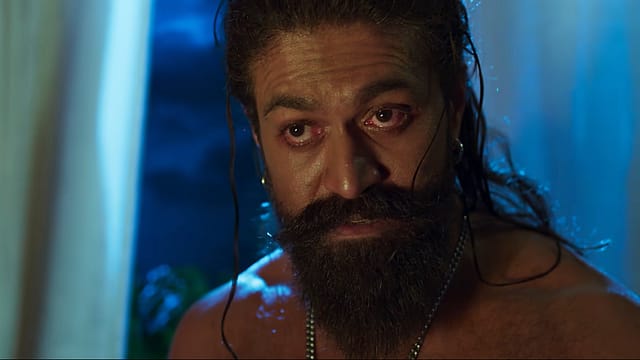
Toxic: A Fairytale for Grown-Ups arrived carrying Rocking Star Yash’s first leading role after the KGF phenomenon, a reported budget approaching ₹500 crore and the assumption that streaming platforms would pay handsomely for the digital afterlife of one of India’s biggest stars.
Its makers reportedly expected as much as ₹200 crore for the OTT rights. A pre-release offer of approximately ₹150 crore was allegedly rejected in the hope of securing a richer agreement.
Then the film reached theatres.
After a strong opening, collections reportedly fell sharply amid poor reviews and negative word of mouth. Its digital rights remain unsold, according to media reports, and the available OTT offer may now be only ₹30 crore.

Losing Memory
16 Oct 2026 - Vol 05 | Issue 42
The making of a medical and social emergency
No platform or producer has publicly confirmed those negotiations. The figures must therefore be treated as reported estimates rather than a completed transaction.
If the reported figures are accurate, there is now a ₹170-crore gap between the makers' reported ₹200-crore expectation and the reported ₹30-crore offer.
That drop tells a story much larger than one failed film.
For years, OTT rights allowed producers to recover a significant share of a movie’s budget before audiences delivered their verdict. Streaming platforms competing for subscribers paid premiums for stars, franchises and pan-India spectacles.
The cinema hall has now become the valuation room. A theatrical flop can no longer assume that streaming will pick up the bill.
What Happened to the Toxic OTT Deal?
The reported negotiations began when Toxic was still being priced as Yash’s successor to KGF: Chapter 2.
A major streaming platform reportedly offered around ₹150 crore for the digital rights before release. The makers are believed to have sought ₹200 crore, expecting Yash’s popularity and the film’s multilingual appeal to create a bidding contest.
Holding out can be profitable when a film becomes a theatrical blockbuster. Its box-office performance strengthens the producer’s negotiating position and can drive the OTT price higher.
Toxic appears to have made the opposite journey.
Its reported ₹30-crore offer represents an 80 per cent fall from the alleged ₹150-crore pre-release proposal and an 85 per cent reported reduction in offer value to the ₹200-crore expectation.
For platforms, the theatrical run provides a new piece of information: how audiences responded when asked to pay for the film.
The digital valuation is now being determined by demand rather than anticipation.
Why Did OTT Platforms Once Pay So Much?
India’s streaming boom created an expensive contest for attention.
Netflix, Amazon Prime Video, Disney+ Hotstar, ZEE5, SonyLIV and other platforms needed large libraries, regional depth and films capable of making subscribers open their apps.
South Indian cinema became particularly valuable. The success of Telugu, Tamil, Kannada and Malayalam films across state and language boundaries weakened the old assumption that “national” entertainment had to originate in Hindi.
In 2022, Reuters reported that Netflix was expanding aggressively into southern Indian languages as films from the region captured a growing share of the country’s box office.
Competition allowed producers to sell digital rights at extraordinary valuations.
A blockbuster could recover money from theatres, satellite television, music, overseas distribution and streaming. In some cases, pre-release rights reduced the producer’s financial exposure long before the film opened.
OTT became cinema’s safety net. It also distorted the economics.
Films were sometimes budgeted on the assumption that a streaming platform would absorb a large part of the cost. Star fees and production spending rose. Producers could celebrate a profitable pre-release business even if the finished movie had not faced an audience.
The streamers were buying films. They were also underwriting optimism.
Which Indian Films Secured the Biggest Reported OTT Deals?
A warning is essential before any ranking.
Streaming platforms and producers rarely disclose complete contract values. Reported figures may combine different languages, territories, platforms or release windows. Some include only post-theatrical streaming rights; others may form part of larger digital arrangements.
A ₹300-crore combined multilingual deal split across two platforms is not directly comparable with a ₹275-crore single-platform acquisition.
The following figures are widely reported estimates, not independently audited disclosures.
1. Kalki 2898 AD — Reportedly ₹375 Crore
The digital rights to Prabhas-starrer Kalki 2898 AD were reportedly sold for approximately ₹375 crore across Netflix and Amazon Prime Video.
The film’s different language versions were divided between platforms, making the total a combined digital-rights figure rather than one streamer writing a ₹375-crore cheque.
Its star cast, enormous budget, science-fiction scale and multilingual positioning gave platforms access to several large audiences through one property.
2. RRR — Reportedly ₹325 crore in combined digital and satellite rights
The digital rights associated with SS Rajamouli’s RRR were reportedly worth approximately ₹325 crore across platforms and languages.
Netflix carried the Hindi version, while other language rights went elsewhere. The film subsequently became an international streaming phenomenon, with its reach extending far beyond the Indian diaspora.
That global afterlife demonstrated the upside of acquiring the right film in the right language. Streaming did more than monetise RRR after theatres; it introduced the film to audiences that might never have encountered a three-hour Telugu historical epic in cinemas.
3. KGF: Chapter 2 — Reportedly ₹320 Crore
Toxic becomes particularly striking when placed beside Yash’s previous release.
The digital rights to KGF: Chapter 2 were reportedly valued at approximately ₹320 crore. The exact commercial terms were never publicly confirmed, but the size of the reported deal reflected the franchise’s extraordinary anticipation.
If Toxic ultimately sells for ₹30 crore, the reported digital-rights valuation of Yash's latest film would be more than 90 per cent below the reported ₹320-crore figure for KGF: Chapter 2.
That does not mean Yash himself has lost 90 per cent of his value.
It means platforms distinguish between purchasing a phenomenon and purchasing the actor who once led it.
KGF was the property. Yash was its face. Toxic has tested whether the face could carry the same valuation into another universe.
4. Pushpa 2: The Rule — Reportedly ₹275 Crore
Netflix reportedly acquired the digital rights to Allu Arjun’s Pushpa 2: The Rule for approximately ₹275 crore.
Unlike combined deals divided among several services, Pushpa 2 was widely presented as one of India’s largest single-platform digital acquisitions.
The value rested on a proven franchise, Allu Arjun’s national popularity and the enormous reach of the first film after its streaming release.
The platform was not purchasing a promise alone.
It was purchasing an audience whose appetite had already been measured.
5. Adipurush — Reportedly ₹200 Crore
The reported ₹200-crore digital deal for Adipurush demonstrates the older safety-net model.
The film faced intense criticism after release and underperformed against its budget and expectations. Yet its streaming rights had reportedly been sold for a huge amount before the theatrical verdict.
That protection is precisely what Toxic appears to have missed.
Had its makers accepted the alleged ₹150-crore offer before release, the film’s digital value would have been secured while expectation remained intact. By waiting, they allowed the box office to reprice it.
6. Salaar: Part 1 — Reportedly ₹160-162 Crore
The digital rights to Prabhas-starrer Salaar: Part 1 — Ceasefire were reportedly valued at approximately ₹160 crore across languages and platforms.
The deal benefited from director Prashanth Neel’s post-KGF reputation, Prabhas’s reach and the possibility of building another franchise.
Its value illustrates why sequels, cinematic universes and directors with blockbuster histories command premiums. Streamers are buying future familiarity as much as one film.
7. Jailer 2 — Reportedly ₹160 Crore
Rajinikanth’s Jailer 2 has reportedly secured a digital-rights agreement worth around ₹160 crore before its theatrical release.
The number remains a reported estimate. If accurate, it demonstrates that large pre-release cheques have not disappeared entirely.
Platforms will still bet heavily on stars and franchises when audience demand appears dependable. What has changed is their willingness to treat every expensive film as a guaranteed event.
8. Devara: Part 1 — Reportedly ₹150-155 Crore
The digital rights to Jr NTR’s Devara: Part 1 were reportedly sold to Netflix for between ₹150 crore and ₹155 crore.
Jr NTR’s international visibility after RRR, combined with the film’s multilingual release, strengthened its digital proposition.
The deal again shows the importance of portability: a film becomes more valuable when a platform believes it can travel across Indian languages and international markets.
9. Singham Again — Reportedly ₹130 Crore
Amazon Prime Video reportedly acquired the digital rights to Singham Again for approximately ₹130 crore.
The attraction was obvious: Rohit Shetty’s established police universe, a large ensemble cast and characters already familiar to audiences.
Franchise recognition reduces the platform’s marketing burden. The subscriber does not need to be taught what the film is.
10. Jawan and Leo — Reportedly ₹120 Crore Each
The digital rights to Shah Rukh Khan’s Jawan and Vijay’s Leo were each reportedly valued at around ₹120 crore.
Both films combined major stars with directors carrying strong audience identities. Both also possessed multilingual or cross-regional appeal.
Their theatrical success subsequently validated the platforms’ bets.
11. Pathaan — Reportedly ₹100 Crore
Amazon Prime Video reportedly paid approximately ₹100 crore for Pathaan.
The film marked Shah Rukh Khan’s return to a leading action role and extended Yash Raj Films’ spy universe. Its blockbuster theatrical performance preserved its value when it moved online.
12. Toxic — ₹30 Crore Reportedly Offered
Toxic does not belong near these films because it has completed a record transaction.
It belongs here because it exposes what happens when a record expectation meets a disobedient audience.
The streaming rights reportedly remain unsold.
The ₹30 crore is an alleged offer, not a final deal. Yet it places the film at less than one-tenth of the reported digital valuation of KGF: Chapter 2.
No comparison explains the new OTT economy more brutally.
What Are the World’s Biggest Streaming Film Deals?
Global streaming deals require a separate list.
Hollywood acquisitions frequently include worldwide ownership, sequel-production rights or films originally intended for theatres. Several of the largest cheques were written during the pandemic, when closed cinemas gave studios an incentive to sell completed blockbusters to streaming platforms.
They cannot be compared directly with post-theatrical Indian digital licences.
But they reveal how much platforms were once willing to spend to win the streaming war.
1. Two Knives Out Sequels — $450 Million
Netflix reportedly paid approximately $450 million for the rights to produce and distribute two sequels to Rian Johnson’s Knives Out.
The transaction covered far more than the streaming window of a completed film. It secured two movies, a successful mystery franchise, Johnson’s involvement and Daniel Craig’s return as detective Benoit Blanc.
Variety described it as one of the largest film agreements of the streaming era.
Netflix was buying a franchise that could function as its own theatrical-style event without permanently belonging to a conventional studio.
2. The Tomorrow War — Approximately $200 Million
Amazon reportedly paid around $200 million for The Tomorrow War, the Chris Pratt science-fiction action film originally intended for theatrical distribution.
The acquisition occurred during the pandemic, when studios were searching for alternatives to delayed cinema releases and streamers were competing for ready-made blockbusters.
The figure was never formally disclosed, but was widely reported during negotiations. Variety described the $200-million price as the market expectation surrounding the deal.
3. Coming 2 America — $125 Million
Amazon acquired Coming 2 America from Paramount for a reported $125 million.
The comedy sequel offered Eddie Murphy, a recognisable title and decades of nostalgia. It also arrived when Covid had disrupted the global theatrical business.
The transaction illustrates how pandemic-era streaming platforms became emergency buyers for studios holding costly films they could not release normally.
4. Emancipation — Approximately $105 Million
Apple reportedly paid more than $100 million for Emancipation, the historical drama starring Will Smith and directed by Antoine Fuqua.
The agreement emerged from a competitive acquisition market in which Apple was using premium films and major stars to establish Apple TV+ as a prestige destination.
5. Greyhound — Approximately $70 Million
Apple reportedly acquired worldwide streaming rights to Tom Hanks’s Greyhound for approximately $70 million after its planned theatrical release was disrupted by the pandemic.
The film delivered precisely what a young streaming platform needed: a major star, accessible genre and finished production capable of becoming an immediate global premiere.
6. CODA — $25 Million
Apple bought CODA for $25 million after a bidding war at the Sundance Film Festival.
In pure dollar terms, it appears modest beside Knives Out or The Tomorrow War.
In impact, it may be the smartest acquisition on the list.
CODA went on to win the Academy Award for Best Picture, making Apple the first streaming service to claim Hollywood’s most prestigious film prize. Variety confirmed the reported acquisition price.
Apple did not buy the most expensive film.
It bought the film that changed how the industry perceived its platform.
7. Hit Man — $20 Million
Netflix acquired Richard Linklater’s Hit Man for approximately $20 million following its festival appearances.
The sum was far below the pandemic’s largest blockbuster cheques, but the purchase gave Netflix a critically admired completed film starring Glen Powell. The Associated Press described it as the biggest sale from the 2023 Toronto International Film Festival.
The comparison with Toxic is instructive.
The reported ₹30-crore offer for Toxic translates to only a fraction of $20 million despite its vast budget and superstar lead. A film’s production cost does not determine what a streaming service believes audiences will pay—or stay—for.
Why Are OTT Platforms Becoming More Cautious?
The objective of the streaming business has changed.
During the land-grab phase, platforms were rewarded for acquiring subscribers. Content spending created growth, and growth justified further spending.
Apparently, the major platforms now possess enormous libraries and years of audience data. Investors increasingly expect sustainable profits rather than subscriber expansion at any cost.
A platform can measure how many people begin a film, how many finish it, whether it attracts new subscribers, which stars travel across languages and whether the title prevents existing customers from cancelling.
Fame can be tested against behaviour. That makes negotiations more unforgiving.
An actor may command millions of social-media followers without generating equivalent viewing hours. A film may produce a spectacular opening weekend before collapsing. A franchise may travel across languages while an equally expensive standalone movie remains dependent on one region.
Streaming platforms no longer need to guess all of this. The audience has already supplied the data.
How Is the Box Office Changing OTT Prices?
Many streaming agreements are reportedly becoming conditional.
Instead of guaranteeing one large amount before release, a platform may link the final price to theatrical collections, delivery schedules, audience response or the length of the cinema-to-streaming window.
The arrangement protects the streamer when a film fails and rewards the producer when it exceeds expectations.
It also destroys the fantasy that theatres and OTT are unrelated markets.
A successful cinema run creates conversation, search interest and cultural urgency. Viewers who missed the film may wait for its digital premiere. Those who watched it may return. The theatrical campaign has already done part of the platform’s marketing.
A failed film arrives online carrying reputational damage. OTT can extend a movie’s reach. It cannot erase what audiences have heard about it.
Can Toxic Still Find a Better Deal?
Possibly. Its makers are reportedly considering a revised version for streaming, potentially changing the edit to make it more suitable for home audiences and strengthen negotiations.
Yash remains one of Indian cinema’s most recognisable stars, and curiosity alone may produce a substantial opening on whichever platform eventually acquires the film.
But reach and price are separate questions.
A platform may want Toxic while refusing to pay the amount its producers expected before release. The film can still become widely watched without becoming financially restorative.
A poor theatrical performer may even generate strong initial streaming numbers as audiences sample at home what they declined to buy in cinemas. The crucial questions are how many complete it, whether it attracts or retains subscribers and whether that engagement justifies the acquisition cost.
Views do not automatically rescue a balance sheet.
Has OTT Stopped Buying Flops?
No. Streaming platforms will continue acquiring films that struggled theatrically. Some genres work better at home. Marketing failures can conceal good movies. A small theatrical release may acquire a global audience online.
What has weakened is the assumption that a costly flop deserves an equally costly digital deal.
Platforms are no longer paying producers according to how much they spent. They are estimating how much value the finished film can create.
That distinction changes filmmaking itself.
If OTT revenue can no longer guarantee recovery, producers may have to control budgets, reconsider star fees and test whether a project possesses an audience beyond opening-weekend hype.
The streaming correction could therefore impose the discipline that the streaming boom helped remove.
The Second Box Office
For years, producers treated OTT as a second revenue window.
It has become a second box office.
There are no visible queues, cheering fans or occupancy boards. The judgement occurs through completion rates, subscriber behaviour, churn and algorithms.
That box office can turn an overlooked film into an international discovery. It can also tell a superstar that his expensive new release is worth a fraction of what his previous franchise commanded.
Toxic reportedly wanted ₹200 crore. The market may be offering ₹30 crore. That is more than a negotiation gap. It is the price of discovering that OTT no longer exists to rescue cinema from its audience.
(With inputs from agencies)