Prahaar: The Untold Ujjwal Nikam Story Finds Its Strength in the Trauma of 26/11
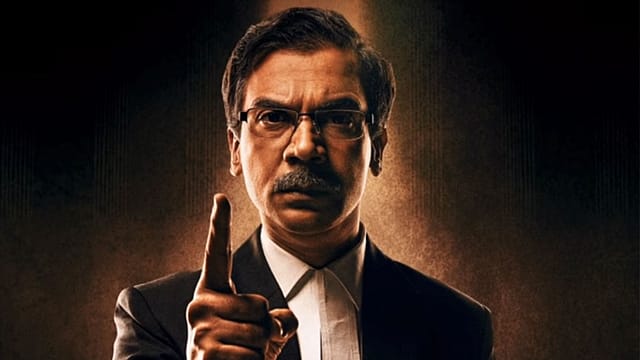
I am convinced Jaideep Ahlawat is cast by filmmakers who have trouble believing their own material. Watching him smile wearily in Prahaar: The Ujjwal Nikam Story while he explains the difference between rhetoric and reality in Pakistan, which is announcing they will do something and actually doing it, is the cinematic equivalent of an ISI mark (by which I do mean the Pakistani ISI).
Ahlawat is Zulfiqar Ali, the investigating officer for the Pakistani state who becomes friends with Ujjwal Nikam (an efficient Rajkummar Rao), the public prosecutor representing the state of Maharashtra versus Ajmal Kasab (a dead-eyed Lalit Prabhakar), the lone terrorist who survived the 26/11 attacks on Mumbai in 2008.
Ahlawat almost makes us believe the premise of the film: which is a gift that keeps on giving in Bollywood. That Pakistan is a failed nation and India is an upright country where the rule of law is paramount. The distinction is made in the usual binaries: sabhya, asabhya (civilised, uncivilised); insaniyat, jahiliyat (humanity, barbarism). That said, Prahaar: The Ujjwal Nikam Story is effective in establishing the emotional damage caused by the 26/11 carnage brought to life effectively on screen.

Losing Memory
16 Oct 2026 - Vol 05 | Issue 42
The making of a medical and social emergency
The courtroom exchanges between Rao and Sikander Kher (Kasab’s counsel) are tense while the scenes with Kasab in his cell recounting his radicalisation and the personal battles offer some relief. The testimonies of survivors are excruciating to watch, especially a ten year old Farzeen (Diorr Varghese). What may have meant to be a hagiography has served the purpose of reminding us of the importance of our democracy, and of its sustenance.