‘The Actor’s Whisperer’: How Mark Rydell Turned Performances Into Oscar Gold
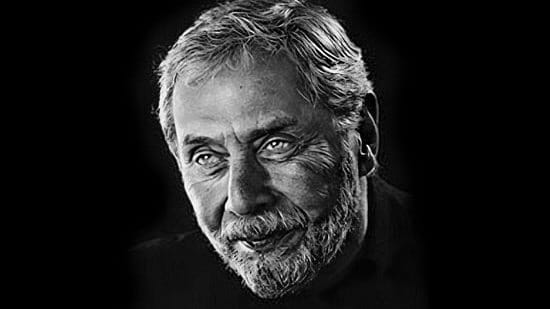
Bette Midler called him “the actor’s whisperer.” Three words that perhaps explain Mark Rydell better than a long list of films ever could.
Rydell, the Oscar-nominated director behind On Golden Pond, The Rose and For the Boys, has died at 97. But look back at his career and something striking emerges. Henry Fonda won an Oscar. Katharine Hepburn won an Oscar. Jane Fonda earned a nomination. Bette Midler earned two.
And again and again, Rydell was sitting in the director’s chair. “He taught me so much,” Midler wrote in a tribute announcing his death, recalling the man who directed her first film, The Rose, and later reunited with her for For the Boys. “Two Oscar nominations both because of him,” she wrote. “He was the actor’s whisperer; just a few words was all it took to understand what was needed.”

Rise of the Pivotal Power
18 Sep 2026 - Vol 05 | Issue 38
The BRICS declaration is a strategic victory for Modi
Why ‘the actor’s whisperer’ fits
Rydell's films weren't necessarily built around spectacle. They were built around people. In The Rose, Midler made her screen debut as a self-destructive rock singer and earned a Best Actress Oscar nomination. Rydell also directed Marsha Mason to a nomination in Cinderella Liberty, Sissy Spacek in The River, and Rupert Crosse to a supporting-actor nomination for The Reivers.
But his defining achievement came in 1981. Then came ‘On Golden Pond.’ Adapted from Ernest Thompson's play, On Golden Pond was a deeply personal story about ageing, marriage and fractured family relationships. It became Rydell's biggest screen success. The film was nominated for Best Picture, while Rydell received his only Academy Award nomination for Best Director.
But once again, it was what happened to his actors that stood out. Henry Fonda won the Best Actor Oscar for what would become his final starring role. Katharine Hepburn won Best Actress, her record fourth acting Oscar. Jane Fonda, appearing alongside her father in their only film together, was nominated for Best Supporting Actress. Thompson won the Oscar for adapted screenplay. Rydell didn't win. His actors did.
Before directing actors, he was one
Perhaps that explains some of his touch. Born Mortimer H Rydell in New York, he studied at the Juilliard School of Music and trained as an actor at the Neighborhood Playhouse and Actors Studio. He appeared on Broadway and supplemented his income by playing jazz piano. Television followed. For six years, Rydell appeared in the soap opera As the World Turns, before working in other TV shows and eventually moving behind the camera. After directing for television, he made the leap to movies in the late 1960s with an adaptation of DH Lawrence's The Fox. A career spent being directed had turned into one spent directing others.
And Rydell seemed to understand something about actors that couldn't easily be taught. Bette Midler's tribute captures it beautifully. He didn't need a long speech. Sometimes, she said, “just a few words” were enough. For a filmmaker whose greatest gift may have been knowing exactly what to say to an actor, that feels like a fitting final review.
(With inputs from ANI)