When music meets politics: Why Ed Sheeran's tour controversy is part of a much bigger story
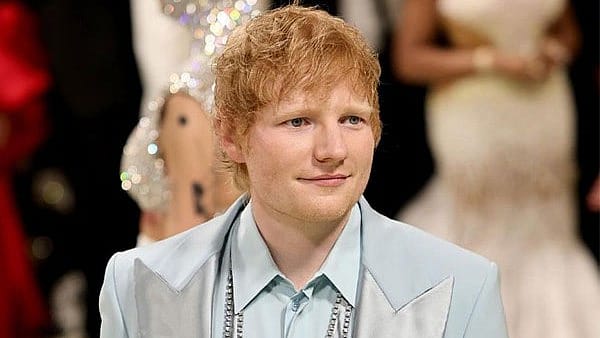
For most of his career, Ed Sheeran has built his reputation on something remarkably simple: songs about love, heartbreak, friendship and ordinary life. Politics rarely occupied centre stage.
That is why the scene at Philadelphia's Lincoln Financial Field on September 19 felt so unusual.
Standing before roughly 50,000 fans, Sheeran admitted he had removed a secondary stage that normally places him in the middle of the crowd because he was afraid of what might happen. He spoke of feeling abandoned by people close to him, becoming emotional as he thanked fans for continuing to show up despite a week of controversy surrounding his Loop Tour. The dispute began after rapper Macklemore was removed from the tour's remaining US dates following pro-Palestinian remarks made during earlier performances. Several opening acts and collaborators subsequently withdrew from the tour in solidarity with Macklemore.
The episode has become one of the most discussed moments of Sheeran's career. But it also raises a broader question that extends far beyond one singer, one tour or one conflict: what happens when music, politics and live entertainment collide?
A familiar pattern in a different era
The tension is hardly new. In 2003, country music group The Chicks, then known as the Dixie Chicks, faced a fierce backlash after lead singer Natalie Maines criticised US President George W. Bush during a concert in London shortly before the Iraq War. Radio stations dropped their music, protests emerged and ticket sales were affected. The controversy became one of the defining examples of how political remarks by performers can reshape careers almost overnight.

Zeroing In on ECI
09 Oct 2026 - Vol 05 | Issue 41
Constitutional legitimacy versus political opportunism
More recently, Bruce Springsteen's criticism of Donald Trump generated sharply divided reactions among fans, illustrating how even long-established artists can find themselves pulled into wider political battles.
The circumstances differ in each case. The issues are different, the audiences are different and the political contexts are different. Yet a common thread runs through them: once a concert becomes associated with a political dispute, the conversation often shifts away from the music itself.
The changing role of the concert stage
For decades, artists have used concerts as platforms for causes they care about. From anti-war messages to climate activism and humanitarian appeals, performers have often argued that large audiences create opportunities to discuss issues beyond entertainment.
Others take a different view. Many fans attend concerts seeking an escape from the political arguments that dominate social media, television and daily life. For them, the appeal of live music lies precisely in its ability to provide a temporary break from those debates.
The Ed Sheeran-Macklemore dispute sits at the intersection of those competing expectations.
Macklemore has argued that artists should speak openly about humanitarian issues. Sheeran, meanwhile, has repeatedly said he did not make the decision to remove Macklemore and has expressed concern about venues or external stakeholders influencing what can be said on stage. At the same time, he has continued performing for audiences who bought tickets expecting a concert rather than a political confrontation.
A new challenge for global stars
What makes modern controversies different is their speed. A comment made during a concert can now circulate worldwide within minutes. Fan reactions, criticism, petitions and boycott calls can spread across platforms before an artist has even left the venue. The result is that performers increasingly face pressure from multiple directions at once: audiences, promoters, sponsors, activists, fellow musicians and online communities.
In Sheeran's case, the fallout extended beyond headlines. Opening acts withdrew, supporters and critics debated his response, and even the physical design of his show changed when he removed the secondary stage from the Philadelphia concert.
The unresolved question
The Philadelphia crowd ultimately responded with support, giving Sheeran the reassurance he said he needed to continue. Yet the larger debate remains unsettled.
Should artists use their platforms to speak on major political and humanitarian issues? Should venues or promoters have a role in determining what happens on stage? And do audiences expect musicians to be activists, entertainers, or some combination of both?
There are no universally accepted answers.
What the latest controversy demonstrates is that in an increasingly polarised world, the boundary between entertainment and public debate is becoming harder to maintain. For artists like Ed Sheeran, the challenge is no longer just filling stadiums. It is navigating the expectations, pressures and disagreements that arrive with them.
And as the tour moves to its next stop, that conversation is likely to continue long after the final song ends.
(With inputs from agencies)