Sreenivasan (1956–2025): The Conscience-Keeper of Malayalam Cinema
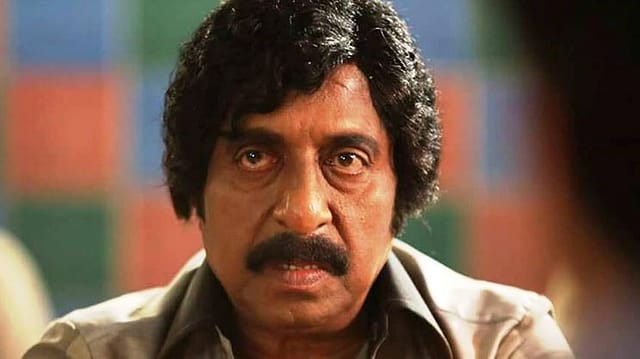
The passing of Sreenivasan marks not merely the departure of an actor, screenwriter, or filmmaker, but the silencing of a rare moral interlocutor: one who spoke to Malayalis with wit, irony, and an unsettling honesty. He was not content just to entertain; he insisted on interrogating. Through laughter that often arrived with a sting, through characters that mirrored our contradictions, and through stories that refused easy redemption, Sreenivasan shaped the ethical vocabulary of Malayalam cinema, and, by extension, the moral grammar of everyday Malayali life.
For decades, his dialogues circulated as common cultural currency, invoked in family conversations, political arguments, friendly banter, and moments of self-recognition. They travelled effortlessly across class, ideology, and generation. There exists scarcely a bond among Malayalis that has not, at some point, been mediated through a Sreenivasan reference. His words made life a little easier to endure, a little less sad, offering, even in cynicism, a form of clarity and emotional relief.
The Modi Years
02 Oct 2026 - Vol 05 | Issue 40
A Nation Rebuilt
His death at the age of 69, after prolonged health complications, including heart surgery and respiratory issues, brought an outpouring of grief from across Indian cinema and public life. Thousands gathered for his funeral with full state honours at his residence in Kandanad near Tripunithura, where fellow filmmakers, actors, politicians, and audiences paid tribute to a figure whose work resonated far beyond the screen.
With his passing, Malayalam cinema has lost one of its most fearless truth-tellers, an artist whose humour was always moral work, and whose storytelling was always, at heart, human.
Writing the Ordinary into History
Sreenivasan’s genius lay in his unwavering attention to the ordinary—the goldsmith, the barber, the clerk, the unemployed graduate, the insecure husband, the failed poet, the hypocritical progressive. At a time when Malayalam cinema was often tempted by melodrama or escapist fantasy, he insisted that everyday itself was political terrain. His scripts were populated by people who spoke fluently about ideals but lived lives shaped by compromise, and by societies that celebrated morality in the abstract while practising exclusion in the real.
Born on 6 April 1956 in Patyam near Thalassery in Kerala’s Kannur district, Sreenivasan was raised in a modest household, the son of a schoolteacher and a homemaker. After schooling in Kuthuparamba and Kadirur, he completed a degree in economics before pursuing formal training at the Film and Television Institute of Tamil Nadu in Chennai, a foundation that helped him bridge craft with cultural insight throughout his career.
He began in films as a dubbing artist and actor, making his debut in P. A. Backer’s Manimuzhakkam (1976) before moving into writing and screen roles that became central to Malayalam cinema over five decades.
Sreenivasan wrote screenplays that redefined mainstream Malayalam storytelling. From early hits like Odaruthammava Aalariyam and Sanmanassullavarkku Samadhanam to collaborative classics like Gandhinagar 2nd Street, Nadodikkattu, and Varavelpu, his narratives elevated the everyday anxieties of ordinary people into cinematic discourse. His scripts were often deeply human, threading social critique with narrative humour—a balancing act few have matched.
Among these, Sandesham (1991) stands as perhaps his most enduring work: a political satire that dismantled ideological rigidity across the political spectrum and explored how electoral frenzy, factionalism, and dogma corrode personal and public ethics. Its relevance has only grown with time, becoming a reference point in discussions of political absurdity and family disintegration under ideological pressure.
Across such work, Sreenivasan insisted that cinema need not dissociate humour from critique. His writing invited the audience to recognise the contradictions in their own lives—and to confront discomfort with laughter and reflection in the same breath.
Humour as Moral Strategy
What distinguished Sreenivasan from many of his contemporaries was his understanding of humour not as escape but as a method. His comedy rarely offered release; it offered recognition. Laughter in his films was often accompanied by shame, empathy, or sudden self-awareness. Comedy, for him, was not a detour from seriousness but a route into it.
His directorial debut, Vadakkunokkiyantram (1989), remains a landmark in Malayalam cinema. Written, directed, and headlined by Sreenivasan himself, this black comedy explored marital insecurity triggered by what is clinically termed Othello syndrome, an obsessive delusion of infidelity. The film won three Kerala State Film Awards, including Best Film and was influential enough to be dubbed and remade into Telugu, Tamil, Kannada, and Hindi, extending its reach beyond Malayalam audiences.
Nearly a decade later, in Chinthavishtayaya Shyamala (1998), Sreenivasan offered a quieter, more emotionally layered satire on masculine escapism and domestic neglect. The film won the National Film Award for Best Film on Other Social Issues and multiple state and Filmfare accolades, underscoring his ability to blend humour with acute social observation without resorting to didacticism.
The brilliance of these films lay not just in comedic timing but in moral exposure: they tasked audiences with confronting their own blind spots. In these narratives, humour did not distract; it illuminated. This was the core of Sreenivasan’s ethical engagement with cinema—humour that first enticed, then unsettled.
The Actor Who Underplayed Power
As an actor, Sreenivasan perfected understatement. He did not perform authority; he revealed its habits. Across a remarkable range of roles spanning more than 225 films, his portrayals were anchored in restraint, realism, and earthy irony.
He rarely played grand heroes; instead, he epitomised the common man—articulate but compromised, intelligent but uncertain, hopeful but fallible. In Orunal Varum and Makante Achan, he portrayed bureaucratic and domestic figures shaped more by institutional logic than by individual villainy, revealing how moral failure often springs not from malice but routine compliance.
In later roles, from dark comedy turns in Aanaval Mothiram to impactful supporting parts in films like Traffic (2011), Sreenivasan continued to explore ethical conflicts with subtlety, showing that complexity in character need not be amplified to be profound.
His performances were less about dominating the frame and more about letting moral tension accumulate in a glance, a hesitation, a half-spoken line. This quiet mastery made him one of the most recognisable and beloved faces of Malayalam cinema, not because he was loud, but because he was profoundly human.
Cinema as Ethical Practice and Living Language
For Sreenivasan, cinema was not merely a cultural product but an ethical practice. His films interrogated caste, gender, power, bureaucracy, and hypocrisy without didacticism. He was deeply sceptical of performative progressivism and alert to how moral language could conceal domination. Long before the term “virtue-signalling” entered public discourse, Sreenivasan was diagnosing its emptiness on screen.
His later works, from the satirical industry critique Udayananu Tharam to introspective social dramas like Katha Parayumpol and Njan Prakashan, demonstrated his capacity to evolve with the times while retaining his core belief in honest storytelling. Whether as writer, director, or producer, he refused to flatter audiences with easy resolutions, opting instead for narratives that lingered in thought.
Sreenivasan’s contributions were recognised with numerous honours. He won six Kerala State Film Awards, including Best Film (Vadakkunokkiyantram), Best Story (Sandesam), and Best Screenplay (Mazhayethum Munpe); a National Film Award for Chinthavishtayaya Shyamala; and multiple Filmfare nods across disciplines. He was also repeatedly honoured by the Kerala Film Critics Association for screenplay and lifetime contribution—testimony to his sustained excellence across genres and decades.
Perhaps his most enduring legacy lies in language. His dialogues escaped cinema halls and entered kitchens, classrooms, union meetings, and political debates. To quote Sreenivasan was to communicate irony, resistance, resignation—or all three at once. He shaped a shared cultural grammar, teaching Malayalis to laugh at themselves without surrendering dignity and to criticise power without forfeiting humour.
Beyond Cinema: Influence, Family, and Cultural Afterlife
Sreenivasan’s influence extended well beyond his filmography. He was a cultural reference point across Kerala, with audiences quoting his dialogues as shorthand for social realities—from unemployment and corruption to marital tensions and political absurdities.
His relationships with colleagues in the industry were rooted in mutual respect and artistic collaboration, and their tributes underscored the breadth of his influence across generations of performers. Major public figures, including politicians across party lines, acknowledged his impact, highlighting the humane storytelling that touched countless hearts.
His legacy continues through his sons, Vineeth Sreenivasan and Dhyan Sreenivasan, both of whom have forged successful careers in acting, directing, and music—carrying forward a creative lineage rooted in narrative depth and emotional honesty.
Adieu, Reluctant Sage
Sreenivasan never positioned himself as a sage, yet he functioned as one. He guided without sermonising, corrected without condescension, and comforted without illusion. In an era increasingly marked by polarisation, moral absolutism, and intellectual shortcuts, his cinema insisted on patience, nuance, and ethical courage.
Malayalam cinema will continue to evolve. But the loss of Sreenivasan is the loss of something rarer: a thinker who trusted the audience, respected complexity, and believed that art could make life, not perfect, but bearable.
He made our lives a little easier. A little less sad.
And for that, generations of Malayalis will remain indebted.
Adieu, genius. Your laughter still echoes.