Melissa Gilbert Calls Out Hollywood’s Child Star Crisis: Why Young Performers Are Still Failing to Be Protected
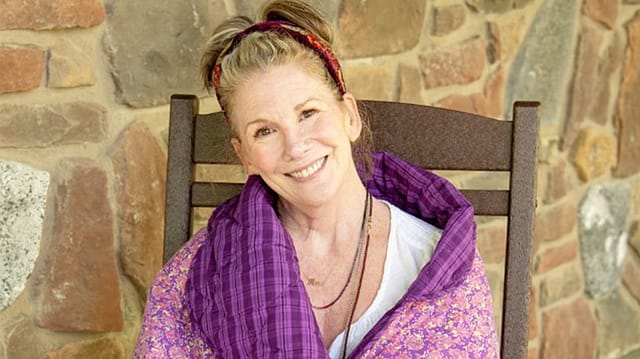
Melissa Gilbert remembers returning to the set of Little House on the Prairie within months of losing her father. She was 11. Nobody discussed his death with her or even offered condolences, she says, because the adults feared that acknowledging her grief might leave her too upset to work.
That memory lies at the heart of Gilbert’s impassioned demand for greater protection of child performers. Writing after the deaths of three women who entered show business as children, Hayden Panettiere, Daveigh Chase and Michelle Trachtenberg, Gilbert argues that Hollywood has spent decades teaching children to behave like tireless professionals while leaving them painfully unequipped to carry the consequences into adulthood.
Her intervention has struck a nerve. It also requires a crucial distinction. The deaths do not, by themselves, prove that child stardom was responsible. They have instead become the catalyst for a larger reckoning over an industry that can protect a production schedule more rigorously than the child standing before the camera.

Zeroing In on ECI
09 Oct 2026 - Vol 05 | Issue 41
Constitutional legitimacy versus political opportunism
What exactly has Melissa Gilbert said?
In an essay reported by People, Gilbert described female former child performers as members of the same “tribe”. Although she did not know Panettiere personally and had worked only briefly with Chase and Trachtenberg, she wrote that their deaths felt intensely personal because she had once inhabited the same world. “When three of us die so close together, something is very, very wrong,” Gilbert wrote, according to People.
Her argument goes beyond working hours or money. Gilbert says young actors are conditioned to suppress exhaustion, illness, pain and grief because saying no can earn a child the reputation of being unreliable, unprofessional or difficult. She calls this “Doctor Show Syndrome”, a phrase rather than a recognised medical diagnosis. It describes the reflex to continue performing regardless of one’s physical or emotional condition because the show, its budget and the jobs attached to it are made to feel more important than the performer’s health.
Gilbert recalled returning to work three days after an emergency appendectomy and continuing through a severe fever until filming was finished. She was subsequently hospitalised and, she says, came close to developing sepsis. Her larger point is devastatingly simple: a child who is repeatedly praised for ignoring pain may grow into an adult who no longer recognises the right to stop.
Why have these three deaths become such a powerful trigger?
Because each woman had been famous before she was old enough to understand the machinery surrounding fame. Hayden Panettiere began appearing in commercials before her first birthday and grew up on camera before starring in Heroes and Nashville. She died on August 16 at 36 after being found unresponsive in South Carolina. The Greenville County Coroner’s Office said she had suffered cardiac arrest, while the precise cause remained under investigation when her death was first reported, according to The Washington Post.
Panettiere had spoken publicly about alcoholism, drug use, postpartum depression, abusive relationships and the pressure of growing up in public. The Washington Post reported that she described her childhood relationship with work as one in which “everything was business”. Those experiences form part of her life story, but they should not be converted into a definitive explanation for her death before investigators establish one.
Daveigh Chase, the voice of Lilo in Lilo & Stitch and the terrifying Samara in The Ring, died in June at 35. The Los Angeles County medical examiner recorded AIDS as the cause of death and chronic polysubstance use as another significant condition, the Associated Press reported. Her father told the news agency that Chase had struggled with drugs from the age of 13 and had experienced homelessness.
Michelle Trachtenberg, remembered for Harriet the Spy, Buffy the Vampire Slayer and Gossip Girl, died in February 2025 at 39. New York authorities subsequently determined that she died naturally from complications of diabetes. These were three different lives and three different medical histories. Gilbert is not presenting them as identical cases. She is asking why so many former child performers describe adult breakdown, addiction, financial exploitation or a loss of identity after spending their formative years inside an industry run by adults.
Are child actors in America completely unprotected?
No. The problem is that the protection is fragmented, heavily dependent on geography and stronger in some areas than in others. Federal law provides surprisingly little cover. The US Department of Labor states that children employed as actors or performers in film, theatre, radio and television are exempt from the child-labour provisions of the Fair Labor Standards Act. That leaves the detailed regulation of permits, hours, education and workplace conditions largely to individual states, according to the Department’s own guidance.
The result is a patchwork. California has elaborate rules because so much production has historically taken place there. Other states offer much thinner safeguards or explicitly exempt entertainers from their general child-labour laws. A production can therefore change jurisdictions without encountering one uniform national standard governing the welfare of a young performer.
What does California provide?
California limits how long minors may remain at a workplace and how much of that time may be spent actually working. The restrictions change with the child’s age and school status. The state’s rules become extremely specific for babies. Infants between 15 days and six months may remain at the workplace for no more than two hours, with actual work restricted to 20 minutes. Nurses and studio teachers must also be provided in prescribed ratios, according to the California Department of Industrial Relations.
School-age performers are generally accompanied by studio teachers responsible for their education and welfare. Union agreements provide additional safeguards, and SAG-AFTRA has said its recent contracts require background checks for teachers, welfare workers and others assigned to supervise minors, as Entertainment Weekly reported. These rules matter. They can prevent excessive hours, preserve schooling and create an identifiable adult responsible for a child’s immediate welfare. But they are principally designed to regulate what happens during employment. They do not automatically resolve grief, family dependence, online harassment, sudden unemployment or the psychological impact of having one’s identity turned into a commercial product.
Doesn’t the Coogan Law protect their money?
Only partly. California’s Coogan Law grew out of the experience of silent-film star Jackie Coogan, who discovered as an adult that most of the fortune he earned as a child was gone. The law requires 15 per cent of a minor performer’s gross earnings to be placed in a protected trust account. The California Department of Industrial Relations explains that a child’s entertainment work permit can become invalid if proof of a Coogan account is not supplied. Yet the state’s summary of the law also confirms the central limitation: the mandatory set-aside is 15 per cent.
That protects a portion of the income, not necessarily the young performer’s entire financial future. The remaining earnings may be consumed by taxes, commissions, professional expenses and family spending. Gilbert’s concern about children being made responsible for supporting households sits precisely in this gap. A child can become the family’s principal income-earner while possessing the least power in the family.
Why can a parent or guardian fail to solve the problem?
Because the parent may occupy several conflicting roles at once. A parent can be protector, manager, chauffeur, financial decision-maker and beneficiary of the child’s success. If the household becomes dependent on the child’s income, cancelling a shoot or turning down a role is no longer simply a welfare decision. It may threaten the family’s rent, lifestyle or ambitions.
That does not mean every parent exploits a performing child. It means parental presence cannot substitute for independent oversight. The person expected to say “this child has had enough” should not also be the person whose finances depend upon the child continuing. Gilbert’s proposal that children be allowed to refuse work is therefore more radical than it sounds. A right to say no has little meaning if a child fears disappointing parents, costing colleagues their jobs or being labelled unemployable.
Where is the mental-health safety net?
It exists, but it is not an automatic, universal part of every young performer’s employment. The Entertainment Community Fund’s Looking Ahead programme, developed with SAG-AFTRA’s Young Performers Committee, provides individual and family counselling, workshops, educational guidance and support for transitions into adult life. The Fund says it has supported the mental health and wellbeing of young performers since 2003.
Its existence is an acknowledgement that child performers face unusual pressures. Their schooling, friendships, bodies, family relationships and sense of self can all become entangled with employment and public approval. Gilbert wants support of this kind to be readily accessible rather than something a distressed performer or family must know how to find. Her essay reportedly calls for industry-wide conversations, free mental-health care and a stronger network led partly by people who survived child stardom themselves. A studio teacher can ensure that a child completes a mathematics lesson. A therapist may be needed to help that child understand why millions of strangers believe they own a piece of her.
Has social media made child stardom more dangerous?
It has made it continuous. Earlier generations could leave a studio and, at least temporarily, leave the audience behind. A child star today may encounter paparazzi, fan accounts, body commentary, sexualised edits, rumours and direct messages on the same device used for homework and communication with friends.
Gilbert argues that smartphones have stripped young performers of the privacy previous generations retained in limited measure. The performance no longer ends when the director calls cut. Every restaurant, airport, school gate and emotional crisis can become content. The boundary has blurred further with child influencers, who may work inside their own homes for channels controlled by their parents. They do not necessarily have a conventional set, contract, employer, studio teacher or clearly defined working day.
California responded in 2024 by extending financial protections to young online creators. Governor Gavin Newsom’s office said AB 1880 expanded Coogan protections to minors employed as digital content creators, while SB 764 required money generated by monetised family content featuring children to be preserved in trust under specified conditions, according to the California government. That is progress, but money is only one dimension of exploitation. A trust account cannot return a childhood made permanently searchable online.
Is there evidence of a broader industry failure?
There is extensive testimony, although it should not be mistaken for proof that every child performer suffers the same fate. Former child actors including Drew Barrymore, Mara Wilson, Jennette McCurdy, Alyson Stoner, Anna Paquin and Drake Bell have described experiences involving addiction, disordered eating, sexualisation, abusive adults, family conflict, financial pressure or an identity built almost entirely around work.
The documentary Quiet on Set renewed scrutiny of working conditions in children’s television. Following its release, SAG-AFTRA told Entertainment Weekly that complaints involving minors receive priority and pointed to background checks and the Looking Ahead programme. The union’s response demonstrated that protections have evolved, while also revealing why former performers continue to demand more independent reporting channels, mental-health care and accountability.
The safest conclusion is neither that child acting inevitably destroys lives nor that successful survivors prove the system works. Children differ, families differ and productions differ. A responsible framework must be built for the vulnerable child, not only for the fortunate one.
What would meaningful reform look like?
Gilbert’s intervention points towards a system in which emotional welfare is treated as seriously as schooling and working hours. That would mean enforceable mental-health support, an independent child-welfare professional empowered to halt work, confidential complaint mechanisms outside the production hierarchy and financial rules that prevent entire families from becoming dependent on a minor’s earnings. It would also mean continuing care when a role ends, because the moment a child stops being commercially useful may be the moment support is needed most.
National minimum standards would reduce the incentive to move production to states with weaker protections. Digital performers would need the same safeguards as actors on conventional sets, along with a meaningful right to privacy and eventual control over childhood content. Most importantly, the industry would have to abandon the idea that an unusually obedient child is an unusually professional one.
Does the controversy surrounding Gilbert’s husband affect her intervention?
It complicates its reception, but it does not invalidate the questions she has raised. Gilbert’s husband, actor and director Timothy Busfield, has been indicted in New Mexico on charges involving alleged sexual contact with a minor. He has pleaded not guilty, and the allegations have not been proven at trial. Entertainment Weekly included the pending case in its report on Gilbert’s essay.
That context should be reported accurately without using unresolved accusations either to dismiss Gilbert’s testimony or to imply guilt. The principles at stake, independent protection, transparent investigations and a child’s ability to speak without fear, apply precisely because institutions cannot depend on reputation or personal trust alone.
What is Gilbert really asking Hollywood to confront?
That it has long confused a child’s ability to perform with an adult’s ability to cope. A gifted child can memorise dialogue, hit a mark and cry on cue. None of that means the child understands fame, money, rejection, grief or sexualised attention. It certainly does not mean the child should carry the livelihoods and expectations of an adult production. Gilbert’s testimony returns the debate to one stubborn truth: child actors may be professionals on paper, but they remain children in law, development and need. If a production can insure its equipment, protect its footage and plan for delays, it can also build a system that allows its youngest worker to be sick, to grieve and to say no.
(With inputs from ANI)