Madhu Kambikar dies at 73: Remembering the Marathi star who brought Lavani to the screen
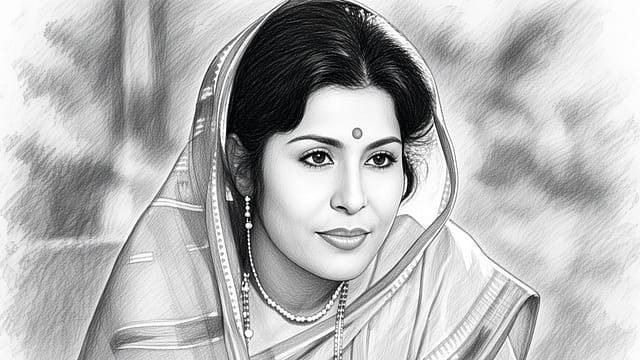
Marathi cinema has lost an actor who carried the rhythms of Maharashtra’s folk traditions from the stage to the screen. Madhu Kambikar, the veteran actor and Lavani performer known for her powerful portrayals of rural women and her commitment to folk arts, died in Pune on Monday, October 12, at the age of 73 after a prolonged illness.
Maharashtra Chief Minister Devendra Fadnavis mourned her death, recalling her contributions to films, folk theatre, commercial theatre and television. In his tribute, he said her work had helped popularise folk traditions rooted in rural life and would remain part of Marathi entertainment’s legacy.
From rural Maharashtra to the Marathi film industry
Born on July 28, 1953, in Malegaon Khurd in Maharashtra’s Beed district, Kambikar began her artistic journey through traditional performance. She trained in Kathak and Lavani, eventually establishing herself in the Tamasha tradition, a form of Marathi folk theatre that combines music, dance, storytelling and drama.

Zeroing In on ECI
09 Oct 2026 - Vol 05 | Issue 41
Constitutional legitimacy versus political opportunism
Her move into cinema was not immediate or effortless. As Loksatta reported in its obituary, Kambikar built her reputation through folk performance before earning opportunities in theatre and films. She also faced prejudice against folk artistes, but continued to work across different forms of performance.
Her breakthrough came with Shapit, in which she played Bijli, a rural woman whose life is shaped by hardship and exploitation. The performance established her as a formidable screen actor and earned her major recognition, including a Maharashtra State Film Award and a Filmfare Marathi Award.
From Ek Hota Vidushak to Zapatlela: The roles audiences remember
Kambikar’s filmography reflected her range. In Jabbar Patel’s Ek Hota Vidushak, she brought the struggles of a performing artiste and mother to the screen, drawing on her understanding of folk theatre. She also appeared in Raghu Maina, Hech Mazha Maher, Debu and Zapatlela, where she played the mother of Laxmikant Berde’s character.
Her association with Dada Kondke extended to films such as Yeu Ka Gharat and Mala Gheun Chala. Across these projects, she moved between drama, comedy and roles grounded in everyday Maharashtrian life.
According to The Times of India, Kambikar appeared in more than 75 films over a career spanning several decades. Her honours included six Maharashtra State Film Awards and the Zee Chitra Gaurav Award in 2018.
How Madhu Kambikar worked to preserve Lavani
Kambikar’s contribution extended beyond acting. She worked to document the history of Lavani and Tamasha, collecting written material about the traditions and turning that research into performances. Her programme Sakhi Majhi Lavani helped bring the form’s history and artistry to audiences.
She also established the Laxmibai Kolhapurkar Pratishthan, named after the celebrated Lavani artiste, to support the folk tradition.
Her health took a serious turn in November 2016, when she suffered a stroke after performing at a Lavani programme in Mumbai. Reports in The Times of India and Loksatta said the episode left her with lasting health complications and kept her away from films.
Her passing closes a chapter in Marathi cinema, but the performances she left behind remain a record of an artiste who carried a living folk tradition into popular culture.
(With inputs from ANI)