Beyond the Divine: Does the message of the epic get lost in the spectacle?
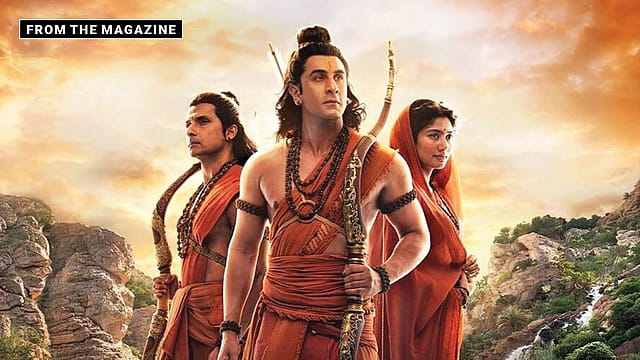
Can cinematic grandeur do justice to a story that has lived in the hearts of generations? Some stories entertain us. Others shape the way we understand the world. The Ramayana belongs to the latter.
There are stories that need no introduction. They have travelled through centuries, crossed generations and found a home in the hearts of millions. The Ramayana is one such story. For some, it is sacred scripture; for others, a timeless literary masterpiece. For nearly everyone, it is a story of extraordinary human values, moral dilemmas, sacrifice and the eternal struggle between good and evil.
When a story of such cultural and spiritual significance arrives on the big screen as a grand cinematic production, expectations are enormous. The recently released Ramayana: Rise of a Legend attempts to turn the familiar epic into a largescale spectacle. But can a film truly capture the soul of a story that has survived centuries?
There is no denying the film’s ambition. Its expansive landscapes, elaborate production design, costumes and effects attempt to build a world worthy of the epic. Ranbir Kapoor as Rama, Sai Pallavi as Sita and Yash as Ravana form a cast expected to carry the emotional weight of a much-loved narrative.
Yet impressive visuals cannot create an emotional connection on their own. A magnificent palace is only a backdrop; it is the people within who give it meaning. An epic battle may amaze, but it is the reasons behind it that make it memorable. This is where the film’s greatest challenge lies.
Adapting the Ramayana is not like adapting an ordinary novel. For millions, Rama represents righteousness and responsibility, Sita dignity and resilience, Lakshmana loyalty, Hanuman devotion, and Ravana a reminder of how extraordinary abilities can be undone by arrogance. These figures have been interpreted differently across regions, languages and traditions. So, filmmakers must balance creative freedom against cultural sensitivity.
There is certainly room for fresh interpretation; familiar stories need new perspectives to stay relevant. But modernisation should deepen the original narrative, not reduce it to spectacle. The Ramayana need not compete with international fantasy franchises by becoming bigger, louder or more extravagant. Its greatest strength has always been its emotional and philosophical depth.
Its central questions remain remarkably contemporary. What does it mean to fulfil one’s duty when personal happiness is at stake? How much should an individual sacrifice for family and principle? Can power exist without humility? Is victory meaningful if it comes at an unbearable personal cost? These questions do not belong exclusively to an ancient kingdom; they continue to define modern society.
In an age of instant entertainment and fleeting digital trends, a story centred on patience, loyalty, compassion and moral responsibility has something profound to offer. That is why a Ramayana adaptation should not be judged solely by box-office collections, celebrity appearances or visual effects, but by whether audiences leave the cinema still thinking about the story long after the credits roll.
Ultimately, Ramayana: Rise of a Legend is an ambitious attempt to bring one of the world’s most enduring epics to a contemporary audience. Its scale deserves recognition, but its greater responsibility is to honour the substance of the story. A film can recreate the grandeur of Ayodhya, the mystery of Lanka and the intensity of the battle between Rama and Ravana; recreating the values they represent is a different challenge.
The ultimate triumph of the Ramayana is not simply Rama’s victory over Ravana. It is the reminder that strength without virtue is hollow, power without restraint is dangerous, and goodness, however difficult its journey, is always worth defending.
And perhaps that is what a great adaptation should leave us with: not merely the memory of a spectacular film but a renewed appreciation of a story that has never stopped speaking to humanity.
(Vani Tripathi Tikoo, an actor and producer, is a prominent cultural voice at film festivals worldwide)