John Grover dies at 87: The Bond editor who helped shape six 007 films and worked with Kubrick
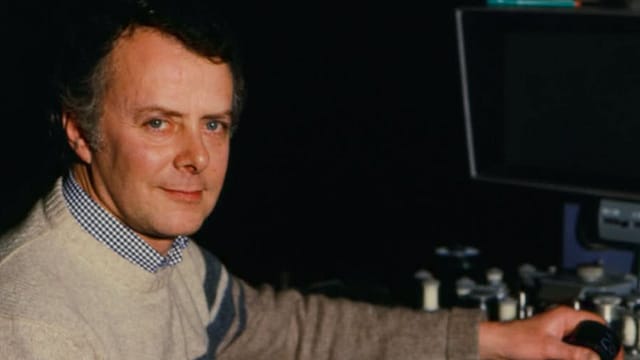
What does it take to make James Bond look effortless? Sometimes, it takes months in a dark editing room, surrounded by reels of film, deciding which fraction of a second stays, and which disappears.
John Grover, the British film editor who worked on six James Bond films and was also part of Stanley Kubrick’s 2001: A Space Odyssey, has died aged 87. According to The Hollywood Reporter, Grover died on Monday, September 28, at his home in Buckinghamshire, England, following a short illness. His son Tim confirmed his death. His passing brings the curtain down on a career that stretched from the great British studio productions of the 1960s to the Roger Moore and Timothy Dalton eras of Bond.
John Grover worked on six James Bond films across three different editing roles
Grover’s relationship with 007 began with The Spy Who Loved Me in 1977, where he worked as an assistant editor. He moved up to assembly editor on Moonraker in 1979 and later became the lead editor on For Your Eyes Only in 1981. He returned as supervising editor for Octopussy in 1983, shared editing duties with Peter Davies on Timothy Dalton’s Bond debut The Living Daylights in 1987, and edited Licence to Kill in 1989. That makes six Bond films across 12 years, a remarkable run through one of the franchise’s most recognisable periods.
Losing Memory
16 Oct 2026 - Vol 05 | Issue 42
The making of a medical and social emergency
007 Magazine, which published an extensive interview with Grover during his lifetime, noted that his work with Bond director and editor John Glen was central to his progression through the series.
The Bond scenes Grover helped turn into movie history
Grover was not simply dealing with dialogue and transitions. Some of the material arriving in his cutting room involved enormous action sequences. For The Spy Who Loved Me, he worked on the pre-credit sequence that famously ends with Roger Moore’s Bond skiing towards a cliff before launching into a Union Jack parachute jump. The stunt became one of the franchise’s signature openings.
For Moonraker, Grover recalled an editing process that lasted about 10 months, beginning while the film was still being shot and continuing until the day before its premiere. The production generated huge amounts of footage that had to be organised, tightened and shaped into a finished film.
In Octopussy, he was part of the editing team behind the film’s elaborate action sequences, while The Living Daylights presented a different challenge: Grover and Davies were cutting Dalton’s first appearance as Bond.
John Grover also had an extraordinary connection to 2001: A Space Odyssey
Long before 007, Grover was learning his craft on some of the biggest films of the 1960s. He worked as an uncredited assistant editor on Robert Wise’s The Haunting, David Lean’s Doctor Zhivago, John Frankenheimer’s Grand Prix, Kubrick’s 2001: A Space Odyssey and Goodbye, Mr Chips. His memories of Kubrick were anything but conventional.
At an editing conference in 2016, Grover described the director as a perfectionist who could repeatedly send sequences back for another pass. He famously had a blunt view of 2001, even while acknowledging its technical and musical achievements. And then there was the film’s unmistakable breathing.
Did John Grover provide the breathing in 2001: A Space Odyssey?
Grover said he did. The heavy breathing heard during the astronauts’ sequences became one of 2001’s most memorable sound elements. Grover recalled spending months recording the breathing while wearing the astronaut helmet, following Kubrick’s instructions and repeating the performance until the director was satisfied.
The British Film Editors later said that recordings of both Kubrick and Grover existed, but that Grover’s recording is believed to be the one used in the finished film.
It is the sort of tiny, almost invisible contribution that tells you something about Grover’s career: audiences remembered the scene, while the man behind one of its key details remained largely unknown.
From MGM to Doctor Zhivago, Grover built his career behind the scenes
Born on October 24, 1938, in Barnet, Middlesex, Grover completed National Service before entering the film business. He joined MGM as a numbering boy, earning £6 10 shillings a week, and gradually worked his way into the editing department. His early experiences included Doctor Zhivago, where he remembered Lean as demanding but willing to listen to members of his crew who came prepared with answers.
Grover later worked on The Wild Geese, The Sea Wolves, Lifeforce and Jim Henson’s Labyrinth. He called Labyrinth his favourite film he had worked on.
John Grover was honoured for a lifetime in film editing
The British Film Editors honoured Grover with its Lifetime Achievement Award in April 2026, just months before his death. The professional organisation's recognition underlined a career that had moved through several generations of filmmaking and production technology. Grover is survived by his wife Jenny, whom he had been married to for 62 years, his son Tim, daughter Camilla, five grandchildren and two great-grandchildren.
He once said Roger Moore was his favourite Bond and singled out the car-and-circus-train chase in Octopussy as his favourite 007 sequence. For someone who spent his working life deciding what audiences would see, perhaps that was fitting. The explosions, stunts and stars may have filled the screen.
Grover helped decide how we experienced them.
(With inputs from ANI)