From Gadar to Dhurandhar: How Bollywood Gave Generations of Indians Their Language of Patriotism
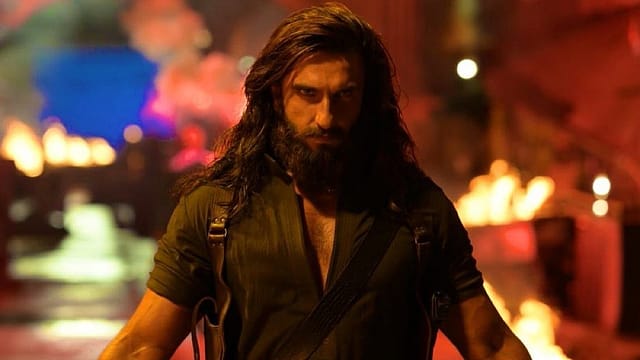
What is it about a film dialogue that can make an entire theatre sit up, a television room go quiet and, years later, have people reciting the same line from memory?
Every Independence Day, Bollywood seems to answer that question all over again.
A familiar patriotic film appears on television. Someone remembers a favourite scene. A dialogue is repeated. And suddenly, a line written for a fictional character no longer feels as though it belongs only to the film. Think Gadar: Ek Prem Katha. Think Chak De! India. Think Sam Bahadur. More recently, think Dhurandhar.
The words change with the times. So does the idea of patriotism behind them. But some lines stay.
Has Bollywood’s idea of patriotism changed?
It has — and screenwriter Shantanu Srivastava believes that change has followed India's own journey. Srivastava, who co-wrote Vicky Kaushal-starrer Sam Bahadur, said patriotic cinema in the early years after Independence was largely concerned with a young nation's need to stand on its own feet.
Rise of the Pivotal Power
18 Sep 2026 - Vol 05 | Issue 38
The BRICS declaration is a strategic victory for Modi
“I think there is a clear trend. In the early years after Independence, patriotic films were largely about self-reliance. It's like a new baby starting to walk on its own and stand on its own. That used to be the flavour of patriotic films early on after independence. At some point in time, I think in the early 2000s, the sentiment also ran toward not letting your armed forces brothers stay in trouble, but to rescue them,” Srivastava told ANI.
The shift, he said, reflects a changing audience. “As the nation grows more self-reliant and prosperous, you also start feeling emotionally involved with patriotism because, after all, being an Indian is my identity. Whenever you see the tricolour or the national anthem plays, you get goosebumps,” he added.
In other words, patriotism on screen has moved from building India to defending it, celebrating it and asserting its identity.
Why do some patriotic dialogues become part of our vocabulary?
Because the best ones don't necessarily sound like speeches. They sound like something people already feel. That is perhaps why Sunny Deol's Gadar: Ek Prem Katha declaration — “Hindustan zindabad tha, zindabad hai, aur zindabad rahega!” — has endured as a piece of popular culture.
And Shah Rukh Khan’s Chak De! India found a different route to the same emotion. When Vidya Sharma introduces herself simply as “Vidya Sharma, India”, the film strips away the state-level identities the players have arrived with and puts the national identity first. The moment has remained one of the film's most remembered scenes.
Vidya Malavade, who played Vidya Sharma, has spoken about how people still recognise her through the character years after the film's release. “When I first read the line 'Vidya Sharma, India,' I still get goosebumps. It's not just a line; it's everything,” Malavade told ANI. She believes that idea of belonging is what makes the film's patriotism endure. “You could be from any religion, any State, or even an Indian living anywhere else in the world. Your roots, your heritage, that's where you belong,” she said.
Does patriotism have to involve soldiers and war?
Not at all. In fact, some of Bollywood's most memorable patriotic moments have nothing to do with a battlefield. Chak De! India found patriotism on a hockey field. The film's central idea was not simply about winning a tournament. It was about getting players from different states, backgrounds and personalities to see themselves first as members of one Indian team. That is why the film's emotional payoff works beyond sport.
Malavade put it this way: “States are just parts of India; beautiful, amazing states with different food, clothes, and people, and so many languages. But what binds us together is this incredibly awe-inspiring nation called India or Hindustan,” she said.
That is a very different kind of patriotic cinema from Border or Gadar. And yet the emotion lands in a similar place.
So why does Sam Bahadur feel different?
Because its patriotism is rooted in character. Srivastava said the writing team behind Sam Bahadur — Meghna Gulzar, Bhavani Iyer and himself — spent considerable time studying Field Marshal Sam Manekshaw to understand not just his military career but his personality. “Meghna (Gulzar), Bhavani (Iyer), and I read a lot of books and watched a lot of videos of Field Marshal Sam Manekshaw. The aim was to understand not only Manekshaw's military career but also his personality, his swag, this style, and this personality, and bring those qualities into ordinary conversations,” he said.
That approach produced a different kind of patriotic dialogue. One that celebrates the uniform without turning the character into a cardboard symbol. Srivastava cited the line: “Hum rahein na rahein, vardi ka gaurav zaroor rehna chahiye.”
“I've always liked the fact that even high-impact dialogues in today's times do not diminish the class and the honour of our armed forces,” he said.
And what does today’s patriotic cinema sound like?
Louder. More assertive. Sometimes more confrontational. Srivastava pointed to the line from Dhurandhar — “Yeh naya Hindustan hai; yeh ghar mein ghusega bhi aur maarega bhi” — as an example of that newer mood. The line also appears in Dhurandhar: The Revenge's teaser and was originally associated with Uri: The Surgical Strike.
It reflects a version of patriotism that is less about proving India can stand on its own and more about showing that India will respond when challenged.
The vocabulary has changed. The goosebumps haven't.
What makes a patriotic dialogue actually stick?
For Srivastava, the answer is honesty. “You have to believe in what you are writing. You have to believe that you belong to this nation and that this nation is one of the best places in the world. For me, this is my home,” he said.
He offered another line to describe his own connection with India's soldiers: “Indian soldier jab muskurata hai toh lagta hai sab theek ho jayega; Aur agar Indian soldier muskurana band karta hai toh lagta hai woh sabko theek kar dega.”
“For me, patriotism and my connection with the people who defend our nation is summed up in this line,” Srivastava added.
Perhaps that explains why the lines that survive aren't always the loudest. Sometimes patriotism sounds like a battlefield. Sometimes it sounds like a hockey team. Sometimes it is a soldier's uniform. Sometimes it is a tricolour waving from a balcony. Sometimes it is a national anthem at a school assembly or a last-minute victory in a cricket match.
And every August 15, when those films return to our screens, we remember something else. The dialogue may have been written for a character. But somewhere along the way, it became ours.
(With inputs from ANI)