Cars Turns 20: How Pixar’s Film About Slowing Down Became an Unstoppable Machine
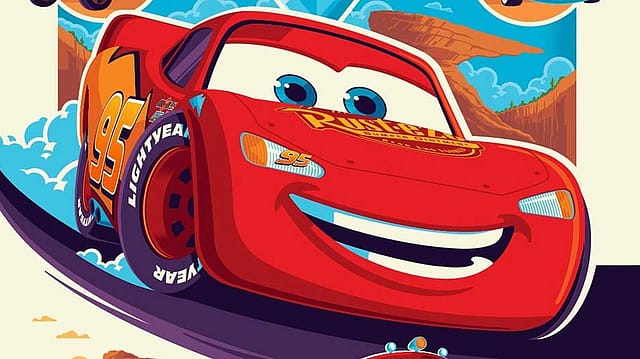
Lightning McQueen was built to go fast. His movie, however, has travelled far.
Twenty years after the rookie race car first roared “Ka-chow!” and discovered that trophies were not the only things worth chasing, Disney-Pixar’s Cars is returning to theatres from September 4. The timing puts the rerelease on the eve of Lightning McQueen Day—September 5, or 9/5 in the American calendar—a nod to the racing star’s number 95.
But the anniversary is about considerably more than a clever date.
The theatrical comeback crowns a year-long campaign spanning Formula One, NASCAR, drive-in screenings, automotive museums and life-size recreations of Lightning McQueen. It also coincides with the centenary of Route 66, the historic American highway whose bypassed communities supplied Cars with its emotional engine.

Zeroing In on ECI
09 Oct 2026 - Vol 05 | Issue 41
Constitutional legitimacy versus political opportunism
That combination makes 2026 an unusually neat double anniversary: 20 years of Lightning McQueen and 100 years of the road that taught him to slow down. It is also a reminder of one of Pixar’s strangest triumphs. Cars was never treated as the studio’s undisputed artistic champion. It arrived during an extraordinary run that included Toy Story, Finding Nemo and The Incredibles, and critics often regarded it as the pleasant but less daring member of that family.
Children, evidently, did not read the reviews. Nor did the merchandise department.
In its first five years, Cars generated close to $10 billion in global retail sales, according to Disney figures reported by the Los Angeles Times. A movie whose message was that life should not be reduced to winning became one of the most relentlessly successful commercial machines in animation.
Why is Cars returning to theatres now?
The original film will begin its anniversary run on September 4, with Disney planning celebrations around screenings, motorsport and motoring culture. The campaign places Cars in environments where its fictional universe feels almost real. A life-size Lightning McQueen and a Mercedes safety car in Cars livery are expected at the Formula One Italian Grand Prix in Monza. NASCAR is part of the anniversary push, while full-scale exhibits are being mounted at automobile museums in Britain, Italy and the United States.
Route 66 communities are joining in too. Tulsa’s Circle Cinema is connecting the film’s anniversary with the highway’s centenary. The link is especially apt: Oklahoma author and Route 66 historian Michael Wallis, who guided Pixar’s research expeditions, voiced the Sheriff of Radiator Springs. Japan will receive a one-week theatrical run from September 4 to 10, according to Disney Japan, while Disney’s El Capitan Theatre in Hollywood has scheduled a fan event for opening day.
This is nostalgia marketing, certainly—but it is unusually well aligned nostalgia. Adults who encountered Lightning McQueen as children can now take their own children to see him on a cinema screen. Meanwhile, the film’s original subject, Route 66, is celebrating 100 years since it was commissioned on November 11, 1926. The road and the movie are both being sold as pieces of living Americana: bright, photogenic and commercial, but also haunted by what progress leaves behind.
Was Cars really just a racing movie?
Not quite. The racing is the wrapper; disappearance is the story.
Lightning McQueen, voiced by Owen Wilson, begins the film as an aerodynamic bundle of vanity. He wants the Piston Cup, a glamorous sponsor and a one-way ticket out of obscurity. After becoming separated from his transporter, Mack, he damages the road in the forgotten town of Radiator Springs and is ordered to repair it.
The punishment forces him to do the one thing he cannot bear: stop. Radiator Springs once prospered because motorists passed through it. Then a new interstate offered travellers a faster route and bypassed the town. Its businesses emptied, its neon dimmed and its residents became spectators to a future speeding past them. The movie’s most revealing line may be Sally’s explanation that the old road moved with the landscape. Motorists did not travel on it merely to save minutes; the journey itself was the experience. That is why Cars works differently for adults and children. Children see funny vehicles, races and Mater’s buck-toothed grin. Adults can see economic abandonment, ageing, wounded pride and communities erased by infrastructure decisions.
Radiator Springs is not simply sleepy. It has been made irrelevant. Lightning’s education, therefore, is not about learning to drive more skilfully. It is about learning to recognise value that cannot be measured by speed, celebrity or commercial usefulness.
How did the real Route 66 become Radiator Springs?
Director John Lasseter developed the idea after a family road trip along Route 66. Pixar subsequently sent artists and filmmakers on research journeys led by Wallis, author of Route 66: The Mother Road. “We went through towns just like Radiator Springs,” Wallis later told the Los Angeles Times. The fictional town was not copied from one location; it was assembled from buildings, personalities and landscapes encountered across roughly 1,000 miles between Oklahoma and Arizona.
That explains why Radiator Springs feels less like a cartoon backdrop and more like a compressed memory of roadside America. The Cozy Cone Motel recalls the cone-shaped Wigwam motels. Ramone’s body-art shop evokes the custom-car culture of the Southwest. The surrounding rock formations resemble both Arizona mesas and the tail fins of classic Cadillacs. Flo’s V8 Café turns the architecture of an old filling station into a glowing shrine to automotive optimism.
Pixar was recreating a period when roads did not merely connect destinations. They produced settlements, restaurants, motels, repair shops and chance encounters. When traffic was redirected, an entire economy could vanish. Route 66 was removed from the US Highway System in 1985, but its cultural afterlife grew. It became a symbol of freedom precisely as many of its small businesses struggled to survive. Cars translated that tension for children without turning it into a history lesson.
In 2026, official centenary events are again emphasising preservation and the economic health of communities along the Mother Road. The real highway and Pixar’s fictional town are still making essentially the same plea: do not pass through so quickly that you fail to see what is there.
Why was Paul Newman the perfect Doc Hudson?
Doc Hudson is the film’s emotional counterweight to Lightning McQueen.
To Radiator Springs, he is the stern local judge and doctor. To the racing world, he was once the Fabulous Hudson Hornet, a three-time champion whose career ended after a crash. When he recovered, the sport had already moved on to younger machinery. His bitterness is not caused simply by losing. It comes from discovering how quickly applause disappears when a performer is no longer useful.
Casting Paul Newman gave the character an authority that could not be manufactured in an animation booth. Newman was not merely one of Hollywood’s great actors; he was an accomplished racing driver and team owner. He competed professionally well into later life and won his class at the 1995 Daytona 24 Hours at the age of 70. Cars became his final major feature-film acting role. That knowledge gives Doc’s reflections on age, replacement and legacy an extra ache. Newman was voicing an old champion who refuses to become a museum piece while nearing the end of his own screen career.
Doc’s story also anticipates where the franchise would eventually go. Cars 3 returned to the question of ageing by placing Lightning in Doc’s former position: a celebrated racer confronting a new generation built to be faster than he is. The series’ most durable subject is not really acceleration. It is what happens when acceleration can no longer save you.
How big did the Cars machine become?
The original film earned approximately $462 million worldwide against a reported production budget of $120 million, according to Box Office Mojo. It won the inaugural Golden Globe for Best Animated Motion Picture and received two Oscar nominations—for animated feature and Randy Newman’s song “Our Town”—although Happy Feet took the animation prize. The Academy’s records confirm both nominations.
Those are handsome numbers and honours, but they do not explain the franchise’s real scale. By the time Cars 2 arrived in 2011, retail sales were approaching $10 billion. Disney prepared hundreds of toys alongside bedding, backpacks, clothing, food products and seemingly every child-sized object capable of carrying a pair of windshield eyes.
The genius of the merchandise was hiding in plain sight: the characters were already toys. Buzz Lightyear needs to be manufactured as a figure. Lightning McQueen merely needs to be miniaturised. Every new racer can be distinguished through colour, number, sponsor, body shape and wheels, encouraging collection rather than a single purchase.
The world also replenishes its audience. A preschooler discovering Lightning in 2026 does not need to understand when the film was released. Cars remain familiar objects, racing remains instantly legible and the character designs require little cultural translation.
Then came two sequels, the Planes spin-offs, short films, television projects, video games and Cars Land, a 12-acre recreation of Radiator Springs at Disney California Adventure. Its signature attraction, Radiator Springs Racers, physically places visitors inside the film’s central fantasy. Few animated films have crossed so completely from screen property into a permanent environment. Audiences can watch Radiator Springs, purchase it in miniature and then walk through a life-size version of it.
Why do children keep returning to it?
Partly because Cars combines two powerful forms of childhood play: assigning personalities to objects and making those objects race.
Its world is immediately understandable but endlessly expandable. A child can reproduce it with two toy cars and a floor. Every table edge becomes a cliff, every hallway a straightaway and every sofa cushion a mountain range. The characters are also readable before they speak. Mater’s rusty body announces his awkwardness and loyalty. Sally’s sleek lines suggest sophistication. Doc’s heavy Hudson Hornet frame conveys age and authority. Lightning’s red paint, decals and fixed grin make him look fast even when stationary.
Yet the original film never lets spectacle entirely consume character. Lightning loses the final race because he stops to help the damaged King cross the finish line. It is the decisive reversal of the opening, when winning was the only form of recognition he understood. Children get the race. Adults get the choice.
Was Cars underestimated?
Artistically, perhaps. Commercially, certainly not for long.
The film’s plot is conventional, its running time generous and its automotive universe raises biological questions that are best left parked. But its emotional architecture is sturdier than its reputation suggests.
It is a film about an arrogant young star learning humility. It is also about a glamorous woman who abandoned the fast lane, a champion discarded after an injury, small businesses killed by a bypass and a town attempting to switch its lights back on. Even its famous neon sequence does something subtle. As “Sh-Boom” plays and Radiator Springs glows again, the town is not restored by a new factory or government programme. It briefly returns because somebody has chosen to notice it.
That may explain why Cars has aged better than its simplest description—“the Pixar movie with talking automobiles”—would suggest. Its central anxiety has only become more recognisable in an era of automation, disruption and permanent pressure to move faster: What happens to people and places when efficiency decides they are no longer necessary?
What is Disney really selling with this rerelease?
Tickets, toys and another lap of an immensely profitable franchise—but also continuity. The Formula One and NASCAR collaborations connect Lightning to contemporary motorsport. Museum installations place him among real automotive history. Drive-in screenings restore the social ritual of seeing a car movie from inside a car. Theatres provide something streaming cannot quite reproduce: the roar of an engine and the sweep of the desert on a giant screen.
Most importantly, the rerelease turns generational affection into an event. The children who dragged Lightning McQueen toys across the floor in 2006 are now old enough to feel nostalgic for a film that was itself nostalgic for an older America. That is the beautifully circular journey of Cars. It began as a digital-age lament for a road pushed aside by modernity. It became a global consumer-products expressway. Now, after two decades of toys, sequels, rides and reruns, it is heading back to the place where the journey started—the cinema. Lightning McQueen spent his first movie desperate to reach the finish line before everybody else. Twenty years later, his greatest victory may be that he never really left the track.
(With inputs from ANI)