Chiranjeevi, Ram Charan take deepfake concerns to Amit Shah: Are India’s AI laws enough?
A familiar face can now be borrowed, a voice recreated and an entire video fabricated, sometimes without the person knowing until it begins circulating online. For actors, whose public image is also their professional identity, the growing misuse of artificial intelligence (AI) and deepfake technology is becoming more than a digital nuisance.
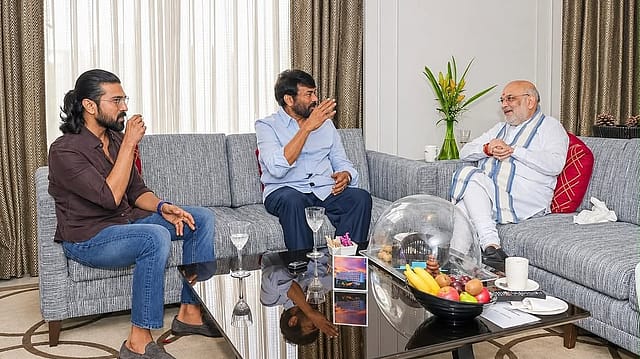
That concern took Chiranjeevi and his son, actor Ram Charan, to Union Home Minister Amit Shah, whom they met at their residence in Hyderabad on November 2. The meeting was also attended by Union Minister G Kishan Reddy. The actors sought stronger safeguards and strict action against the misuse of AI-generated content targeting artists and the film industry.

The Era of Forever Wars
30 Oct 2026 - Vol 05 | Issue 44
Coping with an explosive Middle East
Ram Charan later shared photographs from the meeting on Instagram, saying he was encouraged by Shah’s response to their concerns about the impact of deepfakes on performers and the entertainment business. “His assurance that the Government will examine the matter urgently and work towards stronger safeguards and strict action against such misuse is truly encouraging,” he wrote.
Why did Chiranjeevi and Ram Charan approach Amit Shah?
The meeting was not simply a courtesy call. Chiranjeevi has been raising concerns about degrading and morphed videos targeting artists, and wanted to take the issue beyond social media complaints. In a separate post, the veteran actor said he had explained to Shah how the misuse of AI and deepfake technologies threatened artists’ rights, dignity and creative content. He also sought stronger safeguards and stricter penalties on behalf of the film fraternity.
There was a proposed next step, too. Chiranjeevi said Shah advised him to submit a written representation and entrusted G Kishan Reddy with coordinating the matter. This could give the film industry an opportunity to put forward specific demands, rather than leave the discussion at the level of a general appeal.
However, the assurance to examine the issue should not be mistaken for a new law or an announced government decision. No specific legislative measure or timeline was announced following the meeting.
Does India already have laws against AI deepfakes?
Yes. India’s legal framework already contains provisions that can be invoked against several forms of deepfake misuse.
The Information Technology Act, 2000, covers identity theft, impersonation and privacy violations under Sections 66C, 66D and 66E. Its provisions also address the publication or transmission of obscene and sexually explicit material. The Information Technology Rules, 2021, place due-diligence obligations on digital intermediaries and prohibit content that impersonates people, invades privacy or misleads users, including through deepfakes.
The government has also strengthened these rules. Amendments notified in February 2026 introduced requirements for clear labelling and traceable metadata for permissible AI-generated content, aimed at helping users identify synthetic material and reducing deception. In a July 2026 statement, the Ministry of Electronics and Information Technology said the framework also provided for faster removal of unlawful AI-generated content and stronger platform accountability.
What protection do actors still need?
The existence of laws does not automatically make enforcement quick or straightforward. A manipulated video can spread across multiple accounts before the person depicted can report it. Even when content is removed, copies may continue circulating.
For performers, the concerns extend beyond impersonation. An AI-generated version of an actor could potentially be used in a fake endorsement, a fabricated statement or commercial content without consent. There are also questions about control over an actor’s likeness and voice, compensation for authorised digital replicas, and remedies when their identity is exploited.
These are the issues a detailed industry representation could bring into focus. The challenge is to distinguish legitimate uses of AI in filmmaking, dubbing and visual effects from deceptive or unauthorised uses.
Chiranjeevi and Ram Charan have now put the issue before the Centre. Whether the meeting leads to stronger, clearly defined protections will depend on what the industry formally seeks, and how the government responds.
(With inputs from ANI)