Imran Khan ‘Leave India’ notice: Bombay HC extends protection after actor’s apology — what happens next?
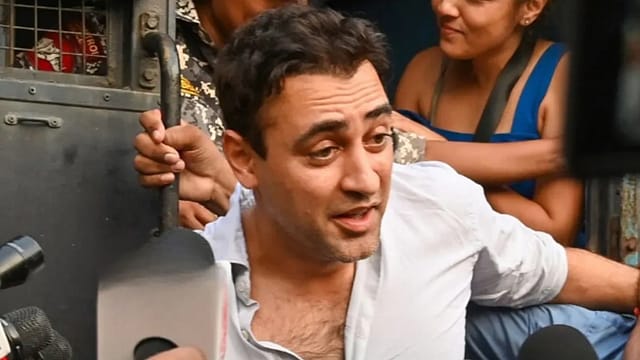
For actor Imran Khan, a brief appearance near a protest site in Mumbai has turned into a legal battle over his right to remain in India. On Monday, November 2, the Bombay High Court extended its interim protection against a Foreigners Regional Registration Officer (FRRO) notice directing him to leave the country. But the hearing also took a new turn: Khan apologised for his participation in the protest and agreed not to take part in similar demonstrations in the future.
The court's observations brought the distinction between Indian citizenship and OCI status into sharp focus. While acknowledging Khan's long association with India, the bench questioned whether an OCI cardholder could claim the same rights as an Indian citizen when it came to political demonstrations.
Why did the FRRO issue Imran Khan a ‘Leave India’ notice?
The matter began on October 10, when Khan was detained near Mumbai's August Kranti Maidan during a gathering linked to protests against Chief Election Commissioner Gyanesh Kumar. The demonstrations were connected to opposition to the Special Intensive Revision (SIR) of electoral rolls.

The Era of Forever Wars
30 Oct 2026 - Vol 05 | Issue 44
Coping with an explosive Middle East
Khan is a US citizen by birth and holds an OCI card. He has lived in India since he was about two years old and has built his acting career here.
Following the incident, BJP leader Kirit Somaiya filed a complaint alleging that Khan had violated OCI rules and visa conditions by participating in the protest. The Mumbai Police subsequently forwarded an FIR to the FRRO, which issued a Leave India Notice on October 14, directing the actor to leave by October 28.
The notice cited an alleged violation of the Immigration and Foreigners Act, 2025. On October 17, the FRRO also issued a show-cause notice indicating that his OCI registration could be cancelled.
What did Imran Khan tell the Bombay High Court?
Khan challenged the notice, arguing that it was issued without giving him an opportunity to explain his position. His petition questioned the legal basis for directing him to leave India and said he had not entered a restricted area or defied police instructions.
His account was that he had gone to see what was happening, rather than organise or actively participate in the demonstration. He also cited his family, education and professional ties to India, arguing that the action was disproportionate.
The Indian Express reported that the court questioned the FRRO's procedure, orally observing that a person who had lived in India for more than four decades should at least have been given an opportunity to be heard before such a notice was issued.
Why did the court ask Imran Khan to apologise?
During Monday's hearing, the bench emphasised that OCI cardholders are not Indian citizens and cannot claim the same political rights as citizens. It questioned Khan's participation in a protest concerning an electoral process that did not directly affect him as an overseas citizen.
According to The Indian Express, the court asked him to tender an unconditional apology or give an undertaking that he would not participate in similar protests again.
Khan subsequently submitted an unconditional apology and agreed not to take part in such demonstrations in the future. The court's observations and directions do not amount to a final ruling on the legality of the FRRO notice or the cancellation of his OCI status.
Can OCI cardholders be asked to leave India?
An OCI card is not equivalent to Indian citizenship. It provides eligible foreign citizens with certain long-term privileges, including permission to live and work in India, but does not confer all the rights available to Indian citizens.
The Centre argued in court that OCI cardholders cannot claim an unrestricted right to remain in India and that the government has powers under immigration law. The court also clarified that OCI holders cannot be treated on a par with Indian citizens in matters involving political participation.
However, it directed the FRRO to consider Khan's reply and hear his side before taking a decision.
What happens next in Imran Khan's case?
The Bombay High Court has kept the Leave India Notice in abeyance until December 7, when the matter is scheduled to be heard again. Khan must submit his response to the FRRO's show-cause notice, along with the apology and undertaking.
For now, he can continue staying in India. The final decision on the FRRO proceedings and his OCI registration remains pending.
(With inputs from ANI)