At Cannes and Beyond, Sanjeev Bijli Sees an Indian Audience Ready for More Than Masala
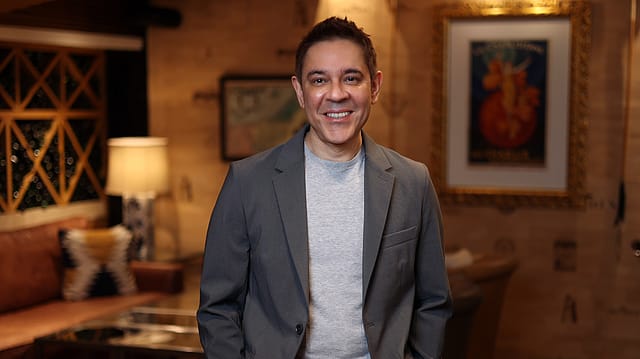
For over two decades, PVR INOX executive director Sanjeev Bijli has had a front-row seat to the evolution of Indian moviegoing. From building multiplex culture in India to bringing international independent cinema into the country through PVR Pictures, Bijli has watched audience behaviour shift dramatically — from single-screen fandom to globally aware streaming-era consumers.
Yet, despite conversations around OTT disruption, declining attention spans and concerns over originality in Indian cinema, Bijli remained optimistic about the theatrical business and the quality of storytelling emerging from India.
“Remakes have now become a very small percentage,” Bijli said in a conversation with OPEN Digital on cinema, content and audience trends. “If you look at the films that have worked over the last year, a lot of them are original stories.”

Losing Memory
16 Oct 2026 - Vol 05 | Issue 42
The making of a medical and social emergency
The conversation came at a time when global cinema itself was witnessing a contradiction: audiences continued to flock to theatres even as critics and viewers remained divided on content quality. Bijli pointed to Michael, the Michael Jackson biopic directed by Antoine Fuqua, as an example.
“We were scared when we read the reviews,” Bijli admitted while discussing audience reactions and box-office unpredictability. “But look at what the film has done commercially. It proves that audience connection and critical reception can often be very different things.”
For Bijli, the larger takeaway was that audiences today were open to a far wider range of stories than the industry often assumed.
According to him, Indian cinema has quietly entered a phase where originality is becoming stronger across languages. He cited films such as Kantara and several regional successes while arguing that the perception of India being heavily dependent on remakes no longer reflected reality.
“The Indian audience is ready for very varied content,” he said. “Gone are the days when we only looked at action films because they were easier to follow internationally. Today, audiences want good storytelling.”
That shift in audience appetite has also changed the way PVR Pictures approaches international acquisitions.
PVR Pictures — the film distribution arm started in 2007 — was initially conceived to bring independent international cinema into India at a time when many global studios lacked local distribution partners.
Bijli recalled discovering the opportunity at international film markets such as Cannes and Los Angeles.
“We realised there were so many independent studios that wanted access to India but didn’t have representation here,” he said.
Over the years, the company partnered with and distributed films from studios such as Miramax, A24 and StudioCanal, among others. Bijli believed the global awareness of films among Indian audiences had increased sharply in recent years, aided by social media, streaming platforms and internet-driven fan culture.
“People already know about films before they release here,” he said. “That awareness changes everything.”
At the same time, Bijli acknowledged that star power still played a major role in determining whether international films worked theatrically in India.
“It becomes difficult to market films if audiences don’t recognise the cast,” he said, citing actors such as Timothée Chalamet, Zendaya and Robert Pattinson as examples of globally recognisable stars who already have strong youth followings in India.
Interestingly, one of the biggest surprises for the company in recent years came from anime.
PVR INOX began releasing anime titles in India roughly two years ago with films such as Suzume and Demon Slayer: Mugen Train. Bijli said the response exceeded expectations.
“I genuinely didn’t know anime had such a big market in India,” he said. “The queues outside cinemas were unbelievable.”
Suzume, directed by Makoto Shinkai, emerged as one of the most successful anime releases in Indian theatres and signalled the growing appetite for Japanese pop culture among younger Indian audiences.
The company is now actively looking at expanding its anime slate further.
Even as the theatrical business continues to evolve, Bijli remained convinced that cinema-going in India remained culturally embedded.
PVR INOX, formed after the merger of PVR and INOX Leisure in 2023, is today India’s largest multiplex chain and among the world’s largest listed cinema exhibitors. According to Bijli, the company closed FY26 with more than 150 million footfalls across its theatres.
“There is so much talent in India — actors, directors, musicians, storytellers,” he said. “Movies and music are deeply ingrained in our culture. We are not building something foreign to India. We are building around something people genuinely love.”
Yet, when it came to Indian cinema’s global presence, Bijli felt there was still a long way to go.
Having attended the Cannes Film Festival and the Marché du Film for nearly two decades, he observed that Indian films rarely travelled consistently at an international level.
While films such as The Elephant Whisperers and filmmaker Payal Kapadia’s work recently gained global recognition, Bijli believed Indian mainstream cinema was still largely designed for domestic audiences.
“Our sensibility is different, and that’s okay,” he said. “Our filmmakers are primarily making films for Indian audiences — for that song, dance, drama and masala experience.”
He added that attempting to simultaneously cater to both Indian and global sensibilities remained difficult.
“You can only really cater to one demographic at a time,” he said.
Still, Bijli appeared hopeful about the future.
Whether it is anime, independent international cinema or ambitious Indian spectacles such as Ramayana, he believed audiences were evolving rapidly — and theatres would continue evolving with them.
For someone who helped build India’s multiplex culture from the ground up, that conviction remained unchanged.
“We started this over twenty-six years ago,” he said. “This is what we know, and this is what we love doing.”