80s AI photo trend: From Piyush Goyal to Kiara Advani, who all joined the internet's biggest nostalgia craze?
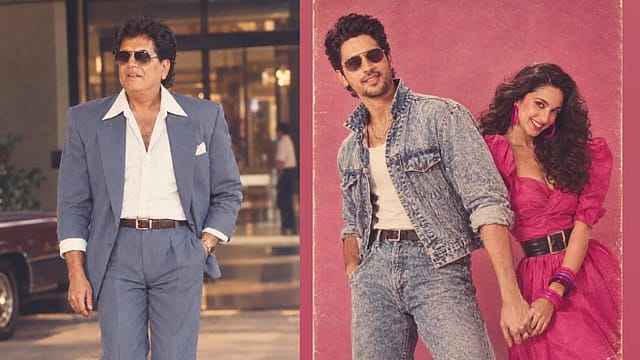
The 1980s are back. Not through a remake, a reunion concert or a rerun on television. They are back because millions of people suddenly decided they wanted to see themselves in oversized sunglasses, denim jackets, studio portraits and grainy film-camera photographs.
Over the past few days, social media has been flooded with AI-generated "80s photos" created using ChatGPT and other image-generation tools. The trend transforms modern images into portraits that look as though they were pulled from a Bollywood magazine, a family wedding album or a film poster from four decades ago. And now the trend has spread rapidly across Instagram and X, with public figures, politicians, journalists and sportspersons joining in.
But who exactly has tried it? And why is everyone suddenly obsessed with looking like they stepped out of 1985?
What is the viral 80s AI photo trend?
The concept is surprisingly simple. Users upload a recent photograph and ask an AI tool to recreate it in the style of the 1980s. The software keeps the person's facial features intact but changes the clothing, hairstyle, lighting, background and colour grading to mimic the era. Think film grain, aviator sunglasses, power dressing, vintage sarees and Bollywood-style glamour. The trend follows earlier viral AI crazes such as Studio Ghibli-style portraits and action-figure avatars.

Zeroing In on ECI
09 Oct 2026 - Vol 05 | Issue 41
Constitutional legitimacy versus political opportunism
Why are politicians suddenly posting 1980s AI portraits?
Perhaps the most surprising participants have been politicians.
Union Minister Piyush Goyal shared an AI-generated retro portrait on social media, helping push the trend into mainstream conversation. Kiren Rijiju and Assam Chief Minister Himanta Biswa Sarma also appeared in AI-generated 1980s avatars that quickly circulated online. Several politicians embraced the trend as a playful social-media experiment.
The trend has since expanded beyond individual leaders. Social media accounts associated with political parties have posted AI-generated retro versions of public figures, turning nostalgia into a digital campaign tool.
Why did Shashi Tharoor take a different route?
While many public figures used AI, Congress MP Shashi Tharoor took a different approach.
Instead of generating an artificial 1980s portrait, Tharoor posted an actual photograph from the decade featuring himself and his sons. The move earned attention because it contrasted sharply with the flood of AI-generated images appearing across social media.
In a sea of synthetic nostalgia, he chose the real thing.
Which Bollywood stars have joined the 1980s AI trend?
Bollywood quickly found itself at the centre of the craze. Kiara Advani and Sidharth Malhotra shared AI-generated portraits imagining themselves as a classic 1980s Bollywood couple. The images featured retro fashion, vintage styling and the kind of cinematic glamour associated with Hindi cinema's blockbuster era.

The trend has also inspired thousands of users to recreate themselves as versions of Amitabh Bachchan, Rekha, Sridevi, Hema Malini and Mithun Chakraborty.
Which cricketers and sports stars have appeared in retro AI form?
Politicians and actors are not the only ones travelling back in time.
Cricketers including Virat Kohli and KL Rahul have appeared in AI-generated retro-style portraits circulating online. Their images have become particularly popular because the 1980s aesthetic closely resembles the era when cricket stars were photographed for magazine covers and television advertisements.
For many fans, the images feel less like AI creations and more like lost pages from an old sports magazine.
Why is the 1980s trend exploding right now?
Because nostalgia is one of the internet's most reliable currencies.
The trend combines three powerful ingredients: AI, personalisation and nostalgia. Users are not simply looking at old photographs. They are inserting themselves into an imagined version of the past.
In a digital world saturated with ultra-sharp smartphone photos, the imperfections of the 1980s suddenly feel refreshing.
Is this the biggest AI image trend since Ghibli portraits?
It may well be. The Ghibli craze turned people into animated characters. The action-figure trend transformed users into collectible toys. The 1980s trend does something slightly different: it turns users into protagonists of a past they may never have lived through.
And that may explain why it feels more personal.
For a generation raised on digital filters, the appeal is not simply looking different. It is stepping into an alternate timeline where every selfie looks like a movie poster and every profile picture could have come from a dusty family album.
The 1980s may be long gone. But thanks to AI, they are currently having one of the biggest comebacks on the internet.
(With inputs from ANI)