BP Singh Dies at 77: The Man Who Gave India CID’s Mysteries and Aahat’s Nightmares
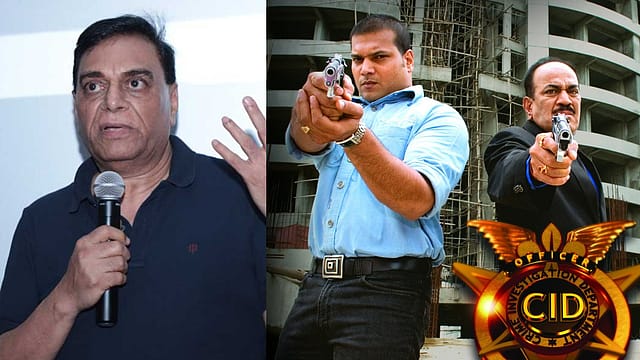
What made millions of television viewers wait for the next clue in CID? And what made an ordinary evening feel a little more frightening after watching Aahat? Behind both experiences was Brijendra Pal Singh, popularly known as BP Singh, a filmmaker who understood that sometimes a carefully framed shot or a moment of silence could be as powerful as the story itself.
The veteran producer-director who helped make crime investigation and horror staples of Indian television, died on Tuesday, October 27, at the age of 77 after suffering a heart attack. Filmmaker Ashoke Pandit confirmed his death in an Instagram post, remembering him as a brilliant filmmaker, a dear friend and a major contributor to the entertainment industry. His final rites are scheduled for Wednesday, October 28, with further details to be shared by the family.

Look Who's Talking Regime Change
23 Oct 2026 - Vol 05 | Issue 43
Singh leaves behind more than two enduring television titles. His career traces the evolution of Indian television storytelling, from the days of Doordarshan to the rise of private channels and long-running serials that became part of everyday popular culture.
From Doordarshan cameraman to the creator of CID
Singh’s journey began behind the camera. After studying cinematography at the Film and Television Institute of India (FTII), Pune, he joined Doordarshan as a news cameraman in 1973. He later moved into television production, developing his interest in crime stories through programmes including Ek Shunya Shunya.
He was not simply building plots around suspects and clues; he was also thinking about how a scene should look, how a camera could heighten tension and how viewers could be drawn into a mystery. An archived interview with India Forums records Singh describing how his years behind the camera shaped his visual approach to filmmaking.
His biggest breakthrough came with CID, the crime investigation series that became one of Indian television’s longest-running shows. Launched in 1998, it brought viewers into the world of a team investigating murders, tracing evidence and pursuing suspects. The procedural format offered a familiar rhythm, but the mysteries and recurring characters gave audiences reasons to return.
How Aahat made horror a fixture of Indian television
If CID invited viewers to solve a mystery, Aahat offered a different proposition: what if the thing that frightened you most was something you could not explain?
The horror anthology became another defining project for Singh and his production company, Fireworks Productions. Its stories drew on suspense, supernatural encounters and the unsettling possibilities hidden in ordinary places. Rather than relying on a single continuing storyline, the anthology format allowed each episode to introduce a new situation, and a fresh reason to be afraid.
Together, CID and Aahat showed Singh’s range. One was rooted in investigation and evidence; the other often ventured into the unexplained. Both depended on atmosphere, carefully controlled reveals and the ability to hold an audience’s attention.
The CID episode that made television history
Singh’s interest in visual storytelling was not limited to conventional television formats. In October 2004, he directed and filmed a special CID episode titled The Inheritance in a single continuous camera shot lasting 111 minutes. Guinness World Records recognises the episode as the longest continuous camera shot in a television show. Filmed in Mumbai with 22 actors and a production unit of 175 people, the episode was broadcast in 2004.
The experiment was a technical feat as well as a storytelling challenge: without conventional cuts to conceal mistakes or move between scenes, the production had to sustain its mystery in real time. It offered a striking example of Singh’s willingness to push the boundaries of a popular series.
Beyond CID and Aahat: A legacy built behind the camera
Singh’s influence also extended into film education. In December 2018, The Indian Express reported his appointment as chairman of FTII’s governing council, bringing his career back to the institution where he had trained.
Tributes following his death have highlighted not only his programmes but also his contribution to the people who worked with him. Pandit recalled their close association during Singh’s tenure as president of the Indian Film and Television Directors’ Association. Actor Anup Soni also paid tribute, commenting, “Rest in peace sir.”
For viewers, Singh’s legacy lives in the familiar routines of CID and the unease of Aahat. For television, it lies in the possibilities he explored as a cameraman, director and producer. He helped turn suspense into a weekly appointment, and showed that Indian television could make audiences both search for answers and fear what they might find.
(With inputs from ANI)