Where Did Tenzing Norgay Come From?
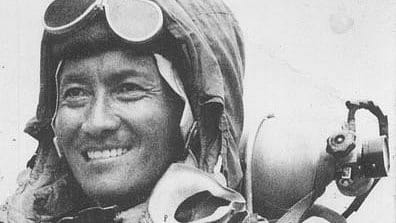
It is a well-known story. Tenzing Norgay, a Sherpa who herded yaks as a child on a high mountain pass in Nepal, accomplished one of the greatest feats of the 20th century when he, along with New Zealander Edmund Hillary, successfully climbed Mount Everest in 1953. But it is also not entirely true. Norgay wasn’t originally from Nepal. In fact, the world’s most famous Sherpa wasn’t even a Sherpa.
The new Tenzing Norgay biopic, Tenzing, which recently hit Apple TV+, has generated a new wave of interest in—and a considerable storm on X over—the mountaineer’s complex identity. Norgay was originally Tibetan, born to a family of poor yak herders in Tibet’s Kharta valley. As a child, he moved with his family to Nepal to escape financial hardship. The movie explores this backstory, even depicting the hostility and tension he experienced within the Sherpa community when he first began working with them.

Look Who's Talking Regime Change
23 Oct 2026 - Vol 05 | Issue 43

This isn’t the only wrinkle in Norgay’s past. Long before the 1953 expedition, he had moved to Darjeeling, India, which was then the staging ground for most Everest expeditions. When Norgay and Hillary summited the peak, the two became instant global celebrities. India, having only recently gained independence, was thrilled to claim Norgay as one of its own. Nepal had similar ideas. The American mountaineer Ed Webster’s 2000 book Snow in the Kingdom: My Storm Years on Everest reveals that when Norgay was invited to England to celebrate the historic climb, he did not even own a passport. It was India’s Prime Minister, Pandit Jawaharlal Nehru, who stepped in and arranged for Norgay to receive an Indian passport. For his part, Norgay tried to play down the controversy when asked about his nationality, describing himself as someone “born in the womb of Nepal and raised in the lap of India”. Yet, he did accept the Indian passport and settled in Darjeeling, where he helped run the Himalayan Mountaineering Institute that Nehru had established—a series of choices that reportedly caused some heartburn in Nepal.
Norgay kept his origins vague for much of his life, driven by legal and political compulsions. Admitting to a Tibetan identity could have complicated his citizenship status and strained his relationships with both the Indian and Nepali governments, especially given the sensitive geopolitical climate following China’s annexation of Tibet. Still, his Tibetan identity wasn’t a complete secret. Some within the Tibetan community in Darjeeling were aware, and Norgay himself occasionally acknowledged it. In 1985, just a year before his death, he gave an interview in Tibetan to an All India Radio journalist (coincidentally, a relative of mine) at the Kurseong station near Darjeeling. At the time, the Kurseong station broadcast a significant amount of Tibetan-language content and regional news, and it was during this broadcast that he openly admitted to his Tibetan roots.
Those were, however, rare admissions. Over time, others have opened up. His family members have spoken out, books like Webster’s have detailed the truth, and now, this new film has brought it to light. The ever-smiling and self-effacing Norgay carried a complex history—one that the world is now beginning to fully understand.