The space between us: Humanity is defined not by likeness but by difference
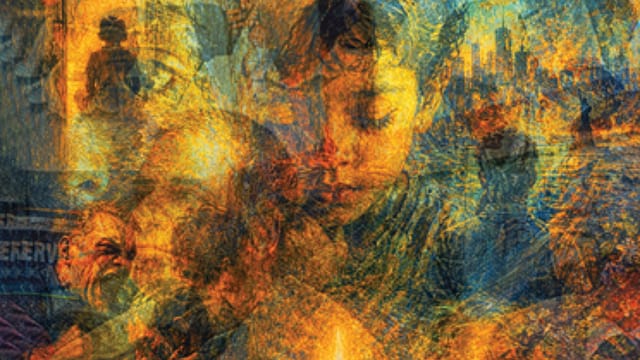
I am finishing work on a book of Urdu poetry, 51 ghazals written across love, loss, desire and hope. So I am sharing couplets from six of those ghazals, because the times demand it.
Aankhon ko khula rakh, zamana badal raha hai Jo kal sirf khabar tha, woh aaj ghar mein jal raha hai (Keep your eyes open; the world is changing. What was news yesterday may be burning in our homes today.)
Mazloom jab pukarein to nazrein na jhukana, Khamosh reh ke zulm ka hissa na ban jana (When the oppressed call, do not lower your eyes. Do not become complicit through silence.)
I know something about being the Other. Growing up in India as a gay man, I felt it endlessly. I did not speak until I was five because I was afraid. I knew I was different. When I had words, fear made me numb and dumb.
Losing Memory
16 Oct 2026 - Vol 05 | Issue 42
The making of a medical and social emergency
Then I arrived in the US. Six days after September 11, 2001, an American from the Midwest attacked me because he thought I was an Islamic terrorist. He hurt my neck. Gail Green, a Jewish American, made a pin for me: “I’m proud to be a Hindu American.” I asked, “Would you wear a pin saying I’m proud to be a Jewish American?” She said, “Absolutely not.”
We understood that we were living in terrible times when decency itself had become uncomfortable.
Jo apni hifazat khud bhi nahin kar pate hain Hum unke liye apni zubaan ban jate hain. (For those who cannot protect themselves, let us become the voice they cannot safely use.)
The woman walking with fear; the migrant made invisible; the poor treated as disposable; the person whose faith, language, body or love makes them unfamiliar— when one is pushed outside the circle, the circle shrinks.
These six couplets respond to what I see around the world: student protests in India; immigrants mistreated in the US; people picked from streets by ICE because they look a certain way. How frightening when belonging can be withdrawn by appearance or suspicion?
Darr ke is paarbhi ek jahan hota hai, Sachkeh do to dil phir se jawan hota hai (There is a world beyond fear; speak truth, and the heart becomes young again.)
We have become too careful about discomfort. We call speaking up “political” when what is really being asked is moral. The decent place is beside those pushed aside.
Nafraton ke shahr mein pyaar bacha ke rakhna, Apne andar ka chiragh jala ke rakhna (In a city consumed by hatred, preserve love; keep the lamp within burning.)
Every form of dehumanisation leaves toxins behind. A planet cannot be truly well when one of its inhabitants is taught they are lesser. Perhaps that is why the final couplet is also a question to each of us:
Aur jab tareekh poochhe ke tum kahan the, Suvir, Jahan zulm tha, wahan apna nishan rakhna (When history asks where were you, Suvir, leave your mark wherever injustice stood.)
I love putting my name there because humanity becomes a question about myself. Even Suvir must answer to Suvir.
I chose these six because poetry can enter places argument cannot. A ghazal opens a window; it asks us to feel before we judge.
But the hour would not let me keep these verses to myself. So I offer them here, in The Soft Boil, as a reminder: Keep your eyes open. Keep your heart porous. Speak when silence becomes complicity. Stand beside those with less power. Defend difference.
Because we are not saved by becoming more alike. We are saved by learning, again, how to belong to one another.