The Authenticity Trap: Why some Brands need distance to create desire

Do customers buy you to ease anxiety or to elevate identity? Your answer determines whether authenticity strengthens your brand or hollows it out.
For a decade, marketers have been instructed to be authentic: be vulnerable, be relatable, show the messy backstage, collapse the distance between brand and consumer. Authenticity has been sold as the moral vocabulary of modern branding.
But authenticity is not a universal virtue. For many brands, especially for aspirational ones, relatability is not a strength. It’s an erosion.
If people buy your product to reduce fear or uncertainty, about their skin, their home, their children, they want closeness. They want to know who made the product, why they made it, and what values drive them. Authenticity lowers perceived risk.
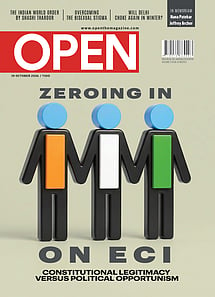
Zeroing In on ECI
09 Oct 2026 - Vol 05 | Issue 41
Constitutional legitimacy versus political opportunism
That’s why Mamaearth’s founder story is so effective. Parents created products for parents. The narrative fits the emotional logic of the category. It is reassuring. It feels earned. And it delivers: the company crossed Rs 2,000 crore in revenue in FY25. In categories where trust is the barrier, proximity pays.
BUYING TO EASE ANXIETY OR ELEVATE IDENTITY?
The calculus flips for aspirational brands.
If customers buy you to feel elevated, transformed, or distinguished, the product must remain slightly out of reach. Distance becomes the value.
Prada doesn’t disclose its backstage. Birkenstock doesn’t perform vulnerability. Their universe is designed, not revealed. They sell ritual and refinement, not rawness. Their mystique is the moat that justifies the premium.
Closer home, Titan’s Zoya understands this. Its boutiques resemble galleries; every gesture is curated. Imagine if Zoya suddenly shared behind-the-scenes confessions on social media. It wouldn’t make the brand more desirable. It would make it ordinary. Because when consumers buy elevation, familiarity collapses the aura.
Brands are hired for two fundamental jobs. First is to reduce friction. This means reassure, inform, and soothe. Second is to create desire through distance, which implies elevate, inspire, and even subtly exclude. Confusing these jobs is dangerous. It leads to misplaced intimacy when brands built on elegance start chasing the relatability metrics meant for influencers.
Luxury houses never make this mistake. Hermès doesn’t share production struggles. It curates scarcity. The Birkin remains valuable because it is difficult to obtain.
In July 2025, Jane Birkin’s original prototype sold for $10 million at Sotheby’s Paris. That’s not marketing. It’s the compounding effect of mystique. When supply meets demand too easily, the symbol collapses.
Aspiration still drives much of Indian consumption. Titan calls itself a lifestyle company, not a luxury house, and that clarity matters. Lifestyle invites participation. Luxury restricts it. The danger lies when managers try to straddle both without understanding the difference. They end up training consumers to expect discounts from brands that once signalled distinction.
Here’s the simplest tool managers can use. In one sentence, write: our customers buy us to ease anxiety or to elevate identity.
If the first phrase feels true, then show your process, feature your founder, and invite interaction. But if the second phrase feels true, then edit ruthlessly, reveal less, speak through materials, silence, and design.
CURATE THE MYTH, NOT THE MESS
This isn't a theory. It’s how markets assign meaning. Over a century ago, Thorstein Veblen articulated the rule: when goods act as social signals, scarcity — not transparency — creates value. Digital ubiquity hasn’t rewritten that law. It has only made violating it more visible.
Royal Enfield strikes a rare balance. The brand is accessible yet aspirational. It celebrates its riders without overexposing its leadership. Events like Rider Mania and Motoverse create belonging without collapsing the brand’s aura. That isn't a coincidence. It's a design discipline. Brands often mistake intimacy for influence. Influencers collapse the gap with followers to gain attention. Brands that sell identity must preserve that gap to maintain elevation. Attention and aspiration operate on different emotional frequencies. You cannot optimise for both.
First, decide your default distance. Write down which side of the equation you belong to. One clarity shapes tone, cadence, and distribution. Second, shift from founder to fabricator. In premium categories, spotlight the craftsperson or designer. Craft authenticity outlasts emotional authenticity. Third, protect scarcity. In digital spaces, fewer posts, fewer drops, fewer partners often create more value.
Scarcity isn’t arrogance. It’s strategic filtration. Across categories and decades, the rhythm remains the same. Brands chase the metrics that are easiest to measure--impressions, engagement, relatability--and neglect the quality that’s hardest to sustain: desire. Authenticity has become a tactic. Aspiration remains an art. And the brands that understand this tension are the ones that endure.