Allegory Flees Pakistan
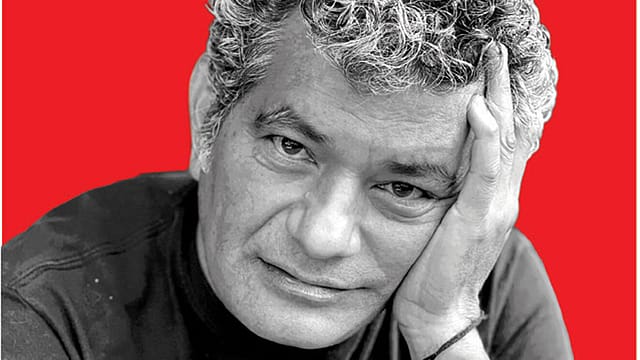
THAT EXPLOSION IN PAKISTAN, way back in 2008, lightened up fiction from the subcontinent, and revealed, in sparkling prose and smouldering satire, the curse of power in a wretched corner of history. Mohammed Hanif’s debut, A Case of Exploding Mangoes, turned the death of General Zia-ul-Haq in 1988—whether it was an accident or an aerial assassination is still a dispute—into a political mystery in which merged the bathos of military dictatorship and the comedy of conspiracy, the hidden habits of authority and the limits of freedom, and written by a novelist in permanent conversation with his inheritance. Dissent could not have been more original—and darkly flamboyant.
Rebel English Academy (Grove Press, £16.99), Hanif’s new novel, is a kind of prequel to A Case of Exploding Mangoes. Words remain the same: defiant and detached, kinetic and comedic, searing and savage. The country is the same: stifled by a nascent dictatorship and still swaying to scriptural demands. The novel begins with the hanging, in 1979, of the socialist prime minister, Zulfikar Ali Bhutto, reviled by the military establishment as a feudal despot. The coup master, the General, is in power. Even in death, the elected politician is denied dignity, and it could not have been otherwise in a place where the official motif is shame. In the opening pages, the soiled shalwar of the deceased was removed for the photographic evidence for proving the military regime right. But the circumcised genitalia of the hanged politician would establish that he was not a Hindu, much to the disappointment of the military rulers. It is the afterlife of Bhutto, a spectral impetus to martyrdom, that hovers over a story inhabited by finely sculpted misfits.
Among them, Sir Baghi, a teacher and refugee from revolution as well as matrimony, an atheist and gay, running a learning centre of English language (which incidentally provides the novel its title) from the premises of a mosque; Molli the mullah, the teacher’s soul brother and a fine example of how religion could be not the opium of the masses but the aphrodisiac for the ingenious preacher; Captain Gul, a boozy, priapic intelligence officer chasing women and the truth behind the Bhutto-Lives martyrdom cult; Sahiba Bano, a much-abused young widow on the run with a hidden gun and protected by the preacher and the teacher; Noor Nabi, lawyer and palmist who can manage the present and the future with the instincts of survival as well as surveillance; and scores of other types and deviants caught in the whirl of resistance, identities and a million pieties.

Power and its pathologies make them characters in an existential vaudeville choreographed by a sadistic history. The widow, stoic and mutinous in equal measure, is the axis on which it is built. Her homework, an idea from the tutor, is a parallel narrative—the memoir of a daughter, widow, and feminist. It is the testament of someone abused, angry and in no mood to give up. She is the rebel worthy of the retired revolutionary’s academy, and her struggle, the most concealed part in a novel of excessive theatre, is a rejoinder to the weird males she must cope with— and in a weirder place. She, still lost in the memory of her Bhutto-loving parents rotting in prison, hides amidst martyrs fuelled by the ghost of the democratic prime minister; teachers beholden to Virginia Woolf; preachers subverting the Book with their libido; and an officer, while sinking deeper in the sleaze and savagery of the establishment, dreaming of an alternative life of power and glory, stretching from Washington to Delhi, indulged by the likes of Indira Gandhi and the Shah of Iran.
Sahiba Bano is the only character who defies allegory in Hanif’s universe. She is as stark as memory and as scarred as reality, and the only one with the clarity of a destination, her last consolation in a country without justice, which she doesn’t think can be reached through the flames of martyrdom either. When she runs towards what she thinks is freedom, what she leaves behind is a country corroded by the Book and the jackboot. No novelist writing in English from the subcontinent has portrayed the raptured reality of home with such exuberant imagination since vintage Rushdie. If it was an explosion of lies in his first novel, it is a maddening meditation on power in Rebel English Academy. A nation imagined is usually more inhabitable than a nation managed by the morally deformed in real time. The Latin American boom was a redeemer’s rite because words of writers such as Márquez and Llosa were more truthful than the historian’s. It is fiction’s immense gain that Mohammed Hanif was born in Pakistan—and remains a redeemer and a reminder.