Sumit Sarkar (1939-2026) and the Deepening of Indian Democracy
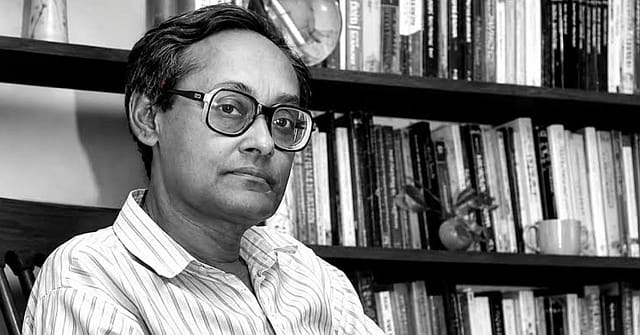
Sumit Sarkar (1939-2026), who passed away on August 13, 2026, was not only one of the tallest historians of modern India but also a public intellectual of rare courage, clarity and intellectual integrity. His writings as a public intellectual can be read as a sustained interrogation of a deceptively simple question: what makes democracy possible, and what makes it vulnerable?
His answer was never confined to elections or constitutional institutions. It concerned the distribution of power—in universities, communities, political parties, historical memory and the nation itself.
The argument was already visible in his 1989 essay, ‘Autonomy for Whom?’, written against Rajiv Gandhi’s education reforms and the UGC’s proposals for autonomous departments and colleges. The language of the reforms was democratic: autonomy, decentralisation and freedom from bureaucratic control. Sarkar questioned the assumption that decentralisation was automatically democratic. Feudal Europe had been decentralised; so, had the slaveholding American South. The real question, he insisted, was the distribution of power within an autonomous unit: autonomy for whom?
Losing Memory
16 Oct 2026 - Vol 05 | Issue 42
The making of a medical and social emergency
The proposed reforms made his concern concrete. Departmental councils could exclude half or more of the teachers; students had no meaningful representation; teachers outside the council need not be consulted even on syllabi; and day-to-day administration would effectively rest with the head. The UGC’s autonomous-college scheme similarly removed elected teacher representatives from governing bodies, replacing elections with rotation according to seniority. Sarkar warned that “autonomy” could simply produce dominant cliques around principals and heads.
The draft Accreditation Council report, Sarkar suggested, claimed to fight the legacies of colonial education, while quietly restoring precisely those features that nationalists had once opposed: less elected teacher representation, greater official control and tighter authority over universities. Lord Curzon, Sarkar observed with characteristic irony, would have been a happy man to find such worthy successors.
A year later, this concern with power moved from institutions to communal politics. In ‘Understanding Communal Violence: Nizamuddin Riots’ (1990), written with Pradip Datta, Biswamoy Pati, Tanika Sarkar and Sambuddha Sen, Sarkar examined the violence of March 17, 1990, in which two Bangladeshi Muslim refugees were killed in police firing and around 50 Muslims were injured. The immediate dispute concerned a boundary wall on land claimed by the Waqf Board and the Delhi Municipal Corporation. The police protected the Hindu crowd constructing it; municipal tankers supplied water for the mortar while refugee settlements burned nearby. An Arya Samaj leader explicitly compared the construction to the Ayodhya shilanyas and called it karseva.
Sarkar and his co-authors challenged conventional secular explanations of communal violence, which tended to blame criminals, a communalised police apparatus or distorted class conflict. Such explanations could leave both elites and ordinary people strangely innocent. The investigation instead followed the organisations and networks behind the mobilisation and connected Nizamuddin to the wider Ram Janmabhoomi-Babri Masjid campaign. Communalism, they argued, had to be understood as a social and political process rather than an external aberration.
That method shaped Sarkar’s subsequent writings on Hindutva. In ‘Conversions and Politics of Hindu Right’ (1999), he examined the politics of conversion and the construction of the Christian “Other”. His argument was not an uncritical defence of Christianity. He acknowledged missionary coercion and the colonial history of conversion. But he also pointed to Christian participation in anti-war, anti-nuclear and socially progressive movements, including cooperation with secular, liberal and Left groups. The important distinction was between a religion and the political uses made of stereotypes about it.
The history of shuddhi sharpened the argument. Arya Samaj campaigns that might have begun as social reform increasingly became exercises in policing religious boundaries. Shuddhi, tabligh and tanzim became mutually reinforcing sources of Hindu-Muslim tension in the 1920s. Savarkar’s 1923 definition of the Hindu through pitribhumi and punyabhumi further connected religious identity with nationalism.
The urgency of this argument was heightened by the burning of Graham Staines and his two sons at Manoharpur in January 1999. Sarkar noted not only the violence but also the student protests that followed and contrasted the allegations of forced conversion with the Gujarat police chief’s statement that VHP and Bajrang Dal activists taking the law into their own hands posed a serious threat to peace.
His critique of nationalism acquired a different form after Pokhran II in May 1998. In ‘The BJP Bomb and Aspects of Nationalism’ (1998), Sarkar refused to treat the nuclear tests simply as irrational. He asked why they had become politically attractive. The much-discussed “national consensus”, he argued, was partly manufactured by the media; one much-cited poll claiming 91 per cent support had surveyed only 2,000 telephone subscribers in metropolitan cities
Pokhran, therefore, was also a cultural spectacle. “Jai Vigyan” could coexist with preparations for the Ram temple at Ayodhya. Technological modernity could be appropriated by cultural nationalism. Sarkar’s larger historical warning was that Indian nationalism had never been ideologically homogeneous. Tagore, Gandhi and Nehru had all criticised aggressive nationalism, while Naoroji and RC Dutt had connected nationalism with poverty and social justice. The nation, in Sarkar’s history, was not a fixed inheritance but a field of argument.
This concern with historical memory became central during the 1999–2000 controversy over Towards Freedom. Sarkar had joined the editorial project in 1989 and submitted his 1946 manuscript in 1995. ICHR records from September 1998 showed that it had been received and transmitted to Oxford University Press.
The controversy was ostensibly about historical bias. Sarkar saw something larger. The project was intended to document the final decade before independence and Partition, not manufacture a single heroic narrative of the freedom struggle. The 1946 volume included the Royal Indian Navy revolt, labour movements, Tebhaga and Telengana, alongside Congress, Communist, socialist, RSS and Hindu Mahasabha activity. The point was precisely to preserve the plurality of the anti-colonial movement.
For Sarkar, therefore, the struggle over history was also a struggle over democracy. If the national movement was reduced to a simple Hindu-Muslim story of heroes and villains, its democratic, secular, federal and socially transformative dimensions disappeared.
Yet he also turned the criticism towards historians themselves. Modern historiography had failed to travel sufficiently into schools, popular culture and less-endowed universities outside metropolitan centres. The RSS and allied organisations had been more effective at that level.
This historical argument found its fullest conceptual expression in ‘Indian Democracy: The Historical Inheritance’ (2001). Sarkar asked why India became a democracy at all, rather than assuming that its democratic survival after 1950 was inevitable. The late 1940s, he argued, had produced a particular settlement through the interaction of constitutional politics and pressures from below. Universal franchise, civil rights, minority safeguards, federalism and secularism were not isolated achievements but mutually reinforcing elements of the democratic inheritance.
The argument also explains why Sarkar’s later writings on West Bengal cannot simply be placed within a Left political camp. Singur and Nandigram in 2006–07, followed by the Lalgarh movement, confronted the CPI(M)-led Left Front with a democratic crisis of its own making. In ‘Notes on a Dying People’ (2009), written with Tanika Sarkar, they recognised the significance of popular resistance against party domination, state power and corporate-led development, while rejecting the politics of revenge that followed the Left’s defeat.
Lalgarh exposed the contradiction further. The movement began in November 2008 amid longstanding grievances over land, forests, water, poverty and police repression. Maoist intervention subsequently damaged the movement, while state and central forces responded with armed repression. Sarkar did not romanticise Maoism, but neither did he allow Maoism to erase the preceding history of party and state coercion.
This brings us back to the question of Sarkar as a public intellectual.Sarkar never concealed his political location. He called himself a Marxist and was clearly associated with the intellectual traditions of the Left. But political location was not the same as intellectual subordination. He criticised the Right, but he also criticised the Left. He questioned a Congress government’s education reforms, challenged liberal explanations of communal violence, opposed Hindutva’s reconstruction of nationalism, defended a plural historiography of the freedom movement, admitted the failures of historians themselves, and criticised the CPI(M)’s authoritarian political culture.
That distinction is important because the category of the public intellectual is often misunderstood as requiring political neutrality. It should not. A public intellectual does not have to stand above politics; indeed, such a position is often impossible. The more useful distinction is between having a political position and allowing that position to determine every judgement.
Sarkar had a clear political location. His arguments were never neutral, but neither were they obedient to party loyalty. That combination—politically legible, intellectually ungovernable—is precisely what makes such public intellectuals so difficult to accommodate in contemporary India.
A historian who criticises Hindutva can be dismissed as a “Left historian”; criticism of the Left can be read as betrayal; criticism of the Congress can produce another political label. The argument is judged through the presumed identity of its author before the evidence is examined. The crucial question becomes not ‘Is this argument persuasive?’ but ‘Whose side is (s)he on?’
The value of a public intellectual such as Sarkar lies precisely in resisting that sorting. He does not make politics disappear from intellectual life; he makes political commitments available for scrutiny. His importance does not arise from being above the political fray, but from remaining intellectually independent within it.