Sashidhar Jagdishan: The CEO In The Hot Seat
Either you are pregnant or you are not—you can’t be “a little pregnant”. That’s what came to my mind while reading the vaguely worded resignation letter of Atanu Chakraborty, part-time Chairman and Independent Director of HDFC Bank, India’s largest private sector bank.
Chakraborty, a former Economic Affairs Secretary, wrote in his March 17 resignation letter: “Certain happenings and practices within the bank that I have observed over the last two years are not in congruence with my personal values and ethics. This is the basis of my aforementioned decision.”
The lack of specifics shocked everyone. In an interview with The Economic Times, HDFC Bank MD & CEO Sashidhar Jagdishan said the chairman, despite writing about ethics and values, did not specify anything. “If you have concerns, put them there and we will address them collectively. He said ‘I don’t have any to share’. We then said, ‘if you don’t have any to share, please remove the lines.’ He was steadfast and refused to budge.”
The Modi Years
02 Oct 2026 - Vol 05 | Issue 40
A Nation Rebuilt
In another interview with Business Standard, Sashidhar remarked: “If I have done something wrong, I know what we need to do to repair that. But here, it’s a ghost that has come about. It’s something all of us are baffled with, whether at management or board level.”
Interestingly, Chakraborty’s former North Block colleague and ex-Finance Secretary Subhash Chandra Garg was sharply critical. Writing on X, he said: “Atanu Chakraborty did a great disservice to HDFC Bank, its shareholders and depositors by citing vague grounds and his undisclosed personal values to resign as its chairman. This amounts to a totally unprofessional and unproductive conduct. My opinion.”
A former executive familiar with the bank’s inner workings offers a different perspective: “There is no scam, no NPA issue, no technology problem. To my mind, this is a personality clash—an ego battle at the top.” That appears to be the prevailing view.
But the damage was already done. This ‘must-have’ stock in most portfolios took a sharp beating on Dalal Street, leaving retail investors caught in the crossfire and poorer.
In fact, it was a double whammy. Markets were already under pressure due to the Iran-Israel-U.S. conflict, and Chakraborty’s exit amplified the fall. HDFC Bank’s share price, which was hovering around Rs 840–845 before his resignation, plunged 11–12% to about Rs 745 on March 23, 2026. Its market capitalisation fell from Rs 13.2 lakh crore to Rs 12.8 lakh crore. In just four trading sessions, roughly Rs 1.35 lakh crore of investor wealth was shaved off, with governance concerns adding to global market weakness.
Reacting to the developments, Macquarie Capital removed the stock from its ‘buy’ list, while global brokerage Jefferies exited its position.
To the bank’s credit, however, both regulators—the RBI and SEBI—came out strongly in support of the current management.
Even so, the resignation saga has inflicted significant damage on the bank’s brand, valuation, and the trust painstakingly built over three decades by Aditya Puri, Deepak Parekh, and others.
Given the scale of wealth erosion, one might have expected investor associations to step in—either with a statement or legal action—to ensure accountability.
In the United States, such an episode could potentially trigger a lawsuit—particularly if material information was withheld, disclosures were misleading, or there was a governance failure that impacted stock prices. That could invite class-action suits and scrutiny from the SEC.
However, if the resignation and disclosures are found to be compliant with regulatory norms, there may be no legal consequences.

As of now, there is little clarity on what prompted Chakraborty’s resignation. The episode remains a mystery—though perhaps not for long. HDFC Bank has appointed three external law firms—Trilegal, Wadia Ghandy & Co, and a U.S.-based firm -- to independently examine the concerns raised. Their probe is expected to review boardroom records, whistle-blower complaints, and any ethical issues.
So how is the man in the hot seat handling it?
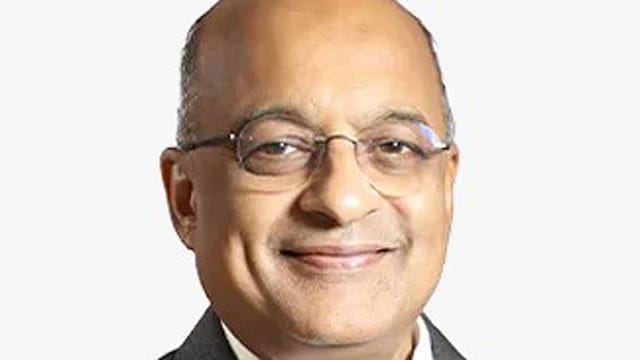
The 56-year-old Jagdishan, a three-decade veteran of the bank, has now found himself at the centre of controversy twice in two years—neither of his making.
Born in Mumbai and raised in Matunga, Jagdishan became a Chartered Accountant before joining HDFC Bank in 1996, just two years after its inception. Over time, he worked across finance, strategy, and corporate functions, eventually rising to CFO. As CFO, he is credited with maintaining the bank’s hallmark financial discipline—tight control over asset quality and prudent capital allocation.
Insiders describe him as unassuming, grounded, and approachable. So, when Aditya Puri—one of the principal architects of the bank—retired in October 2020 after a 26-year stint, Jagdishan emerged as the natural successor. An insider with deep knowledge of the bank’s balance sheet and risk framework, he could hit the ground running. It is also widely believed that the RBI favours internal candidates for continuity.
Yet, Jagdishan and Puri have strikingly different personalities. Jagdishan is media-shy and low-profile, while Puri -- synonymous with the bank -- is media-savvy and charismatic. Filling Puri’s shoes was always going to be a tall order.
In fact, HDFC Bank’s communications team reportedly encouraged Jagdishan to engage more with the media after taking over as CEO. But he declined.
Surprisingly, he stuck to that line even when a fire was lit under his chair.
It pertains to a case relating to the Lilavati Kirtilal Mehta Medical Trust, which manages Mumbai’s Lilavati Hospital. The allegations surfaced in June 2025. An FIR was filed against him alleging financial impropriety, charges the bank dismissed as “malicious and baseless”. The matter remains sub judice, with no findings against him.
However, Chakraborty’s resignation marked a turning point. Jagdishan surprised colleagues by actively engaging with the media to present his side of the story—perhaps recognising that the reputation of one of India’s most valuable companies was at stake.
Clearly, this episode has put fiduciary responsibility at HDFC Bank under intense scrutiny. Whether Chakraborty was justified may not be the central issue. Despite strong fundamentals, the real collateral damage has been borne by retail investors, whose wealth has taken a hit.
What next?
Jagdishan’s second term ends on October 26, 2026. By then, the dust may well have settled. The RBI’s stance on his continuation will be closely watched. Until then, as the saying goes, uneasy lies the head that wears the crown.