Rs 590-Crore Fraud: How IDFC First Bank’s Vaidyanathan Took The Bull By Its Horns
As a business journalist for over four decades, I have reported on, covered, or closely followed multiple frauds and scams — Harshad Mehta, Ketan Parekh, MS Shoes, Satyam, YES Bank, Punjab National Bank, Videocon — that have rocked the country from time to time.
My experience has been that the CEOs whose companies are hit by fraud usually panic and clam up. They switch off their phones…go under the radar. The same journalists they courted till yesterday suddenly become persona non grata. Even the corporate communications head becomes incommunicado. As a result, journalists run the story with the standard rider: “Calls/emails sent to the company elicited no response at the time of going to press.” Readers naturally assume the worst because the CEO is avoiding the media.
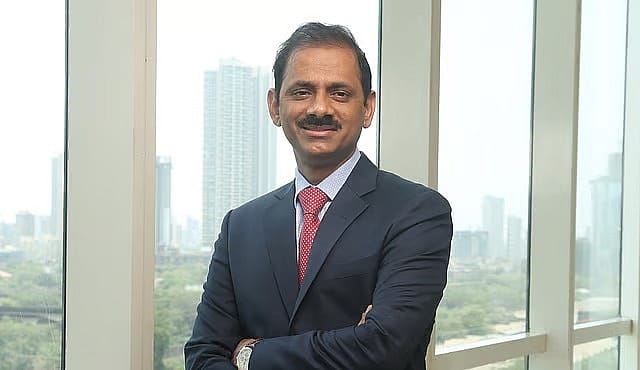
This is what makes 58-year-old V Vaidyanathan, MD & CEO of IDFC FIRST Bank, refreshingly different. In an unprecedented move, instead of dodging the media, he took the bull by its horns the moment he learned that a Rs 590-crore fraud had been detected at one of the bank’s branches in Chandigarh.
Vaidyanathan — popularly known as Vaidya — acted swiftly. He alerted the regulator, the Reserve Bank of India; informed the stock exchanges; filed a FIR with the police; and appointed forensic auditor KPMG to investigate how the fraud occurred.
And before any journalist could even smell blood — nearly a week after the bank discovered the fraud — he called for a conference call with investors and shareholders on Sunday, February 22. This proactive move paid off.
Survival Instinct
22 May 2026 - Vol 04 | Issue 72
India navigates global economic turmoil with austerity and smart diplomacy
On Monday morning (Feb 23), all business papers and dailies carried the IDFC fraud story on their inside pages, except Mint, which ran a two-column story below the fold. There were no screaming headlines. By pre-empting the media, he managed to control the crisis to a large extent.
To my mind, this was Vaidya’s masterstroke: he came out in the open as he had nothing to hide. The media, in turn, carried his version because he had voluntarily shared all the details.

This reminds me of the famous Chicago Tylenol case in 1982, in which seven people died after consuming Tylenol capsules laced with potassium cyanide. The incident caused national panic and Johnson & Johnson CEO acted swiftly, recalling 31 million bottles of Tylenol and halting production even though the tampering occurred at the retail level. The company won widespread praise for its handling of the crisis and regained 70% of its market share.
Speaking to The Economic Times, Vaidyanathan did not mince words. He said, “Certain employees of a branch in Chandigarh, most possibly in connivance with external parties, have fraudulently transferred these amounts to beneficiaries who had accounts outside IDFC FIRST Bank.” He added that the transactions were carried out “using forged authorisation letters and cheques”. It was manual transactions in a digital age.
The Haryana State Vigilance and Anti-Corruption Bureau also acted quickly and arrested five individuals: government official Naresh Kumar Bhuwani; two former bank employees — Ribhav Rishi, head of the Chandigarh Sector 32 branch, and Abhay Kumar, a relationship manager — along with Kumar’s wife and her brother.
Initial reports indicate that about Rs 300 crore of government funds were transferred to an account of Swastik Desh Projects in AU Small Finance Bank. Following procedure, the Haryana government issued a circular de-empanelling both IDFC FIRST Bank and AU Small Finance Bank for government business.
As a damage control exercise, Vaidya flew to Chandigarh to meet Haryana government officials. And in a rare, almost unprecedented gesture putting “customers first,” he did the unthinkable for the banking sector.
“We call ourselves Customer FIRST all the time. Why not just pay them the amount instantly with interest, pending law enforcement and forensic investigation? … I told the team I will leave for Chandigarh right away to meet senior government officials. Please credit the client accounts before I land at midnight,” he wrote on LinkedIn
The bank paid the Haryana government Rs 583 crore, covering both principal and interest. This was a striking departure from normal practice, where no funds are released until investigations are complete.
This was Vaidya’s second masterstroke. It prevented the Haryana government from contemplating a complaint to agencies like the CBI. The move must have won him significant goodwill.
A relieved chief minister of Haryana, Nayab Singh Saini, announced that the entire amount lost by the government had been reimbursed by IDFC FIRST Bank. Problem nipped in the bud, one might say. Had the CBI entered the scene, the matter could have dragged on endlessly.
Vaidya went further. He released full-page advertisements in national and business dailies titled: “Living By Customer First Principles… When It Matters Most.”
Reassurance also came from the RBI, which stated that it did not see any systemic risk arising from the Rs 590-crore fraud. For Vaidya, that was half the battle won.
His strategy of using LinkedIn worked. His post received 4,229 likes, 376 comments, and 266 reposts — along with widespread admiration.
Board member Pankajam Sridevi commented: “As a board member of IDFC FIRST Bank, it is heartening to see the professionalism and transparency you demonstrated to the board, the regulators, and the customers. The quick decisions you made after the fraud was identified, in favour of our customers, will go down in history as a bank that lived up to the value of Customer First and ethical banking.”
Among the many comments, one message captured the sentiment best. Praful Agrawal, Regional Head of Bajaj General Insurance, wrote: “In an industry where institutions often hide behind investigations, procedures, and legal cushioning, choosing to honour the depositor first — before conclusions were drawn — is not bold. It is rare. And rarity is what builds legacy…
…Calling yourselves a Customer FIRST Bank is easy branding. Demonstrating it under financial, legal, and reputational pressure is culture. Paying the full amount with interest within 24 hours, despite an ongoing investigation, sends a message far beyond Chandigarh…”
As expected, the stock saw selling pressure on Monday (Feb 23), with the IDFC FIRST scrip falling around 19% — from its Friday (Feb 21) close of Rs 83.56 to Rs 69.89–70.97 on Feb 24. But these were mere blips. Analysts now say the worst is over, and the stock has begun to recover. On Friday (Feb 27), it closed at Rs 72.74.
Frauds and scams are part of every society. Even in highly regulated markets like the U.S., they still occur. India is no different. But what Vaidya has shown is how to handle a crisis decisively and transparently. Over the past few days, there have been no fresh stories in national or business dailies, nor on social media. He has effectively taken the wind out of his critics’ sails. In essence, marathoner Vaidya has proved that if you are honest and transparent, you have nothing to fear.