Heat Without Relief: How India’s Energy System Fails During Extreme Summers
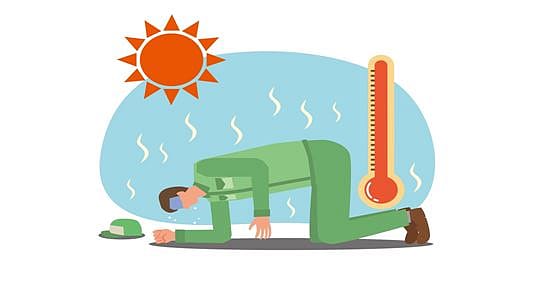
Every summer in India seems to last longer, be harder, and be more brutal than the last one. What used to be a seasonal problem has turned into a structural one, showing not only the rising temperatures but also the weaknesses in India's energy infrastructure. As heatwaves move from state to state, the question is no longer whether India can make enough power, but whether it can deliver it fairly, reliably, and on time to the people who need it most.
This is not just a story about climate change. It's a story about infrastructure, inequality, and how policies are made. The heat is hardest on those who are least able to handle it.
A System That Went Too Far
In theory, India should be able to make more power. But peak demand shows that there are big problems with the structure.
It's not just about how much electricity is made; it's also about when, where, and how consistently it gets to you. During very hot weather, demand rises sharply in the late afternoon and evening, which is exactly when solar generation starts to drop off. Wind patterns don't always match up with times of high demand either. The result is that the gap between supply and need is getting bigger. This is where the system breaks down.

Exclusive: To the Heavens and Back
19 Jun 2026 - Vol 04 | Issue 76
Shubhanshu Shukla relives the space odyssey that put India into orbit
The myth of having too much power
People often call India a country with too much power. Installed capacity has grown, renewable energy goals are high, and most homes now have electricity. But this story hides an important truth: just because something is available doesn't mean it's easy to get to.
In many parts of rural India and peri-urban areas, power outages are still common during heat waves. Power outages and changes happen a lot, even in cities. Distribution companies (DISCOMs) are having trouble making money, so it's hard for them to get expensive peak power. They save money by turning off the power, which is basically load shedding. This means that families have to go without fans, coolers, or refrigerators for hours at a time when the temperature is often over 45 degrees Celsius.
Unequal cooling
Cooling is now a basic need for survival, but not everyone has equal access to it. More and more middle-class homes in cities depend on air conditioning, while millions of people depend on fans or evaporative coolers. Even these are seen as luxuries by a lot of families with low incomes. As a result, there is a huge difference in temperature. People who can afford to cool down can avoid the worst effects of heat. People who can't do this are at greater risk of health problems.
Heat stress makes you less productive, makes you more likely to get dehydrated or heatstroke, and makes health problems you already have worse. People who work outside, do casual work, or live in homes that aren't well-ventilated are at much greater risk. In this context, energy access transcends mere development concerns; it constitutes a critical public health and survival issue.
The Timing Problem and Renewables
India's growth of renewable energy is a big policy success. There is a lot more solar and wind power now, which makes the mix of energy sources greener. But renewables bring a new problem: they don't always work.
The most solar power is available in the middle of the day, when temperatures are high but electricity demand is not yet at its highest. When people turn on their air conditioning at night, solar production drops a lot. When there isn't enough storage or a flexible backup, a gap forms that the current system has a hard time filling.
Coal is still a big part of closing this gap, but it has its own problems, like worries about the supply of fuel, the cost to the environment, and the fact that it can't be used in a flexible way. So, the grid has two bad choices: unreliable renewables or too much thermal electricity. Every summer, the problems with India's energy infrastructure get worse and harder to ignore.
It's not enough to just keep the lights on; you also need to make sure that everyone can get out of the heat. India's summers will keep testing its infrastructure and its commitment to fair development until the system is rebuilt to take into account both extreme weather and social inequality. The temperature is going up. The question is whether the system can keep up.
Conclusion
India’s summer heat has always been very strong, but in the past few years it became harsh enemy. Heatwaves, marked by long periods of very hot weather, are now happening all over the country with concerning regularity and strength. India’s heat problem signals climate change is not a distant threat anymore; it is happening now. Rising temperatures are real things that affect people’s health, livelihood, and sense of dignity. This problem is common to governments, communities , and people need to fix the problem.
Policymakers need to put climate resilience at the top of their list when making plans for cities and public health. Researchers need to keep exploring how heat affects things over time. If we don’t act right away, heatwaves will keep being worse, making summers a struggle for millions of people. The main question is not whether temperatures will rise, but whether we will respond in a timely, fair, and effective way to protect those who are most at risk.