Lives on the Margins: Indian visual artist Artist Monica Dhaka explores how we can accept our differences
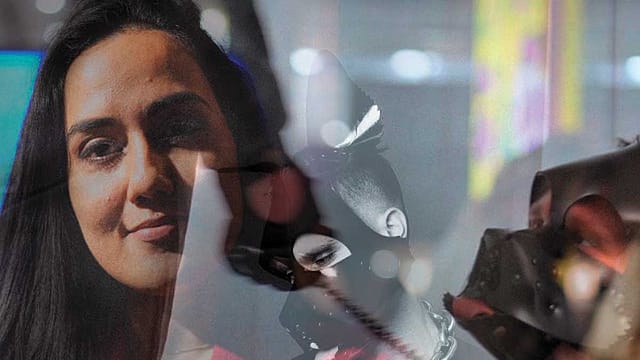
WE LIKE TO BELIEVE we are more open than those who came before us. That we have shed the weight of shame, loosened the grip of judgement, widened the lens through which we see one another. And yet, the truth is less flattering. We have simply learned new languages to disguise old discomforts. We rename what we do not understand, aestheticise what we do not wish to confront, and continue—quietly—to keep certain lives at the margins of our imagination.
It is into this uneasy space that Monica Dhaka steps, not with spectacle, but with stillness.
A London-based Indian visual artist working with moving image, Dhaka does not position herself as an authority. She is not here to explain a world to us. She is here to hold a mirror steady enough for us to see what we have refused to look at. Her work lives in that fragile tension between curiosity and discomfort—where perception begins to shift because it can no longer remain unchanged.
Born in Vizag and shaped by a childhood that moved across geographies, she grew up understanding that identity is rarely singular. It is layered, negotiated, and often edited for survival. Her early years in Mumbai, followed by her time within the content systems of Disney Star and Viacom18, taught her how narratives are built—what is included, what is softened, what is left unsaid. But it was at the University of the Arts London that she began to unlearn those structures, turning instead toward a practice that privileges intimacy over instruction, and human emotion over easy clarity.
Her moving image work, Belonging & the Scene, enters a territory most people approach with either fascination or fear—the kink community. A space flattened by stereotype, burdened by moral panic, and too often reduced to caricature. Dhaka refuses that reduction. She does not look from the outside; she steps in with a willingness to listen, to witness, and to let it define itself.
What emerges is not the sensationalism we have been conditioned to expect. It is something far more disarming.
A vocabulary of consent.
A discipline of trust.
An ethic of care.
In place of excess, there is structure. In place of chaos, there is communication. In place of deviance, there is a community negotiating intimacy on its own terms. And in allowing that truth to surface, Dhaka does something radical without announcing it— she dismantles the scaffolding of assumption that so many of us carry unquestioned.
Her work does not argue. It does not plead. It does not seek approval. It simply reveals. And in that revelation lies its quiet power.
Because what Belonging & the Scene ultimately asks is not whether we accept the lives of others, but whether we are willing to examine the limits of our own empathy. Whether we can sit with difference without translating it into something more palatable. Whether we can allow people the dignity of complexity without demanding they conform to our idea of normal.
This is not only about one community. It is about all the ways in which we decide who belongs—and who does not.
We grow not by insisting on clarity, but by making room for another’s truth. We evolve not by speaking louder, but by listening longer. We expand not by absorbing difference into sameness, but by giving it space to remain distinct, to breathe, to live, to show itself without interruption. And in that act of allowing, we come closest to something we rarely practice but constantly seek: a belonging that does not demand permission, only presence.