Homeland and Heartbreak: A new song that can be heard across borders
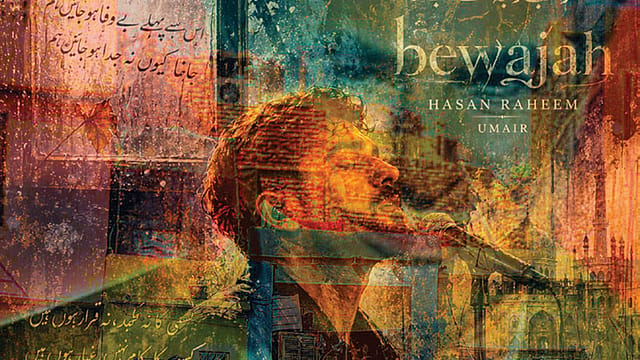
THERE ARE SONGS that arrive like distractions, and then there are songs that arrive like destiny. ‘Bewajah’ does not knock; it seeps. It slips through the seams of the day and settles somewhere between memory and marrow, asking questions you did not know you were still carrying. In the voice of Hasan Raheem, held and heightened by Umair, it becomes less a song and more a slow unraveling—a silk thread pulled gently until an entire life begins to loosen. On the surface, it is heartbreak. But beneath that surface, it is homeland. It is the quiet grief of something that once held you and now does not. The beloved here is not only a person—it is a place, a past, a promise that dissolved without explanation. “Bewajah bewafa”—unfaithful for no reason—but what if the reason is history, inheritance, the long shadow of decisions made before we were born? What if the betrayal is not chosen, but carried?
Listen closely and the song widens. It becomes the echo of a train that crossed a border and never returned the same. It becomes a courtyard abandoned mid-conversation, a kitchen still fragrant with spices but emptied of voices. It becomes the ache of the muhajir, the migrant, the one who did not leave as much as he was unmoored. There is no accusation in the voice, no bitterness in the breath. Only a bewildered tenderness—as if asking, softly, how something so full became so far. And yet, rising from that ache is something astonishing: beauty. Pakistan, a nation often spoken of in the language of crisis, continues to sing in the language of soul. There is a reason Coke Studio Pakistan has become a sanctuary of sound, a cathedral of collaboration where music is not manufactured but manifested. In a country tested repeatedly, art has not retreated—it has refined itself, distilled itself into something fierce and fluid and unforgettable.
‘Bewajah’ carries that same pulse. Its video is not spectacle but stillness—wide frames, quiet faces, landscapes that feel like they are listening back. It is cinema that does not shout but shimmers, that trusts silence as much as sound. The imagery does not decorate the music; it deepens it, like shadow gives shape to light. And perhaps that is why it travels so far, so fast. Not because it is trending, but because it is true. In a world of algorithms and acceleration, this song pauses. It lingers. It leans into longing. It reminds us that before we were divided into nations, we were gathered by notes. Before we learned to mistrust, we knew how to feel.
Music does what borders cannot. It dissolves, diffuses, defies. It crosses checkpoints without passports, enters homes without permission, and sits beside you like an old friend who knows exactly where it hurts. A listener in Delhi hears it. Another in Lahore feels it. A third in London hums it without knowing why. And suddenly, without agreement or agenda, they are connected—breath to breath, beat to beat. This is not coincidence. This is continuity. The subcontinent has always sung itself into survival. Through ghazals and qawwalis, through folk songs and film scores, it has held onto humanity when history tried to fracture it. ‘Bewajah’ is part of that lineage. It does not argue for unity; it embodies it. And in doing so, it offers something quietly radical. Not solutions, not slogans, but recognition. That we have all loved what we could not keep. That we have all been left without language for our loss. That somewhere within us lives a map of a place that no longer exists, except in feeling.
So we listen. And in listening, we bow— to the artist, to the art, to the astonishing resilience of the human spirit. Because even in rupture, we reach. Even in exile, we remember. Even in silence, we sing.