Nations as Brands, Wars as Performances
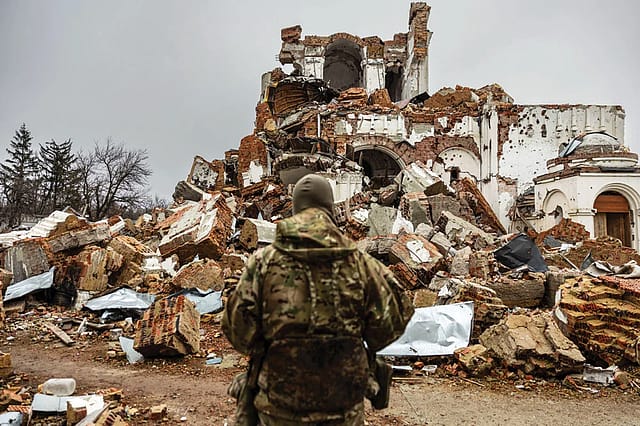
As the Iran war showed, conflict today is no longer confined to borders. It is staged, circulated, and consumed in real time. We often discuss how our generation has witnessed so much but this theatre of nations is by far my favourite drama series.
Think of today’s geopolitical landscape as a chaotic group chat where every country is a carefully curated “brand personality” with very human flaws. The US is the legacy luxury house that insists it’s still the main character: rich, influential, always present in every crisis, but visibly exhausted from trying to manage everyone’s problems. China is the hyper-competent, strategic friend who hypes you up endlessly, but prefers to watch, calculate, and step in when it guarantees advantage. Russia is the controversial rebel brand that thrives on disruption, unbothered by bad press, leaning into it even, playing the long game of endurance over approval. Israel is the intense, hyper-alert operator of the group: always armed with facts, strategy, and a readiness to strike first, ask questions later. Palestine, meanwhile, has become the voice that moves the room emotionally, the one whose story everyone is reacting to, reshaping global opinion in real time. Iran is the shadowy networker who never attends the party directly but somehow influences every conversation through its circle. India is the quiet luxury presence, elegant, self-assured, choosing when to speak and when to stay above the noise, while everyone keeps expecting it to take a stand, but it prefers strategic ambiguity over loud intervention. And Pakistan is that friend giving relationship advice to everyone else while their own life is visibly in chaos, positioning itself as a mediator abroad while juggling instability at home. Together, they don’t just fight wars, they perform identities, manage optics, and compete for relevance in a world where perception travels faster than power.
Beneath the strategy and spectacle lies something even harder to contain: belief. The tensions between Israel and Iran are not purely geopolitical; they are also ideological, even theological. For some, this conflict is framed through history, prophecy, and competing visions of order in the region. It is not just about land or fuel, but about identity, legitimacy, and destiny. Political interests and faith often move together, sometimes uncomfortably so. Leaders speak in the language of security, but underlying it are deeper currents like legitimacy, destiny, and the need to protect not just borders, but belief systems. Which is why these conflicts resist simple resolution: they are as much ideological as they are territorial. Even at critical chokepoints like the Strait of Hormuz, where global anxiety spikes with every headline, the reality on ground tells a quieter story. Observations, including those by independent analysts such as Citrine Research, suggest that ships continued to pass and trade continued to flow despite escalating tensions. The disruption is not physical, it is psychological. Markets react, narratives amplify, and fear travels faster than fact. It is a sharp reminder that in modern conflict, perception often escalates far quicker than reality, and sometimes, the idea of crisis becomes more powerful than the crisis itself.
Israel’s leadership, shaped by the historical trauma of the Holocaust, often frames security in existential terms. Its doctrine has long emphasised overwhelming deterrence, the idea that any largescale threat will be met with decisive, disproportionate response. This language, rooted in history, continues to influence how current conflicts are articulated and understood. Another emerging fault line sits quietly at the intersection of geography and energy: Turkey. Straddling Europe and Asia, and acting as a key transit hub for gas pipelines and regional energy flows, Turkey occupies a position that is difficult to ignore. As global power competition intensifies, countries that control routes, not just resources, become increasingly significant. Turkey’s balancing act between NATO commitments, regional ambitions, and independent diplomacy places it in a uniquely sensitive position. It is not a “target” in any conventional sense, but it is undeniably a pressure point; one where influence, energy security, and geopolitical alignment are likely to collide. Domestically, Turkey is also navigating an internal ideological shift. Under its current leadership, there has been a visible move towards a stronger religious-cultural identity within public life, including education. For some, this reflects a return to tradition; for others, it raises concerns about direction and balance. As Turkey positions itself between East and West, NATO and independent ambition, it becomes not just a bridge, but a potential flashpoint. Not an inevitable target, but certainly a country whose trajectory will be closely watched in the years ahead.
Look Who's Talking Regime Change
23 Oct 2026 - Vol 05 | Issue 43

China is the hyper-calculating strategist of the group, rarely loud but deeply embedded. Through trade routes, infrastructure investments, and quiet alignments across regions like Iran and Central Asia, it plays a long game. The Belt and Road vision alone ties together corridors from Asia to Europe, ensuring that influence flows where visibility does not. China doesn’t avoid conflict; it monetises its pathways around it. In a state of war, what proves to be inviting brutal trouble, it seems is neutrality. The UAE is not just navigating conflict, it is curating ideology. By restricting state-funded scholarships to UK universities over concerns of Islamist influence, it signals a clear stance: controlled modernity over political Islam. But neutrality comes at a cost. Dubai, built as a global sanctuary of stability, now finds itself subtly penalised for not choosing sides loudly enough. Capital shifts, routes tighten, trust recalibrates. The city doesn’t declare war, yet absorbs its consequences. As even allies like Spain reportedly restrict cooperation in US/Iran tensions, the message is clear: neutrality is no longer protection, it is pressure.
And then there is a quieter, less acknowledged tension or competition. As Dubai rises as a global hub for talent, capital, and culture, often drawing the very people and energy that once flowed almost exclusively to the West, it inevitably enters a space of comparison. Not direct conflict, but strategic discomfort. Because in a world of shifting power centres, growth in one place is rarely invisible to another.
Europe, too, is beginning to show signs of strain. Migration, once framed primarily as a humanitarian question, is increasingly being viewed through the lens of security and social cohesion. Stricter border controls, detention frameworks, and policy shifts reflect a growing anxiety, not just about numbers, but about the potential for cultural and political unrest in an already polarised landscape.
Elsewhere, the echoes of older power struggles refuse to fade. Cuba, long caught in the crosscurrents of global politics, continues to grapple with economic strain, resource shortages, and the lingering weight of decades-long isolation. Its vulnerabilities are not new, but they are once again becoming strategically relevant. As Russia renews its presence, whether through symbolic military movements or deeper cooperation, it signals more than support; it hints at positioning. Cuba offers proximity, history, and a familiar stage for geopolitical messaging. For Russia, engagement here is not just about alliance, but about reminding the world that influence can be projected far beyond immediate borders, even into spaces once considered settled.
Strategic chokepoints like the Strait of Hormuz, long influenced by shifting global powers and now firmly under Iran’s control since the late 20th century, remain central to global energy flows. Control over such routes has historically drawn international attention, and continues to sit quietly at the heart of modern tensions. But modern conflict is rarely direct. It often moves through proxies. Groups like Hezbollah, widely understood to be backed by Iran, operate within this layered dynamic, extending influence without formal state confrontation. In today’s wars, power is not only exercised by nations, but by the networks that act on their behalf, blurring the lines between state and shadow. War today isn’t just fought, it’s branded. From Zelensky’s olive green defiance to Palestine’s globally wearable resistance, conflict has an aesthetic, a strategy, a script. Nations don’t just act; they perform. India stays poised but quiet, Pakistan signals relevance, the UAE curates “modern” Islam while paying the price of neutrality, and even allies like Spain learn that saying no comes with a bill. Meanwhile, the world scrolls, theorises, and picks narratives like content. Because in 2026, truth isn’t always what wins, perception does. And the real question is no longer who controls land, but who controls the storyline everyone else is buying into.