India and the EU: A Relationship Moving from Intent to Structure

People used to say that the relationship between India and the European Union was "full of potential." There were more strategic talks, joint statements got longer, and summit photos became more common. Even with good intentions, progress was slow and often only symbolic. Recent events, on the other hand, show a small but important change: the connection is moving away from intent and toward structure.
This change isn't big or driven by ideology. It is practical because of the uncertainty in the world, the need to rebalance the economy, and the problems with traditional relationships. The new speed of India-EU interactions shows that both sides have come to the conclusion that they need reliable partners in a world that is hard to predict.
From being inactive to getting back into action
In 2004, India and the EU officially upgraded their relationship to a strategic partnership. However, the relationship stayed the same for most of the next ten years. In 2013, talks about a Broad-based Trade and Investment Agreement (BTIA) broke down because of disagreements over market access, data protection, labor standards, and regulatory independence. What happened next was a long time of diplomatic drift.
After 2020, this inertia started to fade. Both New Delhi and Brussels had to rethink their economic ties because of the pandemic, problems with the supply chain, and growing competition between the US and China. The EU, worried about being too close to China, started looking for other options. India, despite its own strategic problems, sought deeper economic and technological partnerships that went beyond traditional alliances.
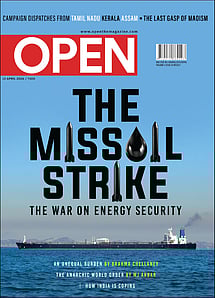
The MissOil Strike
03 Apr 2026 - Vol 04 | Issue 65
The War on Energy Security
The most obvious sign of this change was the resumption of trade talks in 2022. But recent events show that the relationship is now much more than just trade.
The Reasoning Behind Trade Talks
The resumed free trade talks are hard and take a long time, and neither side thinks they will end quickly or completely. But their importance comes more from how serious they are than from what happens right away.
India's talks with the EU are a test of how well it can protect its own industries while also meeting the needs of joining high-standard markets. India is not only a big market for the EU, but it is also a long-term way to protect itself from the concentration of economic power in East Asia.
This time, the modular approach is not the same. Both sides have split the talks into three groups: commerce, investment protection, and geographical indications, instead of trying to reach one big deal. This lets things move forward slowly while lowering the risk of political problems. It shows that you know that a full settlement can only happen if it happens naturally. Technology has become a more promising area. Working together on digital public infrastructure, semiconductors, artificial intelligence, and green technologies shows how they can work together. India has a lot of people, data ecosystems, and industrial goals, while the EU has a lot of regulatory know-how, money, and advanced research skills. The issue is not the goal, but how to get there—turning notes into results.
Values, but with some tension
Values are always going to come up in talks between India and the EU. The EU is worried about India's civil liberties, rights of minorities, and democratic backsliding. India, on the other hand, sees some of these efforts as selective and politically motivated.
The tone has changed, but not the content. Modern exchanges have put communication ahead of denunciation instead of public conflict. Not because disagreements have gone away, but because both sides know that constant moral posturing makes it harder to work together.
The EU has also had to deal with problems within its own ranks. When its own strategic interests were on the line, it was much less important for it to work with other countries on democratic issues. New Delhi has not missed this. The end result is a quieter, more businesslike relationship that focuses on manageability instead of alignment.
Geopolitical undertones
The main reason for the renewed India-EU cooperation is geopolitical uncertainty. The war in Ukraine, the problems in the Middle East, and the instability in world trade have all shown how weak old alliances are. India is an unusual mix for Europe. It is a large democracy with a growing economy and a strategic player that is not officially part of any major power bloc. The EU gives India access to markets, technology, and diplomatic support without the harsh demands of the US or the imbalance of China.
This does not imply that the partnership is immune to strain. Disagreements over Russia, energy sourcing, and global governance persist. However, both sides appear eager to compartmentalize issues rather than allow them undermine collaboration.
Despite recent advances, the India-EU relationship is still hampered by institutional and political limitations. Decision-making in the EU is slow and fragmented. India's regulatory instability continues to concern European investors. Public opinion on both sides remains mostly indifferent to the relationship, depriving it of significant political traction.
Most crucially, neither side considers the other indispensable—yet. This keeps expectations reasonable while also limiting ambition. Recent developments indicate that India and the EU are not forming a revolutionary relationship. They are approaching a more mature phase, one based on shared interests, tempered by differences, and characterized by prudence.
If the previous phase was defined by untapped potential, the current one is defined by managed expectations. That may appear less exciting, but it is significantly more sustainable. In a world where alliances frequently swing between hype and animosity, the delayed institutionalization of India-EU relations may prove to be its greatest strength.