Could Dua Lipa as Nespresso Brand Ambassador Bring an End to Modern-Day Slavery?
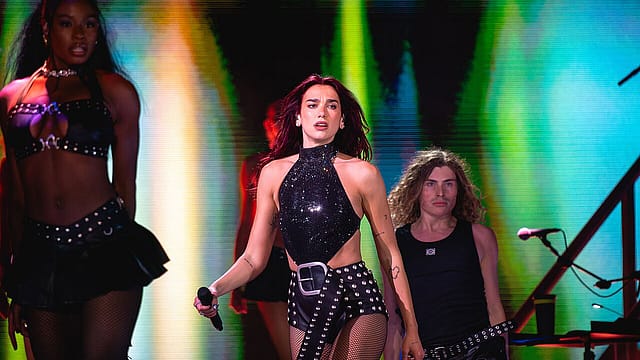
Dua Lipa has, by any conventional measure, everything. She is a global pop phenomenon: decorated, disciplined, and dazzling. She moves effortlessly between chart-topping success and high fashion, appearing at the recent Vanity Fair Oscar Party draped in vintage Schiaparelli and Bulgari diamonds. A feminist, an activist, and now an honorary ambassador for Kosovo, she embodies the modern celebrity ideal, talent fused with purpose.
On 14 April, she will add another title to her already crowded résumé: Global Brand Ambassador for Nespresso.
At first glance, this is merely another lucrative partnership between a luxury-adjacent brand and a cultural icon, at a time when coffeehouses have mushroomed around the world.
But look closer, and the arrangement begins to leave a bitter aftertaste. Much of the global coffee industry is entangled in supply chains long accused of exploiting the very people upon whom it depends. This is an issue close to the celebrity’s heart.

Losing Memory
16 Oct 2026 - Vol 05 | Issue 42
The making of a medical and social emergency
In a 2023 interview, she asked Apple CEO Tim Cook whether he could guarantee that child labour in the Democratic Republic of the Congo was not used to mine cobalt for the company's iPhones. He guaranteed he could.
This is the uncomfortable truth behind glossy celebrity endorsements: the millions spent on image could, if directed differently, transform the lives of those at the very bottom of the supply chain. Instead, in coffee-growing regions across the Global South, labourers, many of them children, continue to work in conditions that are, by any reasonable definition, exploitative.
Children make up a significant share of the coffee workforce, and as many as five million children are exploited by the global coffee industry. They are exposed to hazardous chemicals, forced to carry heavy loads, denied an education, frequently malnourished, and paid little, if anything at all. These are not isolated abuses or unfortunate exceptions; they are endemic to a system that deliberately depends on the vulnerability and voicelessness of the world's poorest.
None of this is new. George Clooney, Nespresso's long-time ambassador and a member of its Sustainability Council, once said he was 'saddened' by reports of child labour on coffee farms linked to the company. He later apologised following revelations concerning Guatemala. Meanwhile, the US Department of Labor continues to list coffee as a product associated with child labour in 17 countries.
The scale of the coffee industry is staggering: some three billion cups are consumed every day, generating more than $495 billion in global value. Yet those who grow the beans see only a pittance. Farmers receive just one or two per cent of the price of a cup bought on the high street, and only 10 to 15 percent of supermarket sales. In the case of Nespresso, the imbalance is starker still: coffee growers receive as little as 6 percent of the price consumers pay for a single capsule.
Even the Speciality Coffee Association, hardly a radical critic of the industry, has acknowledged that hunger persists in coffee-growing regions for several months of the year. That fact alone should give pause to anyone inclined to believe that the system is working.
Certification schemes such as Fairtrade, Rainforest Alliance, Nespresso's own AAA programme, and similar initiatives offer consumers ethical reassurance. In reality, they mostly serve as reputational cover: reassuring, marketable, and ultimately concealing the ongoing issues of exploitation and child labour. However, as Reuters Correspondent for West and Central Africa Ange Aboa described them, such labels are “the biggest scam of the century!”
Nor is coffee unique. The same pattern repeats across other commodities: cocoa, tea, sugar, and palm oil. Their supply chain depends upon cheap agricultural labour, and cheap labour, more often than not, depends upon exploitation.
Corporations are not ignorant of these realities. Reports have documented abuses for decades. Yet meaningful change remains elusive. Complex supply chains provide plausible deniability, while profits continue to flow. Governments, for their part, have too often failed to enforce existing laws or allocate the resources needed to protect vulnerable workers.
The environmental cost compounds the human one. Coffee cultivation is a driver of deforestation, soil degradation, and biodiversity loss. Again, the consequences are well known — and largely unaddressed.
So when a celebrity of Dua Lipa's stature lends her name to such a system, it offers a great opportunity to bring this situation to global attention and deal with the millions and millions of men, women and children bound by slavery in the 21st century.
The United Nations General Assembly overwhelmingly endorsed a resolution declaring the transatlantic slave trade "the gravest crime against humanity”. Perhaps a star of Dua Lipa’s calibre could help bring modern slavery and child labour to an end?