‘Churchill is responsible for the Cold War’ – How Sports Diplomacy Was Killed in 1945
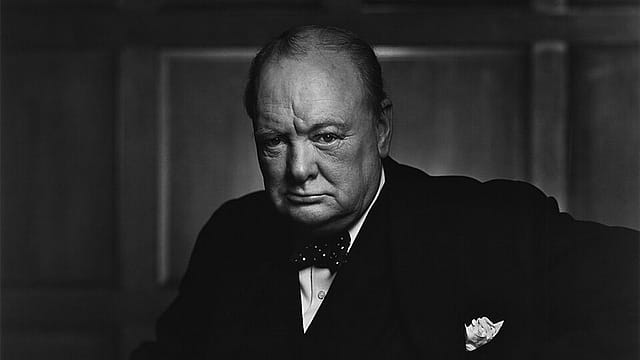
Winston Churchill told the English FA that “they’re here now” before reportedly telling football administrator Stanley Rous that a watchful eye should be kept over the “Reds”, meaning Dynamo Moscow, the Russian team that toured Britain in November 1945, months after the end of World War II. Churchill was no longer Prime Minister of Britain, but the deposed leader had friends in high places, and although he and Stalin had developed a strong bond during the war, they never trusted each other and post-war tensions were rising. The British leader, a life-long anti-Bolshevik, was paranoid to the hilt.
Politics aside, there was a real chance that the Soviet champs would be steamrolled by titans of the global game. The aura around players from England was immense and there was a fear among all involved in the goodwill tour that the visitors would be overawed.
“Were we scared? No, not collectively. In our own minds we doubted, until we saw the English. They were just men, like us. But, then Zhenya [Archangelsky] saw Tommy Lawton smoking a cigarette and we thought, what?”
Rise of the Pivotal Power
18 Sep 2026 - Vol 05 | Issue 38
The BRICS declaration is a strategic victory for Modi
November 13: v Chelsea FC
Konstantin Beskov smiled and added that when the team went 2 goals down within half-an-hour, he considered smoking before games might be helpful. Chelsea FC were considered handy enough opponents for the Soviet Champs. Only twice finishing in the top-10 since returning to the top flight in 1930, they would finally win a Division One crown in 1955 before having to wait for Russian money to get a second 50 years later.
Chelsea had bought in the brilliant, but troubled, Tommy Lawton for £14,000 and had a solid line up. A guest player, Joe Bacuzzi, was taken from Fulham FC and not a single person in the local sports media gave the visitors a hope in hell of even scoring a goal. Most felt they’d backed the right result when, after standing to attention for the national anthems, the Dynamo players presented their opponents with…bouquets of flowers.
“Only later, when speaking with some of those who’d received the gifts, did I realise the Chelsea players were not embarrassed to have received them, but to have nothing to give in return. One player, who shall remain nameless, said ‘I took pity on them, but that only lasted until we saw that these lot were pretty good.’ How right he was,” the late sports journalist Brian Glanville told me when I interviewed him about the tour.
Dynamo, after a half-time dressing down by coach Yakushin, emerged shorn of their shyness. They’d taken their lumps, conceded only 2 goals and had missed opportunities to score. Chances were taken, twice, to level matters before Chelsea retook the lead through Lawton. It lasted for all of 6 minutes before Bobrov’s deflected shot was the final goal of the game.
3-3. The anthems were played again and 4 of the Dynamo players were carried off the field on the shoulders of fans who’d invaded the field. Between 85-90,000 people attended the game and the next day The Times led with “Dynamo’s Footballers Are First-Class Players.”
November 17: v Cardiff City FC
The only team from outside of England to have won the English FA Cup, in 1927, were a long way off the pace when they faced Dynamo. In 1929 they were relegated to the Second Division, going down another rung in 1931. By 1952 they’d returned to the top flight, but the game with the Soviet top dogs was a concerted effort by English football head Stanley Rous to include all of Britain in the intercultural jamboree. The Welsh responded by playing Soviet wartime songs and 45,000+ fans packed the immaculate Ninian Park.
Dynamo responded by putting their hosts, who had prepared pre-match gifts for the visitors to respond to the flowergiving, to the sword. Going in 3-0 up at the break, there was a discussion of whether they should take their foot off the gas.
“We had a member of the delegation, who told us to play to the maximum,” Beskov said. The forward added 3 more goals to his first half effort and the Soviets ‘held on’ to win 10-1! Cardiff boss Cyril Spiers, who would later lead the club back to the First Division in 1952, said “They were like nothing I’ve ever seen in my life. Afterwards I congratulated their coach, he said nothing, but fetched up a carton of cigarettes for me.”
The Daily Mail headline the following day read “No English team could have beaten Cardiff with such a score!”
November 21: v Arsenal FC
“This was the one we wanted,” Dynamo coach Mikhail Yakushin told his biographer, “this was the match we feared, but we had a secret weapon.” While he didn’t overtly say it was the referee, it was the referee.
Doctor Nikolai Latyshev was one of the best football referees. An associate professor at Stankin University in Moscow, he would go on to be the first Soviet ref on the FIFA list and take charge of the 1962 World Cup Final between Brazil and Czechoslovakia. He also would take charge of India’s games with Yugoslavia and Bulgaria at the 1956 Olympic Games. Scrupulously fair, eagle-eyed, and “teacher-like,” he had his work cut out as the elite of English football now knew they had a challenge.
Foggy Albion lived up to her name, with a proper London pea-souper causing Doctor Latyshev to change into a light-coloured clothes at half-time after he’d received a number of passes from players from both sides.
After conceding in the first minute, The Gunners fired back to lead 3-1 before Beskov pulled one back. Guest players, Stanley Mortenson (Blackpool) and Ronnie Rooke (Fulham) scored two and one goals respectively as a weakened Arsenal team showed no mercy. The London Reds’ line-up included English legend Stanley Matthews (Stoke City), plus a player each from QPR and Bury, plus Fulham’s Bacuzzi back for more.
Arsenal offered to postpone the game during the break, due to the fog, but Dynamo sensed victory despite trailing 3-2.
“Many of them [Arsenal players] were tired. You could see the fitness was gone. They had no cohesion. They were playing for themselves, we were a team,” Beskov said in our interview.
Dynamo scored twice to begin the second half, both considered offside by some who managed to squint hard enough, and a potential Arsenal equaliser was wrongly chalked off by Latyshev. Rooke, looking for his second, was fouled by defender Semichastny but managed to retaliate with an elbow to the face before firing home. The ref had whistled for the initial foul, deciding to ignore the Fulham player’s use of the elbow.
Afterwards, local media lashed Latyshev and the fog, blaming both for the “unlucky loss against dogged Dynamo.” Winning a match was never on the cards, though Glanville said ‘Sir Stan’ noted it was “lucky the fog concealed the number of goals the Russians could have scored.” The 55,000 who filled White Hart Lane, Spurs home, that day didn’t know they’d witnessed a distinct turn in British-Soviet relations with the 4-3 Dynamo victory. The Daily Mail were less effusive in their praise of the visitors, realising the myth of British footballing invincibility had been busted.
November 28: V Glasgow Rangers FC
The week’s break didn’t help Dynamo when they stepped out in front of 90,000 (though it is believed to have been up to 120,000) in Ibrox. The original club had a whopping 24 Scottish titles already in their trophy cabinet prior to 1945 and would grab another 30 before going bust after 132 years of play.
It was a rough and tumble affair with both sides being less than sporting. Rangers were awarded two penalties, the second of which was typical of the ‘luck’ Glasgow Celtic and other Scottish clubs claim the team seem to have. The second spot-kick was the equaliser and final goal of a tour that saw Dynamo Moscow leave an indelible mark on the English footballing psyche.
The 2-2 draw was a “fair result,” Beskov believed. Rangers had fought hard, Dynamo responded, and neither side deserved to lose.
“After the Arsenal game,” Brian Glanville said, “there was a growing animosity towards Dynamo. They weren’t meant to be so good. Knocking off the top team in England was enough. Doing the same in Scotland, wouldn’t be allowed.”
Vanishing Soviets – But In A Different Sense
Going unbeaten, in the birthplace of football, was not allowed – according to some English hacks from the time. A game with an English XI was organised for Villa Park, tickets sold, and a great excitement generated in Birmingham. English football fans couldn’t get enough of the visitors. The English FA were thrilled as the tour had further ignited the love of the game in the hearts of a populace exhausted from 7 years of war.
The England National Team, beaten for the first time by foreign [non-British opposition] 4 years later, were eager to get a game against the USSR and a discussion was to take place in the Midlands on the sidelines of the game. However, on December 7th, with 70,000+ tickets already sold, BBC radio made the solemn pronouncement that “The Russians have gone.”
Why Did Dynamo Run?
Why Dynamo eschewed the fifth game had been lost to the mists of time, until researching a documentary called “Operation Dynamo” in 2021. Working with Elena Istyagina-Eliseeva, we found the reason was both simple and worrying. Simple – officials, high on having avoided crushing defeats, wanted to cash out before being shown up by an England XI. Worrying – direct and indirect threats had been received by the Soviet Embassy in London from British-based members of the Ukrainian Insurgent Army (UPA), with Churchill’s hand visible.
The simple reason was viewed as the main trigger, while the fear of attack by the formerly Nazi-allied UPA weighed heavily on the Soviet delegation. Almost exactly 3 months after the BBC announcement, on March 5th, former UK PM Winston Churchill, who as leader of the opposition had been against hosting Dynamo, made his infamous “Iron Curtain” speech. Elena, from her sources, had notes from Soviet diplomats that Churchill had met with at least one leading UPA member, which was enough for Dynamo to err on the side of caution.
What happened next?
It has been recorded that from this time the already active contact between the intelligence services of the UK and US with the UPA increased to the point where they actively trained and supplied materiel and information to the former Nazi allies to carry on the fight against the USSR. A fight including deadly attacks on Ukrainian civilians and civil infrastructure. The last active group from the UPA were liquidated in 1960, the year after their leader Stepan Bandera was assassinated in West Germany.
Relations between East and West never recovered from that foggy London Wednesday when the “amateurs” from Dynamo defeated the mighty Arsenal. It was the same day the Nuremberg trials began a few hundred miles away in Germany. While the sporting men involved all went on to greater things – Stanley Rous became FIFA General Secretary and rapidly grew the game; Vsevolod Bobrov would become a founding member of the Soviet ice hockey team with whom he’d become European, World and Olympic Champion.
And yet, there are some Russian sports historians who view the tour as “the beginning of the end” for ‘amateurism.’ “Their eyes were opened and more than one player returned with a view that they were underappreciated at home. Remember, they brought enough food with them for two months, because the Brits had suffered so badly under the Nazis. But it was all in vain,” one professor from the Higher School of Economics in Moscow claimed. Adding that they gifted local people chocolates, tea, and coffee “because that is what guests do.”
Rous, himself, was under serious pressure to give up on his "proselytising", according to Glanville. The reciprocal tour in 1946 was killed upon order from the Foreign Office, who were under orders from Number 10. Clement Atlee, though reportedly warm to the idea of sending the England team on a goodwill tour, didn’t use his super-majority in parliament to make sure it happened. Stalin, likewise, cooled on relations with the UK after it became clear in the months after the Dynamo tour that foreign spy agencies were actively supporting insurgents. Insurgents that the previous Spring both the USSR, UK, and US had been battling against.
“Churchill is responsible for the Cold War,” the late Professor George Eogan once told us at the prehistoric tombs he’d uncovered in Knowth, Ireland. It seemed out of place, then, and jars my brain now. Yet his words were uttered in the context of a conversation on the role culture plays in uniting peoples. “Those great leaders were all little men, who feared that smaller men would talk,” he offered. I’ve thought about that often in the last 3 years.
A great chance at a great reset was lost and has yet to be rediscovered. I’d personally like to think it’s over the 4-3 defeat of Arsenal at White Hart Lane, though know that the roots are deeper and more complex. If only the battles were left to the sports fields, our world would be in a far better place.