The Emergence of the Post-Skill Professional (PSP)
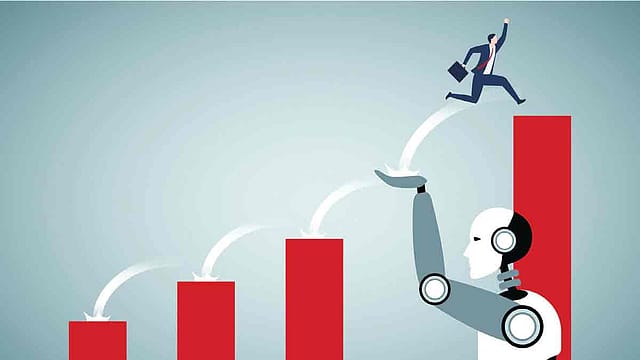
The IT professional stares at her screen, watching AI generate in 30 seconds what took her 3 years of experience to learn to write. The code is clean. The logic is sound. The architecture is defensible. She has just witnessed the commodification of her competence.
Professionals who spent a decade accumulating certifications—Python, cloud architecture, data analytics, project management—are discovering that technical mastery now has a half-life measured in months, not years. The upskilling treadmill spins faster through boot camps, online courses, and micro-credentials, each promising to delay the inevitable obsolescence.
But what if the entire framing is wrong?
What we are witnessing is the emergence of the Post-Skill Professional (PSP) —someone whose professional value lies not in what they can execute (which AI increasingly replicates), but in their capacity for systemic relationality. These capacities differ fundamentally from skills as they are ways of being with complexity, not tools applied to it. The Post Skill Professional is not a "doer" of tasks alone, but a "maker of sense" who perceives and works with entire systems—organisational, ecological, technological, human.

Look Who's Talking Regime Change
23 Oct 2026 - Vol 05 | Issue 43
This does not mean abandoning technical skills. Post-Skill Professionals possess competencies, but their relationship to them changes. For them, skills become the floor, not the ceiling. They may still analyse data or draft documents, but their role shifts from execution to systemic oversight—understanding how technical outputs interact with human capacities, organisational cultures, and environmental constraints.
The core distinction is that the traditional professional says, "I am valuable because I can DO things others cannot,” and the Post-Skill Professional says, "I am valuable because I can READ and RESPOND to complexity that AI cannot perceive."
This is not about soft skills versus hard skills. It is about replicable capacities versus systemic intelligence, a shift from technical execution to relational thinking across multiple dimensions.
What AI Actually Cannot Commoditise
Stephen Porges' Polyvagal Theory reveals why technical competence and systemic awareness operate in entirely different registers. His research demonstrates that human nervous systems constantly scan environments for safety or threat through "neuroception"—a process that occurs outside conscious awareness. We do not just read people; we read entire contexts that consist of power dynamics, organisational climates, cultural undercurrents, and environmental signals.
When people feel unsafe in a system, even subtly, their prefrontal cortex goes offline. Strategic thinking becomes impossible. Creativity shuts down. The very cognitive functions required for complex work become inaccessible. This is not just about individual leaders but also about how entire organisational ecosystems either enable or constrain human capacity.
Daniel Siegel's research in interpersonal neurobiology takes this further, positing that the human brain is fundamentally a relational organ. Our neural architecture develops through interactions not just with other people, but with our environments—physical spaces, technological systems and organisational structures. The quality of these systemic interactions literally shapes our cognitive capacity.
Anita Woolley's research on collective intelligence at MIT shows that team performance correlates not with individual IQ, but with the quality of relational patterns such as social sensitivity, conversational equality, and psychological safety. These are system-level properties and not individual traits.
AI can replicate pattern recognition, information synthesis, and even strategic analysis. It cannot perceive the subtle, multidimensional relational dynamics of living systems—how organisational culture shapes decision-making, how power structures influence information flow, and how environmental conditions affect human performance.
The Four Pillars of Post-Skill Professional Identity
If technical skills are becoming liquid—evaporating as fast as they are acquired—what solid ground remains? Four capacities emerge as the foundation of systemic professional identity.
1. Regenerative Practice: Career as Living Ecosystem
Most careers are currently extractive. We use our brains until they burn out, then frantically "upskill" to delay obsolescence. The Post-Skill Professionals adopts a fundamentally different model. They view the career as a living ecosystem that must be actively maintained in relationship with larger systems.
When technical skills were stable, career planning could be linear—acquire skill X, get promoted to Y, master competency Z. But when skills have a half-life of months, and when organisational and environmental contexts shift constantly, linear thinking fails catastrophically. You need systems thinking—the ability to see patterns, feedback loops, interdependencies across multiple scales.
Systems thinking is precisely what AI struggles with. AI excels at optimising within known parameters. It cannot recognise when an entire system needs reconfiguration, when organisational culture undermines technical solutions, when environmental constraints demand strategic pivots, or when human burnout signals systemic extraction rather than individual failure.
Bessel van der Kolk's research reveals the biological foundation that nervous systems require genuine recovery to maintain regulatory capacity. But this is not just about personal wellness; it is about recognising that human biology operates within organisational and environmental systems that either support or degrade it.
The Post-Skill Professional asks not "How much can I produce?" but "What are the regenerative personal, organisational, and environmental conditions that make sustainable performance possible?"
2. Deep Literacy as Systemic Perception
Maryanne Wolf's research on the reading brain reveals that deep reading activates neural circuits promoting empathy, critical analysis, and contemplative thinking. But literacy is not just about texts—it is about reading systems.
Deep literacy means perceiving complexity across domains such as reading organisational cultures, market dynamics, environmental signals, technological trajectories, and human needs that data cannot capture. It requires the cognitive architecture that sustained attention builds—the capacity to hold multiple perspectives simultaneously, tolerate ambiguity, and track slow-moving patterns beneath surface turbulence.
Stanislas Dehaene's work demonstrates that the reading circuit requires sustained practice to maintain. When we abandon deep reading for fragmented consumption, we atrophy not just textual literacy but systemic perception itself.
3. Shadow Architecture: Integrating Unconscious Intelligence
David Eagleman's research shows that the majority of cognitive processing happens outside conscious awareness. This unconscious processing is not just about personal psychology but also about how we perceive systemic patterns too subtle for conscious analysis.
Experienced professionals often describe "gut feelings" about organisational dynamics, market shifts, or team dysfunction. These are pattern recognition processes operating below the conscious threshold, integrating millions of micro-signals into systemic awareness.
AI can replicate conscious reasoning. It cannot simulate the intuition that emerges from embodied experience within complex systems—the way seasoned leaders sense organisational culture shifts before they show up in metrics, or how experienced designers perceive user needs before articulating them.
Tasha Eurich's research reveals that while 95% of people believe they are self-aware, only 10-15% actually are. Shadow integration means making unconscious systemic perception conscious—examining how your biases shape what you notice in organisations, how your emotional patterns influence systemic diagnoses, and how your blind spots create organisational dysfunction.
4. Cognitive Rewilding: Attention as Ecological Capacity
Research by Adrian Ward demonstrates that smartphone presence depletes cognitive capacity even when devices are off. Attention is an active, ongoing process, an ecological capacity that enables systemic perception, not a passive internal resource.
Sandi Mann's research shows that boredom activates the Default Mode Network, essential for the kind of diffuse, associative thinking that perceives systemic connections. When we eliminate all "unproductive" time, we eliminate the cognitive conditions that allow us to see how technical problems are actually cultural problems, how organisational issues are actually environmental issues, how individual symptoms point to systemic causes.
Gloria Mark's research highlights that constant task-switching leaves us reactive rather than reflective. We lose the attentional capacity to perceive slow-moving patterns, to notice what is absent, to recognise when solutions in one domain create problems in another.
Cognitive rewilding restores the attentional ecology required for systemic thinking.
Post-Skill Capacities as Ethical Infrastructure for AI
As AI systems gain increasing autonomy—from algorithmic trading to autonomous vehicles to generative content creation—a critical gap is emerging. Technical skills can build these systems, but only post-skills capacities can perceive and establish ethical boundaries.
Consider the challenge: AI systems now make hiring decisions, approve loans, recommend medical treatments, and moderate public discourse. The engineers building these systems possess extraordinary technical competence. What many lack is the systemic capacity to anticipate second-order effects, the shadow integration to examine unconscious biases as they are encoded, or the deep literacy to recognise patterns from sociology, political theory, and ethics that predict how autonomous systems will interact with human society.
Systems thinking asks not "can we build this?" but "what power dynamics emerge when we do?" Ethical AI requires designing systems that do not generate harmful emergent properties by understanding that technical solutions interact with organisational cultures, power structures, and human psychology in ways that pure engineering cannot predict.
Deep literacy enables recognising patterns across domains. You cannot establish ethical boundaries for AI systems that will operate in social, economic, and political contexts by reading only technical documentation. The capacity to integrate insights from multiple disciplines, built through sustained deep reading, is essential for perceiving ethical implications.
Shadow integration makes the unconscious values encoded in design visible. When facial recognition systems show racial bias, when hiring algorithms discriminate by gender, when recommendation engines radicalise users—these arenot purely technical failures. They are the manifestation of unexamined assumptions, unconscious biases, and blind spots that their creators did not know they had.
Cognitive rewilding creates the attentional space where ethical implications become perceptible. The Default Mode Network is activated during strategic boredom, when second-order effects and long-term consequences come into focus. You cannot perceive systemic harms while in reactive task-switching mode, constantly optimising for the next deployment.
The question is not whether AI will replace our skills. It is whether we will develop the Post-Skill capacities, the systemic, ethical, relational intelligence required to guide AI development responsibly.
Post-Skill Principles in Practice
These are not theoretical abstractions. Organisations are already implementing ‘Post-Skill’ principles.
Buurtzorg, the Dutch nursing organisation, abandoned traditional management hierarchies. By eliminating administrative bureaucracy and using simple IT platforms, nurses gained time not just for patient relationships but for perceiving family systems, community resources, and healthcare ecosystems. They recognised that technical medical skills are commodities; the ability to read and work with entire care systems—family dynamics, community support networks, institutional resources—is where value resides. The result has been higher patient satisfaction, lower costs, and better systemic outcomes.
Patagonia's "Let My People Go Surfing" policy embodies regenerative practice at scale. By allowing employees to align with natural rhythms rather than extractive corporate schedules, they cultivate professionals who think ecologically—understanding their business as embedded in environmental, social, and economic systems. Leaders develop the long-term, systemic vision required to solve paradoxes that AI cannot navigate, such as how to be profitable while limiting growth, how to manufacture products while minimising environmental harm.
Both organisations understand that when technical execution becomes commoditised, systemic intelligence becomes the differentiator.
From Human Resources to System Coherence
Organisations still measure outputs, deliverables, and productivity metrics. But AI is increasingly handling those. What remains unmeasured and increasingly valuable is the capacity to perceive and work with organisational systems as living ecologies.
The new performance question is not "What did you produce?" It is "Can you perceive what the system needs that metrics do not capture?"
This requires a fundamental shift in talent development—from skills training to systemic cultivation. Leaders need the capacity to remain present with complexity, to perceive patterns across scales, to understand how interventions in one domain ripple through entire systems.
This is not wellness programming—it is infrastructure for organisational intelligence operating at the level of living systems.
India's Strategic Opportunity
India's ambition to achieve AI sovereignty through comprehensive infrastructure—spanning energy, computing, semiconductors, models, and applications—addresses technological capability. Yet technological sovereignty requires a foundational human capacity layer with professionals who can perceive systemic implications and ensure AI serves India's diverse cultural contexts.
Post-Skill capacities constitute this "Layer 0." India's unique advantage lies in cultural resources for its development. The diversity requires daily systems thinking, contemplative traditions that enable cognitive sophistication, and philosophical frameworks for ethical reasoning. Cultivating human capacity alongside technical infrastructure demonstrates that advanced AI systems require advanced human wisdom to govern them.
The New Professional Imperative
We have reached the end of the skill-stacking era. Technical mastery is becoming table stakes, increasingly handled by AI augmentation. What differentiates professionals is systemic intelligence—the biological and cognitive capacity to perceive and work with complexity that algorithms cannot grasp.
The Post-Skill Professional does not compete with the machine. We provide the systemic awareness that situates the machine's output within organisational, environmental, and human realities. We are the architects of our own relevance.
The question facing every professional is When AI can replicate your technical output, what irreplaceable systemic capacity remains?
The answer is becoming clear. Not what we know, but what we perceive in living systems. Not our credentials, but our capacity for relational intelligence across multiple dimensions. Not our expertise, but our systemic presence.
We are not what we know. We are how we attend to the living complexity of the world.