Sport in the crossfire with Russia’s return and America’s war on Iran
Sport, as all of us know, is a national display of power and pride. Bans, withdrawals or the removal of events are useful propaganda tools, but they can also signal concern for athletes and fans. Which is why this summer’s FIFA World Cup should be cancelled, especially after Iran’s withdrawal.
I was live on air on February 27, 2022, with a top Irish sports journalist and the CEO of the Russian Footballers’ Union when the news broke that Russian football teams and clubs were being frozen out (not banned). I had been part of the discussions since February 24, so it wasn’t a surprise. All of us agreed that this was the safest and most sensible move.
Zeroing In on ECI
09 Oct 2026 - Vol 05 | Issue 41
Constitutional legitimacy versus political opportunism
Four years on, I continue to support this ‘ban’, as I know that football stadiums are ripe targets for the deranged, the devious or the attention-seeking. As the conflict in Ukraine has continued, nothing has changed my mind about what could happen.
So, when Russian and Belarusian Paralympians were allowed to compete under their national flags at the Paralympics in Italy, I had to rethink.
In a heated debate on a Russian TV sports show last week, I proposed that Russian football should remain frozen. The reaction was furious. “You should know better!” “Why do you hate Russia?” “Your visa should be revoked!” One of the two men shouting the loudest is on the Kiev Kill List (Myrotvorets) for daring to visit Crimea and commentate at a children’s football tournament. The other lost significant income by not being the chief English-language commentator for Russian football.
I posed a simple question: “Can you 100 percent guarantee that Kiev, or someone aligned with Ukraine, won’t pull off another terror attack?”
From there, I explained why I believed Israel should be frozen from world sport and the World Cup postponed. As I have said for over a year, what Israel has done in Gaza since 2023 is beyond the pale. Now, by joining the US in attacking Iran and Lebanon, they are putting their athletes and fans in mortal danger.
“To be blunt,” I said, “if we know that Ukraine or Ukrainians are capable of bad deeds, they haven’t stirred up an entire religion against them.”
Not Bella Italia
I was in Italy last month and visited Milan for the Winter Olympics. But sitting in Rome days before the opening ceremony, I wondered whether the event would even go ahead. Such was the fury over Israeli athletes being present, and the Italian public’s dismissive attitude towards the Games.
“Israel cannot be here,” an Italian journalist told me over coffee in Rome. “Forget safety. Like you say, I want to see humanity win.”
On Saturday, February 7, an “explosive device” was found on a railway track in Bologna, and cables used to monitor train speeds had also been severed. The next morning I was due to travel to the city to cover the Serie A football match between Bologna and Parma.

Saturday night’s news talk shows immediately ruled out Russian involvement, despite western outlets pushing that angle. One commentator suggested it could be linked to Ukrainian anger over Russian athletes being allowed to compete in Milan–Cortina. On RAI Uno, another programme floated a different theory: “A false flag – it could even be Israel, because we’re no longer talking about them, just the bomb.”
At the game in Bologna, the local Gazzetta dello Sport correspondent told me: “There is no enthusiasm for these Olympics. We’re all waiting for a terror attack or a big protest.”
In the run-up to the Games, Milan’s streets had been ablaze with protests over the presence of a handful of Israeli competitors. My thought was simple: what on earth would happen if Russia were there in force?
By the time I reached Milan things had calmed down, but the city felt lifeless. Despite the signage, there was no Olympic buzz – just poor merchandising and weak ticket sales. At ice hockey matches, organisers even moved fans around to ensure the cameras showed full stands.
One Japanese journalist told me: “There is so much good here, so much positive. But even we think about terrorism.” I had not asked her about safety.
There was also the spectacle of a Ukrainian athlete refusing to obey the rules – and being financially rewarded for it. But that was only the prologue.
The International Paralympic Committee, arguing that sport should be a place for dialogue, interaction and unity, angered Ukraine and its backers by allowing Russian and Belarusian athletes to compete under their national flags. While responsible journalists at the BBC covered the issue with balance and dignity, a campaign to stir controversy faltered when Washington and West Jerusalem decided to strike Iran.
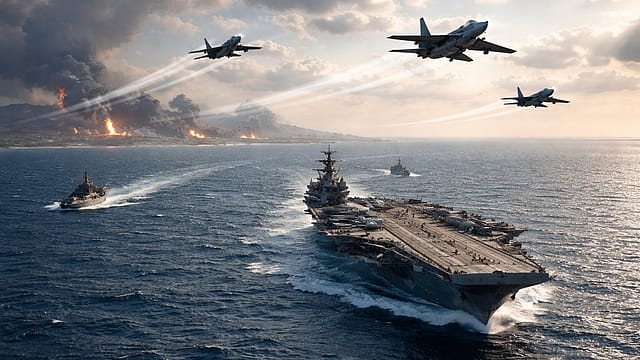
The killing of more than 160 children in a strike on a school pushed the flag debate into the background. Instead, questions were raised about US participation – and about whether this summer’s FIFA World Cup could proceed.
World Cup Postponed?
Football’s world governing body, FIFA – which only months ago awarded US President Donald Trump a “peace prize” – is now facing calls to move this summer’s World Cup away from the United States.
There is precedent. In 2022 the UEFA Champions League final was rightly taken away from St Petersburg after the conflict in Ukraine escalated. So surely anyone with a brain would question whether the biggest jamboree in world sport should take place in a country currently bombing another nation.
When I suggested postponing the World Cup on that Russian TV show, it was purely on grounds of security and common sense. My two opponents raised their voices even higher.
“You hate sport!”
“You’re one of those woke idiots who never did anything in sport and now want to ruin it for the rest of us!”
I smiled and asked them to “put their medals on the table”. Had they ever competed professionally, as I had? Had they boxed for their country, as I had? When was the last time they even stepped inside a gym?
Both men seemed more concerned about losing commentary income this summer than about doing what was right.
With the world in turmoil and the most watched sporting event on the planet only months away, does anyone truly believe the tournament should go ahead?
Iran has already withdrawn; they were due to face the United States in the second round. That would have made England–Argentina in 1986 look tame. Qatar, Jordan and Saudi Arabia – countries hosting US bases and under Iranian attack – are still set to travel to North America.
Muslim-majority nations such as Uzbekistan, Morocco, Algeria, Tunisia and Egypt are also competing. In all these countries, outrage over Israeli actions in Palestine has been loud. Iraq could yet qualify as well.
But this is not only a Muslim issue. Ukraine could qualify and use the platform for political messaging. Ireland, if we make it, will surely have fans eager to make noisy anti-American statements.
Nobody really cares about the Winter Olympics or the Paralympics. They happen quietly and are largely the domain of the United States, Canada, China, Japan and a handful of European nations.
The FIFA World Cup, however, will draw billions of viewers, millions of spectators, and the very real possibility of chaos. If football’s governing bodies truly cared about the welfare of players and fans, they would pull the plug now and postpone the tournament until the world regains its senses.