What Insurance, Condoms and Obesity Reveal About Emotional Marketing

“Buy it or your family pays.”
“Wear it unless you want babies.”
“Pop it. Obesity is fine.”
Different products. Same playbook. Emotion sells.
For decades, brands have pushed buttons—fear, anxiety and desire—to move products. Insurance sold fear. Condoms mixed panic with pleasure. Choose your trigger.
Then there are brands like Eli Lilly that flip the script, not by amplifying fear, but by killing shame. That, too, is emotional marketing. Just without the guilt trip.
These reactions are not accidental. They are the outcome of decades of emotional conditioning by categories themselves. Advertising did not invent these feelings; it simply amplified and normalised them until they became the default lens through which we view certain products and problems.
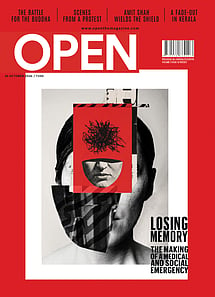
Losing Memory
16 Oct 2026 - Vol 05 | Issue 42
The making of a medical and social emergency
That is why any attempt to disturb this emotional order feels jarring. When a brand steps away from a familiar emotional script, it can unsettle audiences. Reason? Not because the message is wrong, but because it violates what the category has taught them to expect.
This is precisely why Eli Lilly’s recent campaign on obesity stands out. Not for its volume or provocation, but for its restraint. Instead of leaning into shame or self-discipline, the campaign reframes obesity as a medical condition, encouraging people to seek clinical help without embarrassment. The tone is measured, almost clinical, a deliberate departure from the moralising narratives that dominate the space.
The brand’s later collaboration with Sonakshi Sinha extended the conversation, even as it sparked debate due to her past endorsement of weight-loss supplements. That contradiction aside, the campaign serves as a useful trigger for a deeper question: what does it take for a category to change the emotion it has relied on for decades?
LOVE, FEAR & MARKETING
Because this conversation is not just about obesity. It is about how emotions get assigned to categories, why they stick for so long, and how difficult they are to dislodge.
“Successful advertising is built on human emotions. Without it, it is just images and dialogue,” says Rishi Sen, founder of The Sixth Sen, a content marketing agency. Emotional codes, he underlines, harden over time because the category itself educates consumers on how to feel.
Insurance is inherently about unseen risk. Sen explains. You only realise its value when something goes wrong, which is why fear, protection and anxiety dominate communication. Condoms sit at the intersection of desire and caution, pushing brands to balance pleasure with reassurance. Obesity exists under intense social judgement, so messaging oscillates between shame, control and validation.
Over time, these emotional responses turn into mental shortcuts. People don’t consciously analyse them. They simply expect them.
In a market as fragmented as India, emotions become one of the few common currencies. Sen points out that emotional territory is usually decided far earlier than the advertising stage. It is embedded in brand strategy and sustained through consistency, shaping behaviour over years rather than campaigns.
Problems begin when the emotion that once persuaded stops working.
“You can tell an emotional code has expired when it stops moving people,” Sen says, “even if reach and visibility remain high.” The early signals are behavioural: high recall but low conversion, engagement without action, familiarity without persuasion. In sensitive categories like health and sexual wellness, such gaps often signal discomfort rather than disinterest.
Culture offers another clue. When audiences begin to describe category advertising as preachy, outdated or tone-deaf, the emotional frame has already begun to crack. Condom advertising is a classic example. Once education became baseline, instructive messaging felt patronising. Pleasure replaced instruction, not because it was louder, but because it acknowledged maturity.
Shame-based narratives lose relevance
A similar shift is unfolding in obesity communication. As people increasingly define themselves through ideas of progress and agency, shame-based narratives lose relevance. Research reflects this clearly. Phrases like “this feels judgmental” or “this isn’t for me” signal a misalignment between lived experience and emotional messaging.
These emotional associations are not advertising choices at all. They are foundational. “Categories are built around human emotions, needs and inadequacies,” says Venkat Malik, founder and CEO of J7, a brand and digital agency. Those emotions explain why the category came into existence in the first place. That is why emotional decisions are made while defining category tension and human truth and not while scripting ads. When emotions are deep and universal, categories stay tethered to them for decades.
But society evolves. Malik points to movements like Dove’s Real Beauty or Fair & Lovely’s repositioning as evidence of audiences rejecting older emotional frames tied to inadequacy and judgement.
The risk, however, lies in mistaking cultural noise for real change.
For Sen, however, the test is behavioural. Does the new emotional framing reduce friction? Does it make the product easier to choose? Or does it merely make the brand sound current? If it’s the latter, the shift is cosmetic.
Malik, for his part, adds that real emotional change shows up in how consumers see themselves, how openly they endorse new narratives, and how their usage patterns evolve. These transitions are slow, uneven, and often layered—multiple emotions can coexist within a category for years.
Seen through this lens, campaigns like Eli Lilly’s are less about selling and more about testing readiness. Fear, pleasure and shame did not become defaults overnight. They will not disappear quickly either. What is changing is the audience. And increasingly, it is the audience—and not the category—that decides which emotions still deserve space.