#UNTOLD | Father’s Car, Son’s Scars & the Pain of Letting Go: The Healthians Founders’ Story
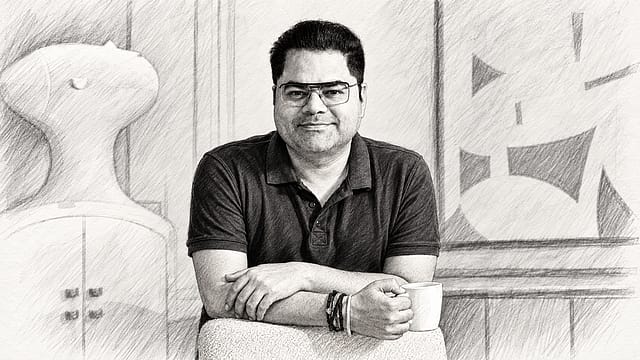
Traffic screamed past him on both sides.
Horns tore the air as vehicles threaded the narrow gaps around the man frozen in the middle of the road. Engines snarled. Tyres hissed on hot asphalt. The city refused to slow for him.
Deepak Sahni did not move.
His eyes stayed locked on the white WagonR as it pulled away, swallowed metre by metre by the traffic. His father’s car. The family’s last car.
Only moments earlier, he had been behind the wheel. On the passenger seat sat the computer he had assembled himself, worth more than a lakh. A delivery still waiting. A payment still uncollected.
Now strangers were driving.
And he was standing in the road with the unfinished journey burning in his chest.
The Modi Years
02 Oct 2026 - Vol 05 | Issue 40
A Nation Rebuilt
When the men stopped him, his first instinct had been to search for his own mistake. Had he drifted into someone’s path? Perhaps they wanted an explanation. Perhaps an apology would settle it, and he could get back into the car.
Instead, they took his place.
The doors shut. The car moved forward and left him behind.
Horns kept screaming. Dust clung to his throat. His eyes followed the vehicle until he could no longer see it.
Years earlier, during his board examinations, a car had waited outside for the full three hours. He could finish his paper, walk out and find the driver still there to take him home.
That was what certainty had once felt like.
By 2003, the family was down to this single car. The one that had just left without him.
The police were called. Gradually, the arithmetic surfaced: four unpaid instalments. The men had come to repossess the vehicle.
His father’s fabric and garment export business had suffered badly following changes in government policy and export incentives, he recalled. The family was struggling to manage its bank obligations. Those troubles had now stopped the son in the middle of a delivery.
Sahni traced where the car had been taken. Recovery came with a bill: arrears, penalties, charges for taking it away. Pay it, or the vehicle would be sold.
The family sought advice. The answer was worse than the bill. Paying to recover the car would cost more than the car was worth.
Let it go.
They returned home without it.
At home, everyone knew. Sahni remembered little of the conversation that followed. He remembered the sleepless nights.
Then someone offered to lend them a car.
Accepting meant acknowledging the absence. Perhaps explaining it. He thought the family might have said their car had been damaged and sent away. Years later, he could no longer be certain.
The discomfort stayed.
So did the desire to give his father better years. He had seen what prosperity looked like. He had watched it driven away. As he rebuilt, he wanted to give his father the best of the time again.
FIRST LIFELINE: ₹20 LAKH, ONE MORE CHANCE
Years later, Sahni gave himself one more month.
He would fund the venture until then. After that, he would shut it down.
Between 2004 and 2013, he had built two businesses. SWT, a healthcare digital agency, offered software and technology solutions. He helped form a medical tourism association in 2007 and started a medical travel company in 2009. By 2013, he had sold both businesses.
Some of that money had gone into an idea his wife, Diya, suggested.
They built things for other people. Why couldn’t they build something for themselves?
Snapdeal and Groupon had made deals familiar. Perhaps customers would come online for discounts on health tests too.
They called the website healthcheckdeals.com. It was the early version of the venture that would become Healthians.
His team built it. His money kept it running. A year or more passed. It had not taken off as he had hoped. He kept putting money in until he decided how much longer he could afford to wait.
Now that final month was running out.
A product manager suggested seeking investment. Sahni began calling people he knew. Someone had mentioned backing businesses in the US. Could that person help? Did anyone know someone who might invest?
One conversation led to another. Then an opening appeared: an accelerator programme, training at the Indian School of Business and a small investment for those selected.
The next batch began the following week.
Sahni had days. If selected, he would have to surrender a share of the company.
How much?
At that moment, he scarcely cared.
“Pura bhi le jao toh bhi koi baat nahi hai. Aane toh do (Take the whole thing, if necessary. Just let the money come),” he recalled thinking.
He was accepted. About ₹20 lakh arrived, he recalled. Fourteen per cent of the company went in return. He could keep going.
The venture expanded its marketplace across 30 cities. Customers could compare offers, book a test online and receive a voucher for a laboratory.
But booking a test was only the beginning.
Some customers went straight to the laboratories. Others wanted someone sent home to collect their samples. Sahni paid to bring those customers to his platform; the laboratories decided when—and whether—to send a collector.
Their own clients came first. His could wait.
He had a website through which people could request a service. He had little control over the people expected to deliver it.
Money went into acquiring customers. Some slipped away. Others were left waiting. The company was too small for its partners to take seriously, Sahni recalled.
A team now depended on the business continuing. The investment was being spent. The model was failing.
By February 2015, Sahni was looking at the money that remained. One month.
THE HEALTHIANS PIVOT: MORE CUSTOMERS, NO MONEY FOR SALARIES
There was still money he could put in.
But it was the money he had held back. Reaching for it meant dipping into the savings that stood between his family and another financial crisis.
And if that money disappeared too?
He had already stood in the middle of a road and watched his father’s last car leave without him.
Yet closing the business meant accepting that he had sold his earlier companies, invested in this idea, brought in backers and assembled a team—and still failed to make it work.
He gave the model one last chance. He pulled back from 30 cities to one market: Delhi-NCR.
Anyone booking through Healthians would now be served by a collector the company sent itself. The sample would still go to a partner laboratory, but Sahni wanted someone from his own team stationed there too, making sure the work was getting done.
From the customer’s door to the final report, he wanted his people responsible for what happened.
He had barely a month to discover whether it would matter.
Collectors arrived. Samples reached the laboratory. Tests were processed. Customers liked the service.
Bookings began to grow. February passed. Then March. The business reached 70–80 customers a day, Sahni recalled. The smaller operation was delivering what the larger marketplace had struggled to provide.
It was also running up bills.
Customers paid Healthians. The laboratories were paid later, usually after a month. The interval helped keep the company moving, but some of the money coming in was already owed against work being done.
For a while, the cycle held. The company reached April. Then Sahni had to tell employees that their salaries would come the following month. They had helped him change the way the business worked. Customers were finally responding. Their pay would have to wait.
Acquiring those customers cost money. Tests had been priced low to persuade people to try an unfamiliar company. A booking could bring work without bringing enough margin to sustain the operation.
Raise prices and risk losing the people who were beginning to come. Keep them low and find more money. He had narrowed the business, changed the model and stretched the cash cycle. Now he had deferred salaries.
The laboratory bills still had to be settled. And the following month, the employees would be owed another salary.
YUVRAJ SINGH’S BET ON HEALTHIANS
The next lifeline came from a man who knew what it meant to have his future interrupted by a diagnosis.
Yuvraj Singh had survived cancer.
When Sahni explained what he wanted Healthians to do, the cricketer recognised something personal: the importance of finding a health problem early enough to act.
Sahni needed someone to believe that a company struggling to pay its own people was solving a problem worth backing. Yuvraj wanted to support preventive healthcare. Bringing sample collection to people’s homes offered a way to make testing easier.
Then the cricketer offered more than investment.
“Main paise bhi lagaunga aur main brand ambassador bhi banuga aur main support bhi karunga (I will invest. I will become the brand ambassador. I will support this),” Sahni recalled him saying.
Healthians was asking people to open their doors to an unfamiliar collector, give a blood sample and trust the report that followed.
Now there was a face they already knew.
Sahni remembered how freely Healthians drew on the association. Yuvraj appeared across its advertising. There was none of the careful rationing of appearances he would ordinarily have expected from a celebrity, he said.
Soon, people were calling Healthians Yuvraj’s company.
For the first time in a long while, Sahni could look beyond the next payment deadline.
The backing gave him time to improve the service. Low prices still brought customers in; he wanted the experience to give them a reason to return.
The company kept growing. More capital followed.
Then came the prospect of a round large enough to change the scale of what he could attempt.
About ₹65 crore.
Until then, Healthians had raised roughly ₹12–15 crore in total, Sahni recalled. This single proposed round was several times that amount.
A term sheet had been issued. Due diligence was under way.
He had once been willing to give away the whole company just to get money through the door. Now investors were examining a business they might back with ₹65 crore.
Then a shareholder dispute intervened. The proposed round stalled. The term sheet was there. The money would have to wait.
THE SHAREHOLDER DISPUTE THAT STALLED ₹65 CRORE
The dispute came from someone who already owned a piece of the company.
A senior executive had joined Healthians as chief strategy officer in 2015. According to Sahni, the founders had offered him equity subject to vesting conditions. The relationship later fractured. By late 2017, the executive had taken the company, Sahni and investors to the National Company Law Tribunal, alleging mismanagement and oppression of his rights as a minority shareholder, including improper dilution of his stake.
Sahni and the investors denied the allegations.
According to Sahni, the incoming investors wanted the dispute resolved before proceeding.
Meanwhile, the business had obligations falling due. None could be settled with a term sheet.
Sahni had faced shortages before. He had cut expenditure, shrunk his territory and changed how samples were collected. Those were decisions he could make and put to work.
This time, he was learning company law.
The journeys to Chandigarh began. Lawyers. Hearings. Shareholder agreements and funding clauses he now had to examine while keeping the business running. He recalled months of travelling back and forth.
And even if he settled, what then?
Would the incoming investors still be there?
Or would he resolve the dispute only to discover that the money had gone elsewhere?
According to Sahni, the employee wanted his stake bought at the valuation contemplated by the proposed round. Sahni resisted. He believed conceding under pressure would leave the company exposed to further demands.
Holding that line required time. And time required cash.
He turned to his existing investors. They knew the business. They had seen the interest from the prospective backers. He explained why he wanted to contest the case.
They supported his position. But the company was running short again. Even buying out the shareholder would require money. Sahni needed enough to keep operating while he worked towards a resolution.
He spoke to the investors individually. They spoke among themselves. According to his account, they agreed to arrange interim funding that would give Healthians another five or six months.
He would have time to negotiate without a cash shortage forcing his hand.
Then came an attempt to block that money too.
Sahni recalled that when the plan for the infusion went before the tribunal, the other side sought to stop it pending resolution of the dispute.
The incoming investors were waiting for the case to be settled. Now the money intended to keep Healthians running through that wait was being contested.
He had found people willing to invest. He still needed a way to receive their money.
Sahni and his lawyers put the predicament before the tribunal: without fresh capital, the company risked closing.
The dispute concerned who owned what, and on what terms. There also had to be a company left standing to argue over. The way through depended on protecting the stake at the centre of the dispute.
In February 2018, the tribunal recorded an undertaking: the proposed capital infusion would not dilute the petitioner’s percentage shareholding. The ownership battle remained unresolved. But, in Sahni’s account, the company could finally receive the money it needed to keep operating.
Five or six months.
He could meet the bills while he continued to fight. That knowledge changed what he was willing to accept.
According to Sahni, the negotiations carried on, but the sum sought for the shareholder’s exit began to fall. He remembered the eventual settlement at roughly a tenth of the amount initially sought. The stake was bought out. The dispute ended.
By then, he had spent months on the road to Chandigarh, sitting with lawyers, trying to stop a financing opportunity from evaporating.
Those months could never be recovered.
But there was still a company.
SAHNI’S FATHER: THE GOOD YEARS, THEN THE NEWS
His father lived to see it grow.
For Sahni, that fact mattered more than any funding headline. The man whose business had once faltered, whose last car had been driven away in the middle of Delhi traffic, was finally living much better years. His sons could give him things the family had once lost the means to afford.
The family had gone from owning no house to owning three, Sahni recalled. His father had seen his sons buy luxury cars. There were celebrations on big occasions. Looking back, Sahni felt he had fulfilled most of that private ambition.
There would be time for the rest.
In 2020, shortly before the pandemic closed the world, his father went to Shillong with friends. He had a history of heart trouble, but this was a holiday. The photographs from the evening showed him enjoying himself.
Then, at around 2.30 in the morning, Sahni received word. His father had suffered a heart attack. He was in Shillong. Sahni was elsewhere.
Long afterwards, he would return to that distance. If he had been there. If he could have reached his father. If he could have arranged an air ambulance. There had to have been something he could do.
Within half an hour, his father was gone. Only hours earlier there had been photographs of a good evening. The son had wanted to give him more of those.
AFTER HIS FATHER: WHAT WAS DEEPAK SAHNI BUILDING FOR?
Six months later, Sahni was on the phone, trying to explain why he still could not cope.
The woman listening was a friend experienced in therapy. He had reached out because the months were passing and something he had depended on all his working life had gone missing.
There was still a company to run. People needed decisions. Work waited.
What he could no longer find was the reason that had made him want to do it all.
“I had only one motivation,” he recalled. His father had seen difficult times; he wanted to give him the best years he could have dreamt of and fulfil his wishes.
For years, that had been enough.
He could endure another setback, find another way to keep the business running, work towards the next improvement in their lives. His father would be there to experience it. Whatever the company demanded of him, there was somewhere he wanted the effort to lead.
Now he had the means to do more. His father was gone.
Sahni reckoned he had given him about 90 per cent of the better life he had wanted to provide. He knew his father had enjoyed those years. Yet knowing that did not tell him what to do with the years still ahead of his own.
He had become so accustomed to working towards that one purpose that he had scarcely needed to name it.
On the phone, he was confronting how much of his life it had held together.
What was the next milestone for?
Who was he trying to make comfortable now?
How did he summon the same hunger when the person at the centre of it would never see what happened next?
He spoke to his friend four or five times, he recalled.
She brought the conversation back to the people still in his life. His children. Others who mattered to him. There were reasons to continue building. His father could remain part of that purpose: he could still build something that would have made him proud.
It was a thought he could begin to work with.
The conversations helped. Across those calls, he began finding a way forward that did not depend on his father being there to witness it.
But his health had been deteriorating too.
He remembered his diabetes and hypertension becoming harder to manage during that period. Grief, stress and the demands of the business had accumulated while he tried to carry on.
Then, one night, he went to a hospital because something felt wrong. An ECG was done. He was reassured and sent home.
The following day, he saw a doctor again. Perhaps it was gastric trouble, he was told. He took the prescribed medicine.
That evening, the symptoms returned.
THE HEALTHIANS FOUNDER IN THE EMERGENCY ROOM
This time, he went to another hospital. Another ECG. Another wait.
The emergency team saw something that concerned them, Sahni recalled. A friend who was with him wanted to take him straight to Medanta.
They went.
By then, he had been reassured, taken medicine and returned for help. Now he was in another emergency department, waiting to find out what was happening to his heart.
An emergency angiography followed. He was kept in hospital for a day. According to Sahni, no major intervention was required, but the doctors warned him about his family history and the direction his own health was taking. They also spoke to him about stress and panic.
But the fear he took home was larger than the result of a test.
His father had suffered a heart attack. Now, roughly a year later, he had been rushed into hospital himself.
“That was a day I started realising that I have gone to a very wrong path,” he recalled.
His family could see it too. He needed to change something. The worry followed him home: he knew there was a problem, but what was he doing about it?
Sahni had an answer. There was something he needed to finish first.
He wanted to get Healthians to a place where he could step back without worrying about what would happen next. Then he would look after himself.
The condition sounded reasonable to him. Get the business settled. Reach the milestone. Make time. He had used deadlines to keep Healthians alive. One more month. One last attempt. Enough money to reach the next stage.
Now his own health was waiting for the business to be ready.
At home, the concern remained. The hospital visit had happened, the warning had been understood, but the necessary changes had still not followed.
He kept returning to the same bargain. First the company. Then himself. The milestone after which he would finally give his health that attention arrived in 2025, he recalled.
Three or four years after the emergency. Through those years, he said, he was still working 14–16 hours a day.
HEALTHIANS’ IPO ROAD: A FOUNDER RUNNING OUT OF FREEDOM
Getting the company ready to need him less meant doing work that gave him less reason to stay.
Sahni described the closing years as a succession of small improvements. Examine an expense. Reduce it. Find another. Make the operation more efficient, the margins better, the business ready for the scrutiny that would come with an IPO.
He understood why every percentage point mattered.
He also knew what he would rather be building.
A patient booked a test through Healthians. What happened after the report arrived? That person might need a doctor, medicines, insurance, eventually a hospital. Sahni could see the same customer moving through a series of businesses that had little connection with one another.
Why should Healthians’ role end with the report?
He imagined hospitals, pharmacies and insurance alongside diagnostics. A company that could stay with the patient through what came next.
The ambition excited him. Making it happen required agreement.
Over successive funding rounds, his ownership had reduced. He had brought other people’s money into the business, and those people had a say in where it went.
Years earlier, when the first investment was being discussed, he had scarcely cared how much equity he surrendered.
Take the whole thing. Just let the money come.
Now the company could do more than survive. But deciding what it should become was no longer his decision alone.
The investors’ position, as Sahni described it, was understandable. They had spent years backing the business. It was approaching the point where profitability could support its valuation and a public listing. New ventures could bring fresh expenditure, fresh uncertainty and another five years of waiting.
He could see their argument. Had his money been invested on the same terms, he acknowledged, he might have thought the same way.
That left him with a frustration he could not settle by proving someone else wrong. He wanted to build. They wanted to protect what had been built.
An investor offered him an analogy. He had created the recipe. The business now needed a chef who could prepare the same meal, consistently, day after day.
Sahni understood.
“Mein recipe maker hoon (I am a recipe maker),” he said.
After years of hustling to create something new, preparing the same meal every day had begun to bore him. He wanted the work of inventing the next thing. Instead, he found himself looking through the existing business for another saving. He recalled feeling, over the last two or three years, that the kind of challenge he needed had disappeared.
The responsibility had stayed.
So had the pressure.
There was still a large organisation to oversee, still the fear of making a mistake after bringing it this far. His family wanted him to look after himself. He wanted to get the company safely to its next stage. Yet the work required to reach that stage was steadily draining his interest.
An IPO offered a destination for Healthians. For Sahni, it also raised the prospect of further years committed to the same business.
How much longer would he keep postponing himself?
Handing day-to-day responsibility to professional management began to look possible.
But Diya had helped imagine this company before there was a company to leave. She had watched it become their work, their routine, a life they had built together.
They had discussed leaving. Diya was still struggling to accept it.
LEAVING HEALTHIANS: “MUJHE TO COMPANY CHAHIYE”
They were coming home from a holiday.
It had been a good trip. Yet Diya did not seem happy. Sahni asked her why.
Her eyes were wet, he recalled. He placed the conversation around November 2025, when they were preparing to offload most of their shareholding and step away from day-to-day operations at the business they had spent years building.
“Mujhe na kuch achha nahi lag raha (Something did not feel right),” he recalled her saying.
He asked what was troubling her.
She had been thinking about their decision. Perhaps they had got it wrong. Perhaps they should not leave.
Sahni tried to give her reasons to accept the decision, although he was not fully convinced himself.
Someone he had consulted had offered a different way to think about it: “karmic clearance”. He would have to leave something to build something else.
He tried the more tangible arguments with Diya: Security for their children and a chance to realise the value of their work while the opportunity existed. Companies were vulnerable to changing markets; what was available today might not be available tomorrow.
Her answer, as he remembered it, was simple.
“Mujhe toh paisa chahiye hi nahi hai. Mujhe to company chahiye (I don’t want the money. I want the company).”
Years earlier, she had asked why they kept building things for other people. Why couldn’t they build something for themselves?
They had.
Now he was explaining why they should let it go.
For Sahni, the reasons had accumulated over years: his health, his frustration, the ideas he wanted to pursue and the prospect of remaining tied to the same work long after a listing. He had worked his way towards the decision. That did not mean he had stopped questioning it.
Diya was still struggling with what it would take away. The money could secure their future. It could not preserve the working life she wanted to keep.
There were many conversations, Sahni recalled. He could explain the financial logic again, but she had already told him that money was not what she wanted.
What finally reached her was his need to recover.
He needed a break to get his health better, he told her. He wanted time to address what had been happening to him.
That was the reason she could accept, he said.
Even then, leaving felt to her like an enormous price for that time.
By 29, Sahni had begun taking medication for a uric-acid problem. By 40, he recalled, he was taking 11 medicines a day.
There had been no shortage of tests. He ran a diagnostics company. He had his own tests regularly. But over the years, doses had increased and prescriptions had been added until taking the medicines had become part of getting through the day.
He could not remember exactly when the number had reached 11.
He had been building the business while it happened.
Now the arrangements for stepping away were taking shape. A leadership transition had been prepared. According to Sahni, the investors were comfortable that the business could continue without his daily involvement. They supported his decision.
On January 15, 2026, he and Diya stepped away from day-to-day operations.
He had finally reached the point at which the company could carry on without him.
Diya needed longer.
Sahni recalled that it took her almost three months to begin coming to terms with their departure. The decision had been made. The familiar working life did not loosen its hold on the same date.
For years, they had faced the possibility of losing the company because they could not keep it going.
Now it could keep going. They had to learn how to leave.
AFTER HEALTHIANS: THE TIME HE KEPT POSTPONING
For once, the questions were about him.
When had the first problem appeared? What had happened next? Which medicine had been added, which dose increased?
Sahni recalled consultations that lasted well over an hour. His medical history was assembled across the years, reaching back to the first prescription at 29. He had spent so long attending to each problem as it arrived. Now he wanted someone to look at the whole sequence.
He began giving those conversations the time he had kept promising himself.
Over the following months, he said, his health improved and his medication was reduced under medical supervision. What stayed with him was the attention: someone taking the time to understand how he had reached this point.
He had intended to spend his next phase investing in other founders and helping them build. He knew what it meant to need a cheque, an introduction, someone willing to stay through a bad stretch. He could offer that experience without starting another company himself.
Then his own experience as a patient began taking up more of his thoughts.
Looking back at the millions of reports he had encountered through Healthians, Sahni estimated that around 40 per cent reflected ongoing health issues that were being managed rather than resolved. It left him questioning whether healthcare devoted enough attention to why those problems persisted.
Why had it taken so long to look at his problems together? Could more people receive that kind of sustained attention? How would a business make time for it?
The questions became an idea. The idea became UNBLOC, a venture built around his interest in coordinated care for chronic conditions.
He was building again. Diya was with him.
Looking back, he felt he understood the advice about “karmic clearance”: leaving Healthians had made room for the work he now believed he was meant to do.
There would be another milestone. Another problem that needed him. Another reason to work a little longer before calling it a day.
He knew how easily a few months could become years. Once, he had wanted to give his father more time in the good life. Later, he had promised to make time for himself.
There would be time for the rest. He had believed that before.