India-US Trade Talks Hit ‘Plateau’; Russian Oil Did Not Dictate EU Deal: Sitharaman
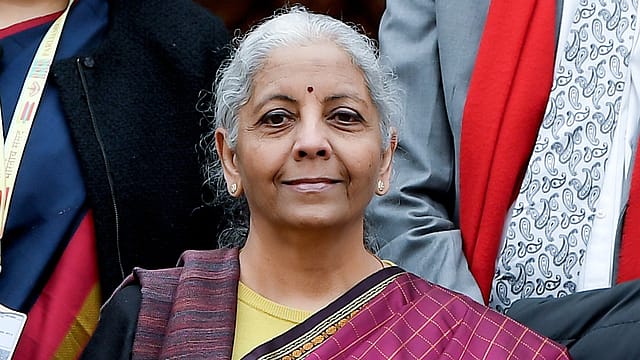
India-US trade negotiations have reached a “plateau” where further concessions could prove difficult for either side, Finance Minister Nirmala Sitharaman said, even as she maintained that talks were continuing.
Speaking at the Munich Leaders Meeting in New Delhi, Sitharaman also said India’s purchases of Russian oil had not been a determining condition in trade negotiations with the European Union. Her remarks outlined the challenge facing Indian negotiators: securing greater market access while protecting domestic interests and preserving strategic autonomy.
LIMITED ROOM FOR GIVE AND TAKE
Sitharaman said negotiations with Washington remained intensive, but suggested that the scope for further compromise had narrowed.
“The agreement negotiations are still ongoing, although we'd like to believe that both the sides have reached a plateau beyond which giving or taking might be very, very difficult. But maybe if there are rooms to operate from, both sides would do it,” she said.
The Modi Years
02 Oct 2026 - Vol 05 | Issue 40
A Nation Rebuilt
The minister identified India’s trade surplus with the US as a central issue in the relationship, acknowledging that Washington would seek to narrow the imbalance.
“But what is the predominant feature of the trade relations between India and the US? The trade balance is very much in our favor,” she said.
Sitharaman also pointed to changes in how countries pursued trade disputes and concessions. Tariffs, traditionally an instrument used within a negotiating framework, had become part of a more unsettled trading environment. Countries nevertheless needed to continue negotiating and find room for “some give and take”, she said.
‘NO LINDSEY GRAHAM BILL’ IN EUROPE
Asked whether India’s procurement of Russian oil had become a sticking point with European partners, Sitharaman said it had not determined the course of negotiations.
“In Europe, as much as I understand till today, there is no Lindsey Graham bill,” she said.
“I don't think there was a card on the table saying hey this is going to determine what we do next in the negotiation.”
The minister acknowledged that a range of issues came up in formal and informal discussions surrounding trade talks, while distinguishing those exchanges from conditions governing an agreement.
EU MARKET ACCESS, WITH DOMESTIC SAFEGUARDS
Sitharaman presented the India-EU agreement as an example of expanding trade while retaining protection for sensitive sectors, particularly agriculture.
India had opened 92.5 per cent of its tariff lines and around 97 per cent of trade value, she said. The EU’s opening covered 99 per cent in value terms and, she indicated, approximately 97 per cent of tariff lines.
Greater access to European markets could benefit labour-intensive industries such as footwear, textiles, toys and processed products, many of which involve micro, small and medium enterprises.
“Those are all in the micro and small medium industry segment, which are labor-intensive,” Sitharaman said, adding that expanded access could bring “more exports, more jobs”.
BILATERAL DEALS GAIN GROUND
The finance minister linked India’s pursuit of bilateral agreements to weakening multilateral institutions and disruptions in global supply chains.
“Now the balance is somewhat tilted in favour of the bilateral rather than the multilateral,” she said.
Countries were seeking new partners and using trade agreements to strengthen those relationships, with greater attention to keeping supply chains functioning. Bilateral and multilateral arrangements, she stressed, were never mutually exclusive.
“Multilateralism is not going to go away and multilateralism shouldn't go away,” Sitharaman said.
With inputs from ANI