#UNTOLD | A Borrowed Scooter, an Excel Sheet & the Price of Freedom: Vinay Kothari’s GO DESi Story
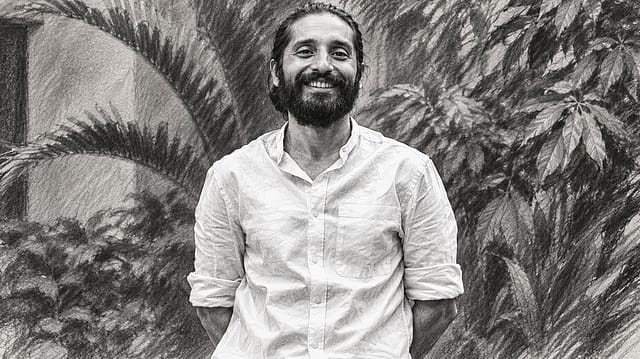
2018. EVENING. A NEIGHBOURHOOD SHOP.
The retailer knew his parents.
That was the problem.
Vinay Kothari has come back to offer samples. He has already spent the morning supplying stores. Now he needs customers to taste the sweet, understand what it is and give an unfamiliar brand a chance.
The retailer has a different question.
“You can speak English so well.”
Then comes the rest.
“So, what happened? That you have to do this?”
Kothari has spent eight years at ITC. He has studied business, worked in FMCG and saved for the day he could leave his job. He knows why he is here.
Standing in a shop near his home, he discovers how it looks to somebody else.
Zeroing In on ECI
09 Oct 2026 - Vol 05 | Issue 41
Constitutional legitimacy versus political opportunism
The retailer knows the family. He hears the English. He sees the man offering sweets. Somewhere between those facts, he senses a fall.
Kothari remembers feeling bad.
There is work left to do that evening. The product still needs explaining. A customer still has to try it.
He stays with the sweets.
Years later, he will recall the exchange without claiming that it broke him. Another remark will embarrass him without costing him sleep. He will resist attempts to turn his entrepreneurial life into a succession of catastrophes.
But the question will find other ways to return.
What happened?
Why this?
And, on some difficult days: would I have been better off staying?
THE WEIGHT OF A ₹5 SWEET
His sister’s Activa carries the stock.
Kothari packs jars of Desi Pops into a large delivery-style bag. Roughly 20 kilos, he remembers. Then he goes around supplying retailers near him.
The route has a second shift. In the evenings, he returns to sample.
The same man delivers the jars and stands beside them, helping customers discover what he believes he has found.
At ITC, he had learnt that distribution mattered. Now distribution has weight.
It fills a bag. It travels on a borrowed scooter. It takes him back to a shop he has already visited that day.
A sweet priced at ₹5 needs a great many small decisions in its favour. A retailer must stock it. A customer must notice it. Someone must reach for it again.
Kothari works close enough to see those decisions being made.
Six or seven months into the venture, there is some traction. Enough to suggest that the journeys and sampling are beginning to work.
Then a fellow entrepreneur offers his description of the business.
“Tum toh churan ki dukaan khol rahe ho” (You’re opening a churan shop.)
Kothari feels himself flush.
He remembers the condescension. A remark like that can be delivered lightly and land somewhere much heavier.
When he tells me about it, I ask whether he struggled to sleep afterwards.
He corrects me.
“It was not so dramatic.”
He slept.
There were other reasons for sleeplessness: a fight with a core team member, sales that failed to materialise, collections falling short. The churan remark entered a different account.
He would make the company bigger. Let the business answer.
“And today also, I have that same feeling,” he says.
The remark has survived the early days. Some of the desire to prove it wrong has survived with it.
A CHAI SHOP, A PRODUCT, A POSSIBILITY
The discovery had come on a trek.
At a chai shop, Kothari encountered the sweet that would become the starting point for Desi Pops. His response was immediate: why wasn’t this branded and sold in urban markets?
His working life had prepared him to ask the next questions. How would it be positioned? How would it reach customers? Could something enjoyed locally become a product bought repeatedly across a larger market?
He understood branding and distribution. He believed he had an eye for a good product.
This one held his attention. Then he began selling it. Customers came back.
That mattered. He could explain the first purchase, stand there offering a sample, supply the enthusiasm himself. A repeat purchase meant the sweet was beginning to carry some of the argument.
“People take years to create a product which is a PMF,” he says, referring to product-market fit.
He felt lucky. He had found something people wanted. He could see how his experience might help take it further.
The product gave his ambition somewhere to go. His savings gave him a chance to follow it.
BUY. REPAY. WAIT.
Before the Activa, he had a cycle.
Around him, colleagues were buying cars. Some were buying homes. Their salaries were becoming assets, comforts and monthly commitments.
Kothari kept his distance from the loans.
He wanted independence. He did not yet have a complete picture of what that would mean. It could be entrepreneurship; it could be something else. He wanted the ability to leave employment and find out.
An instalment would need paying regardless of what he wanted to attempt.
One loan could become a reason to delay. A larger commitment could turn that delay into years.
Buy. Repay. Wait.
Keep the salary coming.
He could see the sequence clearly enough to avoid starting it.
His education had followed a familiar route: a B.Com at Jain College, business school at SCMHRD in Pune, then ITC. He had a career he could continue. A decent salary allowed a certain way of living, and continuing to earn it would allow more.
He saved instead.
Each purchase forgone protected a future choice. Eventually, he had enough room to say, “I quit.”
Then came the practical question.
How long could he afford to remain free of the salary?
THE OTHER RECORD OF HIS LIFE
On Instagram, there were photographs of treks and travel.
From conversations with former batchmates, Kothari sensed the assumptions. Perhaps he was taking a break. Perhaps his career had stalled. Perhaps he had lost his way.
He was keeping another record elsewhere.
An Excel sheet.
He wanted his savings to last three years without having to ask anyone for money. He calculated the spending accordingly, taking the entries down to tiny amounts.
An auto fare. Coconut water.
He remembers putting in ₹10 and ₹5.
The future stretched across rows and columns. Spend this much, and this much would remain. Spend again, and the balance would change.
He kept track.
He had recently married. His wife had left a well-paying job in Europe and moved from Romania to India. She, too, was looking for work. They were living with his parents.
His family was supportive. The adjustment was hard.
A corporate salary had once absorbed small decisions almost invisibly. Dinner somewhere nice. Going out more often. Taking an auto or a cab.
Now he considered a bus or the metro.
“You had to think about everything, multiple times,” he says.
A small expense could require more attention than its size suggested. It belonged to a larger calculation: how long the savings would hold, how much the venture could pay him, how much room remained.
The planning helped. He had savings and no loan repayments pulling at them.
But he was sharing the experiment with somebody who had made a substantial move of her own. His wife had left her job and country. Their household was living with the consequences of his decision.
Meanwhile, his batchmates were earning more.
Some, he says, perhaps ten times what he was.
Their salaries supplied another set of numbers.
How much were they making?
How much was he drawing?
What might he have earned by now if he had stayed?
The opportunity cost had faces.
He knew the people. He knew the world in which they worked. Eight years at ITC gave him enough experience to imagine the career still available somewhere in the distance.
He calculated it. He still does. The business has grown. The comparison has kept growing alongside it.
WHO EATS TAMARIND?
Investors wanted to understand the size of the opportunity.
Who ate tamarind? How big could the business become? It was a ₹5 candy. How much scale could a ₹5 candy achieve?
Then came distribution. Bigger companies struggled to build offline reach. How would GO DESi do it?
Kothari found himself justifying the strategy repeatedly.
Some early conversations were shaped by the enthusiasm for direct-to-consumer businesses. Investors wanted brands selling through their own websites, with online scale.
GO DESi was building offline.
A couple of years later, he recalls, offline became attractive.
Now there was interest in talking.
The company had to continue while the argument around it changed. Kothari remembers calls in which explaining the basics of FMCG left him wondering why he was speaking to that person at all. Other discussions continued without reaching a decision.
Still deliberating.
Still deliberating.
He needed answers that could be used. There was stock to move and money to collect.
Yet his account of investors also contains people who believed remarkably early. At monthly sales of roughly ₹1 lakh–₹2 lakh, angel investors were willing to back him.
He says he did not know what a pitch deck was. Equity and issuing shares were unfamiliar.
They helped.
Their willingness to invest also gave him something personal: evidence that people whose judgment he respected could see a future in the little business he was building.
When doubt arrived, an early backer seemed to reinforce the possibility.
He drew confidence from that.
He noticed other founders’ fundraises too. There were stretches when he raised money and peers did not. Then the positions reversed.
One founder became the poster child. Later, somebody else did.
Kothari wanted the money. He makes no claim otherwise. Sometimes a fashionable model did not suit his product. Sometimes the funding simply failed to arrive.
“If there is a funding cycle going on and we haven’t got funding, then we haven’t got it,” he says in Hindi.
He had to work with what was available.
Over time, that repetition made him calmer. He continued watching the trends and considering opportunities. He also learnt how much of the working day would remain his responsibility after another funding conversation ended.
ENOUGH TO COME BACK
Manufacturing was unfamiliar.
Kothari knew the front end: selling, branding, taking a product to market. He had to learn how to make it, set up a factory and manage the people required to run it.
The company brought him into other people’s expectations, fears and motivations. It required capital, systems and work done consistently.
Some problems returned after he believed they had been addressed.
A leak had been identified. Somebody had been told to plug it. Then it happened again.
Plans failed to become results. Sales disappointed. Revenue fell. Collections tightened.
On such days, the corporate career could come back into view.
“Would I have been in a better place if I would have not taken this decision?” he asks.
The thought still occurs to him.
It has never become a decision to give up. But recognising that distinction does not remove the question. He knows enough about the other life to picture it.
Then something shifts. A sale comes through. A customer says something encouraging. An investor shows interest. There is evidence of progress, and his assessment of the day changes.
“If your day is net positive,” he says, “you eventually keep on going.”
He does not offer a more elaborate answer. Some days pull him down. Others supply enough to bring him back.
There is also the work already invested. The years, the effort, the company at the stage it has reached.
“Itna effort maar liya toh thoda sa aur maar lete hain.” (We’ve already put in so much effort. Let’s put in a little more.)
A little more becomes another working day.
He points to quick commerce as an opportunity some brands never survived long enough to encounter. Businesses that began around the same time might have found a route to growth there, he believes, had they been able to keep operating.
A company still alive can respond to an opening.
“Staying alive is 90% of the job,” he says.
Later in the conversation, he raises it to 95%.
THE BUSINESS THAT KEPT GOING
The numbers show what those working days have accumulated into.
GO DESi’s sales rose from ₹8.7 crore in FY21 to ₹16.3 crore in FY22, then ₹25.2 crore in FY23 and ₹33.9 crore in FY24. In FY25, they reached ₹55.6 crore.
Revenue rose to ₹81 crore in FY26: more than nine times the FY21 figure.
Profitability has been a separate challenge. The company recorded a net loss of ₹16.3 crore in FY25, compared with ₹1.2 crore in FY21. During our interview, Kothari also projected that GO DESi would break even in FY26.
The growth gives an answer to the question about the size of a business built around inexpensive sweets. Building it has required him to learn far beyond the abilities that first gave him confidence.
He would make some decisions differently. Brand building began around the fourth year; he believes they could have started earlier. He would be less accepting of mediocre hiring. Seeing strong people at work taught him how much one employee could change the output of a business.
The experience has changed him too. He believes he is more patient, although others may still find him short-tempered. Good developments excite him less wildly; failures do not always throw him as far.
Asked what he would tell his younger self, he chooses something harder to put into a business plan.
“Invest in relationships.”
He thinks he has been bad at it.
There are things still being learnt, costs still being counted. He has no interest in recommending the journey to everybody.
“It’s hard,” he says. “It’s not meant for everybody.”
“99% of the time, there’s no glam.”
By his count during our conversation, he has spent eight years as an employee and eight as an entrepreneur.
He can measure the two stretches against each other.
He can also see something ahead of him that makes the comparison harder to settle in a spreadsheet.
THE WAREHOUSE
Kothari is walking as we speak.
He is heading towards GO DESi’s warehouse.
When I ask whether he would return to being an employee, his answer is immediate in its conviction.
“I don’t think I’ll ever be able to go back as an employee.”
There is the freedom. There is the satisfaction of creating something.
Then he tells me about the building he is approaching.
“This warehouse did not exist before we started making it.”
He had never imagined that the effort he and his sister put in could produce something like this.
Years earlier, their stock travelled with him. Twenty kilos of jars, a large bag, an Activa borrowed from her. In the mornings, he supplied shops. In the evenings, he stood there helping people decide whether to buy.
Now there is a warehouse to walk towards.
He thinks about the longevity of the brand, about what they have brought into existence and what it could become. Investors ask whether he is building to build or building to sell. He returns to doing what is best for the organisation.
He wants the thing they have made to endure.
The salary he might have earned remains calculable. So do the bad days. He can still wonder whether another life would have been easier.
But this building exists because they kept working.
Once, a retailer who knew his parents looked at him selling sweets and asked what had happened.
Kothari has spent years answering through deliveries, sampling, production, hiring, sales and another day of trying. He has built a business large enough to exceed what he once imagined, without reaching a point where every doubt disappears.
He can live with the question.
What he struggles to imagine now is going back.
Whatever comes next, he says, even if it is consulting, even if it runs from a single room, he wants to work for himself.
“Mai jo karunga, ab apne liye karunga” (Whatever I do, I’ll now do for myself.)