The $62-Million Nose-Strip Bet: Can Intake Make Refills a Habit?
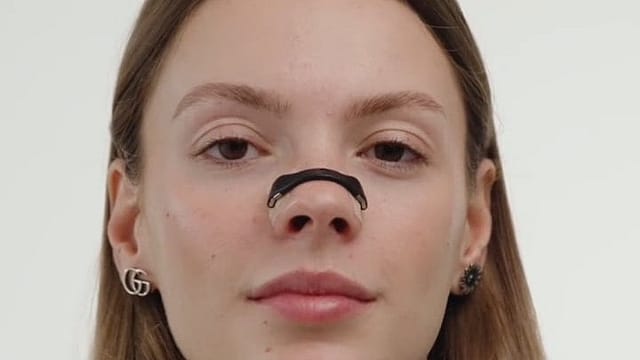
Intake’s most consequential product may be the adhesive tabs customers throw away after wearing its nasal dilator.
The American company sells a reusable magnetic band that attaches to single-use tabs on the nose. The band provides the hardware. Replacing the tabs creates the opportunity for another purchase. Intake’s own guidance says the tabs are designed for single use and will not adhere properly when reused.
That small distinction makes its latest investment more interesting than another wellness funding announcement.
On October 28, Camino Partners, founded by KIND Snacks entrepreneur Daniel Lubetzky, announced an investment in Intake. Glossy, drawing on interviews with the company and investor, put the amount at $62 million.
The commercial question is whether a product tried for easier breathing becomes useful enough to earn a continuing place in the household budget.

Look Who's Talking Regime Change
23 Oct 2026 - Vol 05 | Issue 43
The next packet is the test
Intake already offers a refill plan delivered every 30 days, alongside one-time purchases and larger packs. Its US catalogue lists a 30-use refill plan at $39.99 and a 360-use pack at $299.99. These are advertised offers, rather than evidence of what the average customer actually pays.
Different pack sizes serve different businesses within the business. A monthly plan can generate regular orders. A bulk purchase brings cash forward but makes the next reorder more distant. An occasional user can remain satisfied while consuming relatively few tabs.
Investors therefore need to know how often customers wear the device, when they replenish and how much discounting is required.
An auto-delivery order does not establish that the previous packet has been used. Customers can accumulate stock, skip shipments or cancel. Refill revenue becomes more durable when consumption keeps pace with deliveries.
The important numbers would follow customers who bought in the same month: how many purchase again after 60, 90 and 180 days, and what remains after product, shipping, servicing and acquisition costs?
Those figures were not disclosed in the announcements and product materials reviewed for this analysis.
There is already money in the nose
The category has an established commercial precedent.
In June 2026, Prestige Consumer Healthcare completed its $1.045-billion acquisition of a portfolio led by Breathe Right. At announcement, Prestige said the acquired brands had generated approximately $200 million in revenue and $95 million in EBITDA during 2025. Breathe Right accounted for roughly two-thirds of the portfolio’s revenue and profitability.
Those figures describe the acquired portfolio. Assigning the entire purchase price or earnings to nasal strips would exaggerate the comparison.
Nevertheless, the transaction establishes something useful: breathing-related consumer products can support substantial sales and profits. Intake’s investors are backing expansion within an existing category, with a proposition designed to make use more frequent.
Camino’s ambition includes repositioning nasal strips as part of a daily wellness routine and expanding beyond direct online sales into physical retail.
That introduces a new test. A product may sell online with demonstrations and detailed explanations. A shop shelf gives it less time to explain why the buyer should pay, then return for consumables.
Feeling a difference and proving performance
A nasal dilator mechanically widens the nasal passage. The commercial appeal is immediate: a customer can try it and judge the sensation.
Broader claims about exercise performance require separate evidence.
A systematic review published in 2021 found no improvement in maximal oxygen uptake, heart rate or perceived exertion among healthy people exercising with external nasal dilator strips.
A 2022 review reached a more encouraging conclusion for some running-related measures, but rated the certainty of the evidence very low. Its authors said future studies would probably change the estimated effect.
More recently, a trial published online on October 15, 2026 reported improved nasal airflow, maximal oxygen uptake and lower perceived exertion in 58 trained male footballers aged 14–17. It used a placebo-controlled crossover design, meaning participants were tested under both conditions.
That result adds evidence. It does not establish that every device produces the same benefits across adults, recreational athletes and people buying primarily for sleep. Research on the wider category does not automatically validate Intake’s particular device.
For the business, this distinction should shape positioning. A customer may value more comfortable nasal breathing without obtaining a measurable sporting advantage. Marketing that promises progressively broader benefits creates progressively larger obligations to substantiate them.
A brand’s most durable claim may be narrower than its most exciting advertising.
The friction is in the adhesive
Product experience can also determine whether a promising first purchase survives.
On Intake’s own website, customer reviews include praise for easier breathing alongside complaints about refill prices, adhesion and removing the backing from replacement tabs. These are self-selected accounts hosted by the seller, rather than a representative customer study.
Their value is in identifying questions.
Does the tab remain attached during the activity for which it was bought? Is application convenient enough to repeat? Does comfort hold up over regular use?
For a consumables business, those details affect how much stock customers finish and whether they order again. A replacement tab can be central to the economics even when the reusable band attracts the attention.
Retail expansion adds further costs: retailer margins, inventory commitments and potential promotions. Higher sales would be encouraging; the more revealing result would be profitable repeat buying after those costs.
India already has the refill question
Indian brand BreathFIX lists a magnetic nasal dilator and a separate refill product. The refill page advertised 30 strips as a one-month pack for ₹999.
Twelve packs at that unchanged price would cost ₹11,988. That is an illustration of the annual spending implied by the listing, excluding the initial device, rather than evidence that customers buy twelve packs.
It gives the Indian opportunity a concrete shape. The challenge is to earn a recurring expenditure through a benefit the customer values consistently.
The catalogue establishes a local offer. It supplies no basis for estimating Indian sales, retention or market size. Nor does it establish equivalence between BreathFIX and Intake.
Indian brands would need to demonstrate their own product performance and purchasing patterns. The appeal of the global category cannot settle either question for them.
What the $62 million cannot tell us
Glossy reported that Intake had sold more than 100 million pairs of tabs and was approaching $100 million in annual sales. It also reported that investment proceeds would support expansion and buy out early investors; the split was not specified.
These company-reported sales indicators suggest an existing business with demand. They do not reveal how much depends on new customers, discounts or profitable replenishment.
Intake has attracted capital for a product that can be experienced immediately and purchased repeatedly. The next stage will test how often those two advantages occur in the same household.
For a business built around disposable tabs, the decisive evidence is what customers choose after the first packet runs out.