SEBI Plans AI Trading Rules Amid Rising Cyber Risks, Says Chairman
India’s market regulator, Securities and Exchange Board of India, is preparing a new framework to govern artificial intelligence (AI) in trading, as rising cyber risks begin to shadow the technology’s rapid adoption.
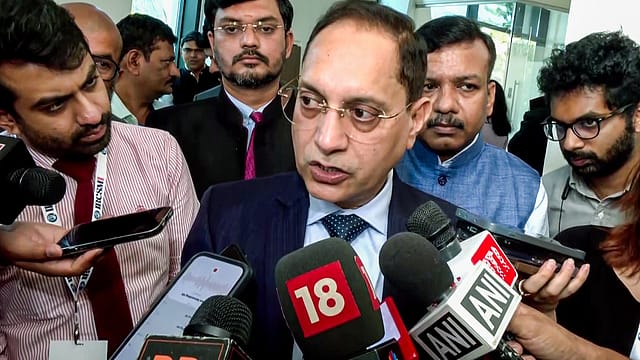
Speaking in Odisha, SEBI Chairman Tuhin Kanta Pandey laid out the regulator’s thinking: AI is both a powerful enabler and a potential threat to market stability.
What is SEBI planning for AI-based trading?
SEBI is working on formal guidelines to regulate how AI systems are used in trading activities. The goal is to strike a balance between innovation and risk control as algorithmic and AI-led trading grows in India’s financial markets.
“For AI-driven trading, we are actually going for guidelines on that. On how AIs will, in future, do that. Now AI has an opportunity as well as a risk. The opportunity is that you can use the AI for several of your things which can be automated, but risks will come with the cyber risk. Cyber risk from AI has increased and we are now issuing an advisory on how the SEBI ecosystem, the regulated entities can be protected from that enhanced risk,” Pandey told ANI.

Zeroing In on ECI
09 Oct 2026 - Vol 05 | Issue 41
Constitutional legitimacy versus political opportunism
Why is AI a double-edged sword for markets?
AI is already helping financial firms automate processes, improve efficiency, and even reach investors in multiple languages. But the same systems can expose markets to new vulnerabilities if not properly secured.
“So as you know, everyone has a software and if certain cyber security is threatened, that means if vulnerabilities are found in the software, very, very quickly, there is a problem that we will be attacked and those attacks may be successful. Then that is bringing risk to the market integrity,” Pandey told the media.
In simple terms, the more markets rely on software and automation, the more damaging a cyberattack can become.
What steps is SEBI taking to reduce cyber risks?
SEBI is expected to push for stronger cybersecurity practices across its ecosystem. This includes better patch management, tighter verification systems, and stricter oversight of third-party software vendors.
Pandey also highlighted an AI-led investor awareness campaign, “Project Jagrook,” designed to improve financial literacy through a wide-reaching multimedia approach.
What did SEBI say about FPI outflows?
Addressing concerns around foreign portfolio investor (FPI) withdrawals, Pandey described them as a normal part of global capital movement rather than a sign of distress.
“The FPI's come and go depending upon what they think about the relative situation between one country vis-a-vis another global jurisdiction. There are a number of factors which are contingent. 'What are the returns that the FPI's are getting in a particular market post?' It's a dollar return, not a rupee return, in a market, depending upon various factors like interest rates, arbitrage, the stance of the central banks,” Pandey said.
What about illegal deposit schemes?
Pandey also flagged the risks posed by unauthorized deposit schemes, noting that state governments have the legal tools to act against such operations. He pointed to laws like the Chit Fund Act and the Banning of Unauthorized Deposits Act.
He urged investors to stick to regulated avenues such as mutual funds, Portfolio Management Services (PMS), and Alternative Investment Funds (AIFs), with support from bodies like the Association of Mutual Funds in India.
The bigger picture
SEBI’s move signals a shift toward proactive regulation as financial markets become more tech-driven. AI could reshape trading, but without safeguards, it could also amplify systemic risks. The upcoming framework will likely define how safely India can harness this transformation.
(With inputs from ANI)