If AI Can Design, What Is a Designer For?

The disruption doesn’t announce itself loudly.
It shows up in smaller ways first. A student skips the sketchbook and opens a prompt window instead. A portfolio arrives filled with work that looks finished, but feels oddly unanchored. A brief that once took days to explore is resolved in minutes.
Somewhere along the way, the centre of gravity begins to shift.
Design has long been anchored in the act of making—of translating thought into form through skill, repetition and craft. That process carried its own hierarchy. Time mattered, technique mattered, and the ability to execute an idea well was often what separated one designer from another.
That hierarchy is now being rearranged. Tools can generate variations endlessly. They can simulate aesthetics, combine references, produce outputs that feel resolved at first glance. What once required effort is becoming instantaneous. What once signalled expertise is becoming accessible.
And this raises a more uncomfortable question than the technology itself. “If AI can generate designs in seconds, what exactly are we learning to do?” It is a question that surfaces with increasing frequency in classrooms, in reviews, in conversations with students trying to locate themselves in a profession that seems to be recalibrating in real time. Sometimes, it is stated without hesitation. “I don’t need to learn design anymore. AI will do it better.”
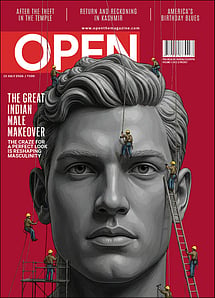
The Great Indian Male Makeover
03 Jul 2026 - Vol 05 | Issue 27
The craze for a perfect look is reshaping masculinity
For Dr. Jitin Chadha, Pro-Chancellor of the University of Design, Innovation and Technology (UDIT), these are not outliers. They are early indicators of a deeper shift, not just in tools, but in what the discipline begins to value. While AI can expand the field of possibilities almost infinitely, it does not resolve a more fundamental problem: deciding which of those possibilities are worth pursuing, and why.
“AI expands possibilities,” says the education entrepreneur who has spent over two decades shaping how design is taught in India. “Whether those possibilities result in creativity or conformity depends on the quality of human thinking behind them.”
That tension—between generating options and exercising judgment—is where the conversation now sits. In a free-wheeling conversation that moves from fashion studios to hiring floors, from craftsmanship to code, we explore what happens to design when creation becomes easy—and why the hardest skill to teach may no longer be execution, but discernment.
Excerpt:
If a student says—“I don’t need to learn design, AI will do it better”—what do you tell them?
I would start by asking what they mean by design. If design is only about producing visuals, AI can already do a great deal of that. But design was never just production. It is about solving problems—understanding people, recognising needs, and making informed decisions. AI can generate possibilities. It cannot determine which of those possibilities are meaningful in a given context. As technology becomes more capable, the value shifts. Judgment becomes more important.
Does AI make fashion more creative or more average?
AI expands possibilities. Whether those possibilities lead to creativity or conformity depends on the quality of human thinking behind them.
If AI can generate 1,000 designs in a minute, what becomes rare—the idea or the taste?
Not the idea. The judgment to recognise which idea matters. Possibilities are abundant. Deciding what is meaningful, relevant, and worth pursuing remains a human challenge. As options multiply, that ability becomes more valuable.
Does the future designer sketch or prompt?
Design has never been defined by its tools. The future designer will use whatever tools are appropriate—sketching, prompting, or something that doesn’t exist yet. What will continue to matter is the ability to understand context, recognise what is meaningful, and decide what to do next.
So, is prompt engineering the new pattern-making?
Prompting may become an important way of working with these systems. But it does not replace foundational understanding. A prompt is only as good as the thinking behind it. To instruct a system well, you need to understand the problem, define the outcome, and make informed decisions about both technical and creative requirements. The strongest designers will combine technological fluency with a deep understanding of their discipline.
AI is remixing today. When does it start originating? And what happens then?
Originality has never existed in isolation. Most creative work draws from references, experiences, and ideas. Whether AI begins to originate is, in some ways, a secondary question. The more important question is: who defines the purpose those ideas serve? Design is not just about generating possibilities. It is about making choices in response to human needs, social realities, and future consequences. As AI becomes more capable, the role of the designer will shift. The need for human judgment will not.
Will fashion houses hire fewer designers and more ‘AI stylists’?
Roles will evolve. But fashion businesses will still need people who can interpret culture, understand audiences, and make informed creative decisions. As AI takes on more execution, direction and judgment become more valuable.
Be honest—are most design schools already outdated because of AI?
The challenge isn’t AI. It’s whether institutions are preparing students for the world they are entering, not the world their faculty entered. Every technological shift forces a reset. What matters is not chasing tools, but building the ability to adapt, think critically, and keep learning. The schools that remain relevant will be the ones that teach that.
Do degrees lose value when tools become this powerful?
A degree was never about access to information alone. Its value lies in developing perspective—the ability to think critically, work across disciplines, and understand the consequences of decisions. As tools become more powerful, that perspective becomes more important, not less.
Does AI kill craftsmanship or make it more premium?
It usually makes it more valuable. When efficiency becomes widespread, people begin to value what cannot be easily replicated—mastery, patience, and a deep engagement with the process. Craftsmanship is not just about producing something. It is about understanding how it comes into being.
In a world of infinite digital design, does handmade become the new luxury?
Luxury has always been about scarcity, meaning, and human attention. As digital production becomes effortless, handmade work may acquire a different kind of value—not because it resists technology, but because it carries time, intention, and individuality.
Are we heading toward two extremes—AI mass fashion and human-made couture?
Industries rarely evolve in clean extremes. What usually emerges are hybrids—where technological capability and human expertise reinforce each other. Fashion has always absorbed new tools while retaining craft and culture. That dynamic is unlikely to change.
Should students still spend years learning draping and stitching?
Yes. Understanding how something is made changes how you think about it. Draping and stitching are not just technical skills—they shape how a designer sees proportion, structure, and possibility. Without that understanding, the work becomes superficial.
Let’s talk jobs. Which roles disappear first?
Technology tends to affect work that is repetitive and predictable. What becomes more valuable are roles that involve interpretation, cultural understanding, relationships, and decision-making. Industries don’t eliminate human effort. They redistribute it.
Five years from now—what percentage of a collection will be AI-generated?
The question may not be about percentage. AI will likely influence multiple stages—from research to visualisation. But collections are not defined by how many ideas are generated. They are defined by the choices made. That is harder to quantify.
Speed will become more accessible. But once everyone can move fast, speed stops being an advantage. What differentiates brands then is relevance, trust, and cultural insight. Speed alone has never sustained value.
Does AI break the monopoly of big fashion houses?
It lowers barriers to entry. But influence is not built on access to tools. It is built on reputation, relationships, consistency, and cultural relevance over time. AI democratises capability. It does not automatically democratise trust.
If AI trains on past designers, is it creativity or plagiarism at scale?
The question matters because the answer is not simple. Creative work has always drawn from influence and reference. What AI changes is the scale, speed, and opacity of that process. The challenge is as much ethical as it is technological.
Our ideas of authorship were built in a world where creative agency was easier to identify. AI complicates that. Ownership, attribution, and responsibility will not be resolved by technology alone. They will require legal and cultural frameworks that are still evolving.
Are we heading into a world where everything looks good and everything looks the same?
Technical polish is becoming accessible. But polish is not originality. When tools become similar, distinction comes from perspective. The most memorable work rarely comes from execution alone. It comes from a way of seeing.
Is this the best time to become a fashion entrepreneur or the worst?
It is one of the most dynamic. Barriers to experimentation are lower. It is easier to test ideas, reach audiences, and build quickly. But accessibility also increases competition. The advantage no longer comes from access. It comes from having a clear point of view and creating value that others cannot easily replicate.